
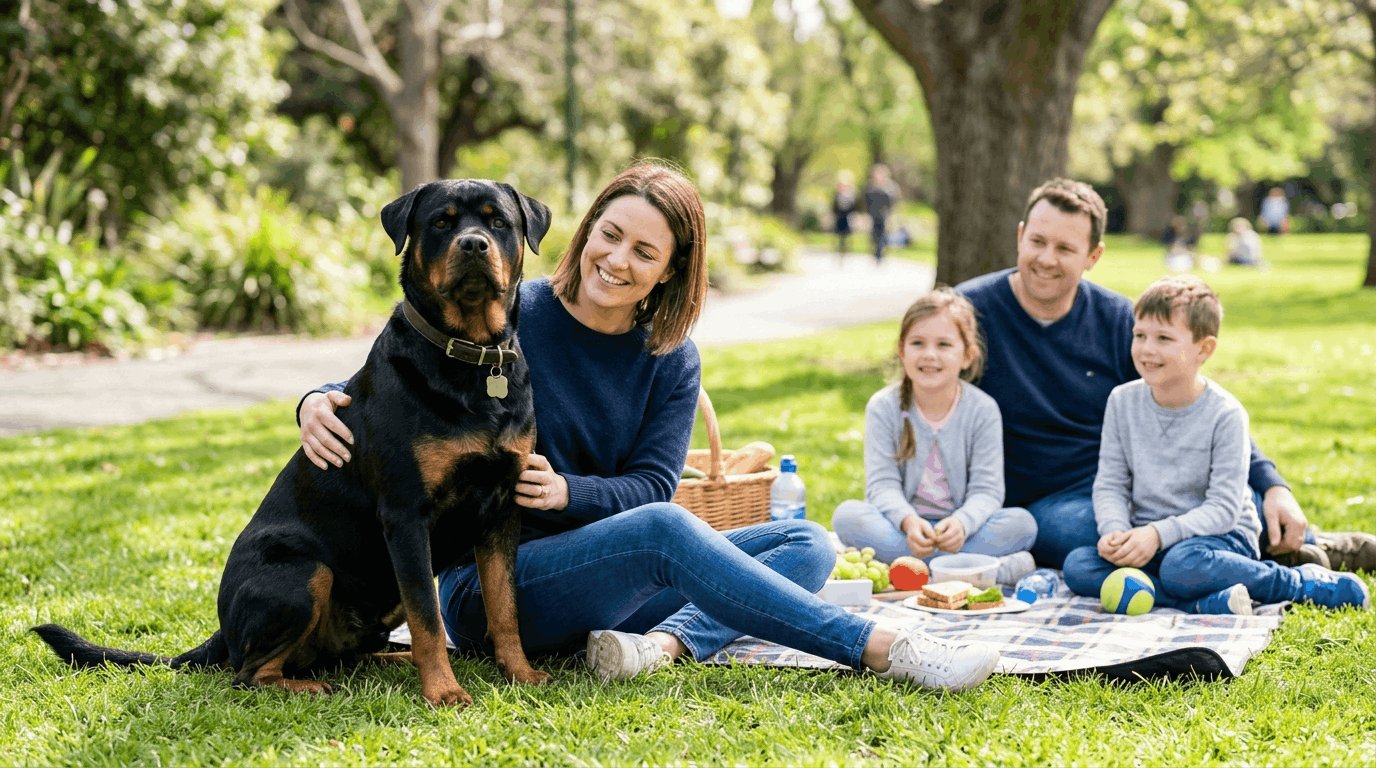
Rottweilers are powerful, intelligent, and deeply loyal dogs known for their protective instincts and confident presence. However, true strength in this breed goes far beyond physical appearance. A mentally and emotionally stable Rottweiler displays calm confidence, controlled energy, healthy social behavior, and emotional resilience in everyday life. Recognizing balanced rottweiler behavior helps owners better understand their dog’s emotional health while supporting safer and more rewarding relationships.
Many people mistakenly believe confident dogs should appear dominant, overly intense, or constantly alert. In reality, emotionally balanced Rottweilers usually behave in calm, predictable, and stable ways. They rarely overreact unnecessarily because they feel secure in themselves and their environment.
A well-balanced Rottweiler generally handles stress calmly, responds to guidance reliably, and recovers from excitement or frustration without extreme emotional swings. These dogs tend to observe situations thoughtfully rather than reacting impulsively.
The best signs of balanced rottweiler behavior involve emotional control, healthy confidence, adaptability, and strong communication with owners.
Most importantly, balance develops through genetics, training, socialization, structure, and emotional trust over time.
Calm Confidence Around People
One of the clearest signs of emotional stability involves calm social behavior. A mentally balanced Rottweiler usually remains composed around familiar people, visitors, and controlled public environments.
Balanced rottweiler behavior often appears through relaxed body language, steady attention, and controlled curiosity rather than hyperactivity or excessive suspicion.
Stable dogs may observe strangers carefully without lunging, barking uncontrollably, or displaying unnecessary tension. They generally respond to new people based on owner guidance rather than emotional impulsiveness.
Confident Rottweilers also avoid excessive clinginess or insecurity around trusted family members. While loyal and affectionate, they usually remain emotionally steady rather than anxious when routines change slightly.
Calm confidence reflects emotional security rather than emotional suppression. Healthy dogs still remain alert and aware while feeling stable internally.
Controlled Energy Instead of Constant Hyperactivity
Rottweilers are energetic working dogs, although emotionally balanced individuals usually demonstrate self-control alongside physical power.
Many owners notice balanced rottweiler behavior through the dog’s ability to settle calmly after exercise, excitement, or stimulation.
Stable dogs enjoy play, training, walks, and interaction enthusiastically. However, they generally recover emotionally once activities end instead of remaining overstimulated for extended periods.
Hyperactive pacing, nonstop barking, destructive chewing, or inability to relax indoors sometimes indicate emotional imbalance or insufficient structure.
Balanced dogs understand when it is time to engage actively and when it is time to rest calmly.
Owners often underestimate how valuable relaxation skills become for powerful working breeds. Emotional control helps prevent impulsive behavior while improving household stability significantly.
Healthy Responses to New Environments
Emotionally balanced dogs usually adapt more successfully to changing environments, routines, and experiences. Although caution may remain natural, stable dogs recover from uncertainty relatively quickly.
Balanced rottweiler behavior often includes curiosity, observation, and thoughtful responses rather than immediate panic or aggression during unfamiliar situations.
For example, confident Rottweilers may pause briefly in new locations before calmly exploring once they assess surroundings safely.
Fearful dogs often display excessive avoidance, trembling, barking, or reactive behavior instead.
Strong emotional resilience allows balanced dogs to process new experiences without becoming overwhelmed emotionally.
Proper early socialization strongly influences environmental confidence. Puppies exposed positively to varied sounds, people, surfaces, and locations often develop healthier adaptability later in life.
Consistent Emotional Reactions
Emotional consistency represents another major sign of stability. Mentally healthy dogs generally respond predictably across similar situations rather than displaying extreme mood swings or unpredictable behavior.
Balanced rottweiler behavior usually includes reliable emotional patterns that owners learn to understand and trust.
Stable dogs do not suddenly shift from relaxed affection to uncontrolled reactivity without clear cause. Instead, their body language and responses remain relatively consistent across daily routines.
Unpredictable emotional reactions sometimes indicate fear, stress, pain, poor socialization, or underlying behavioral issues needing attention.
Consistency helps both dogs and owners communicate more effectively because expectations become clearer and more reliable.
Good Impulse Control
Impulse control remains essential for large powerful breeds. Emotionally balanced Rottweilers typically demonstrate an ability to pause, wait, and respond thoughtfully instead of reacting immediately to every stimulus.
Balanced rottweiler behavior often appears through controlled greetings, reliable obedience, and calm responses during exciting situations.
For example, stable dogs may sit patiently before meals, wait at doors, or maintain composure when visitors arrive.
Poor impulse control sometimes appears through jumping, lunging, frantic barking, or inability to focus during stimulation.
Training helps develop these skills greatly, although emotional maturity and confidence also influence self-control naturally.
Owners should remember that calm behavior reflects internal emotional balance rather than forced suppression alone.
Comfort With Structured Leadership
Rottweilers generally thrive when owners provide clear structure, boundaries, and guidance consistently. Balanced dogs usually feel more secure when expectations remain understandable and predictable.
Balanced rottweiler behavior commonly includes willingness to follow direction without constant conflict or resistance.
Stable dogs do not feel the need to control every situation themselves because they trust their handlers confidently.
Confusion, inconsistency, or chaotic routines may increase stress and emotional instability over time, especially in intelligent working breeds.
Healthy leadership focuses on communication, consistency, and trust rather than intimidation or dominance-based handling.
Emotionally balanced dogs often respond best to calm confident guidance paired with fair structure and positive reinforcement.
Relaxed Body Language at Home
A calm home environment often reveals emotional wellness more clearly than public situations. Stable dogs generally display relaxed comfortable behavior within trusted environments.
Balanced rottweiler behavior may include loose muscles, calm breathing, soft facial expression, comfortable sleeping habits, and willingness to rest peacefully around family members.
Dogs constantly pacing, scanning windows obsessively, or reacting intensely to every small sound may struggle with underlying anxiety or overstimulation.
Healthy emotional balance allows dogs to feel secure enough to rest deeply without remaining in constant defensive alertness.
Owners should pay attention to relaxation patterns because emotionally stable dogs usually spend significant portions of the day resting comfortably between activities.
Healthy Social Boundaries With Other Dogs
Not every Rottweiler enjoys constant interaction with unfamiliar dogs. However, emotionally balanced individuals generally display appropriate social communication and controlled responses.
Balanced rottweiler behavior often includes neutral observation, calm greetings, or polite disengagement rather than immediate aggression or uncontrollable excitement.
Stable dogs typically communicate discomfort through body language before escalating physically.
Overreactive behavior sometimes develops from fear, poor socialization, frustration, or previous negative experiences.
Owners should avoid forcing social interactions unnecessarily because emotional balance involves confidence and choice rather than compulsory friendliness.
Controlled positive experiences usually support healthier long-term social behavior more effectively.
Strong Recovery After Stressful Events
Resilience strongly reflects emotional wellness. Mentally balanced dogs generally recover from startling or stressful situations relatively quickly compared to highly anxious individuals.
Balanced rottweiler behavior includes the ability to calm down after loud noises, surprises, or temporary excitement without remaining emotionally overwhelmed for long periods.
For example, a stable dog may react briefly to a sudden sound before relaxing again once the situation passes safely.
Dogs remaining intensely reactive long afterward may struggle with anxiety, insecurity, or chronic stress.
Recovery speed often reveals more about emotional balance than the initial reaction itself.
Enjoyment of Training and Learning
Rottweilers are intelligent working dogs that often enjoy mental stimulation and structured tasks. Emotionally balanced individuals usually engage positively during training rather than shutting down emotionally or becoming overly frustrated.
Balanced rottweiler behavior commonly appears through focus, curiosity, and willingness to participate during learning activities.
Stable dogs generally recover from mistakes calmly while remaining engaged with handlers.
Training sessions should build confidence and communication rather than emotional pressure or fear.
Positive reinforcement, consistency, and clear expectations often support healthier emotional development while strengthening trust between dogs and owners.
Appropriate Protective Instincts
Rottweilers naturally possess protective instincts. However, emotional balance determines how appropriately those instincts appear in daily life.
Balanced rottweiler behavior involves thoughtful awareness rather than constant suspicion or uncontrolled territorial behavior.
Stable dogs may notice unfamiliar situations without immediately escalating emotionally. They generally respond based on real environmental cues instead of chronic anxiety or impulsive reactivity.
Overprotective behavior often reflects insecurity rather than genuine confidence.
Owners should encourage calm observation and structured responses rather than rewarding unnecessary defensive behavior.
Emotionally healthy protection involves controlled judgment and reliable handler communication.
The Importance of Emotional Fulfillment
Mental and emotional balance does not develop automatically. Dogs require proper exercise, training, socialization, structure, and emotional connection consistently.
Balanced rottweiler behavior becomes far more likely when dogs receive both physical activity and mental engagement regularly.
Boredom, isolation, inconsistent routines, or insufficient stimulation may contribute to frustration and emotional instability over time.
Interactive training, structured walks, scent work, obedience games, and calm family interaction all support healthier emotional development.
Most importantly, emotionally balanced dogs usually feel secure, understood, and connected within their environment.
Supporting Long-Term Emotional Stability
Maintaining emotional balance requires ongoing attention throughout a dog’s life. Puppies, adolescents, adults, and seniors all experience different developmental needs and challenges.
Balanced rottweiler behavior often strengthens through consistent routines, clear communication, and positive life experiences over time.
Owners should focus on building trust and confidence gradually rather than expecting instant perfect behavior.
Patience matters especially during adolescence because hormonal changes and maturity shifts sometimes influence emotional responses temporarily.
Regular training, healthy boundaries, mental stimulation, exercise, and calm leadership all contribute to long-term emotional stability.
Most importantly, emotionally balanced Rottweilers usually become deeply trustworthy companions capable of remarkable loyalty, confidence, and self-control. Their calm presence reflects not only strong genetics but also thoughtful guidance, emotional fulfillment, and meaningful relationships built through consistency and trust.
FAQ
1. What does a mentally stable Rottweiler look like?
A stable Rottweiler usually appears calm, confident, emotionally controlled, and responsive without unnecessary aggression or fear.
2. Can poor socialization affect emotional balance?
Yes, limited positive exposure during development may increase fear, anxiety, or reactive behavior later in life.
3. Why is impulse control important for Rottweilers?
Impulse control helps large powerful dogs respond calmly and safely during exciting or stressful situations.
4. Do balanced Rottweilers still act protective?
Yes, emotionally healthy dogs may remain naturally protective while responding thoughtfully rather than impulsively.
5. How can owners support emotional stability long term?
Consistent training, exercise, mental stimulation, structure, and positive social experiences all support healthier behavior.