Rottweilers are loyal, intelligent, and naturally protective dogs that often form deep emotional bonds with their families. While these qualities make them exceptional companions, poor handling, inconsistent training, or limited socialization may increase the risk of defensive or overprotective behavior over time. Learning how to prevent rottweiler aggression early helps owners create emotionally balanced dogs that remain confident, stable, and trustworthy in daily life.
Many people misunderstand aggression completely. True aggression rarely appears without cause. In many cases, reactive or defensive behavior develops from fear, insecurity, confusion, frustration, or unhealthy environmental experiences.
Healthy Rottweilers usually display calm confidence rather than constant suspicion or emotional instability. Stable dogs do not feel the need to react aggressively to every unfamiliar sound, person, or situation.
The best strategies to prevent rottweiler aggression focus on emotional stability, structured leadership, proper socialization, impulse control, and consistent communication.
Most importantly, prevention should begin long before serious behavioral problems appear.
Why Early Prevention Matters
Behavioral habits often develop gradually through repeated experiences and emotional associations. Consequently, prevention becomes far easier than correcting severe aggression later.
Owners trying to prevent rottweiler aggression should understand that puppies constantly learn from everyday interactions, even outside formal training sessions.
Fearful experiences, chaotic environments, inconsistent rules, or isolation may influence emotional development significantly during early life stages.
Rottweilers naturally observe their surroundings carefully. Therefore, they quickly notice whether environments feel safe, stressful, predictable, or threatening.
Healthy emotional development requires positive experiences combined with calm structured guidance consistently over time.
Early prevention helps dogs build confidence, adaptability, and trust before defensive habits become deeply ingrained.
Socialization Builds Emotional Confidence
Proper socialization remains one of the most important factors affecting long-term behavior. However, socialization involves much more than simply exposing puppies to random people or dogs.
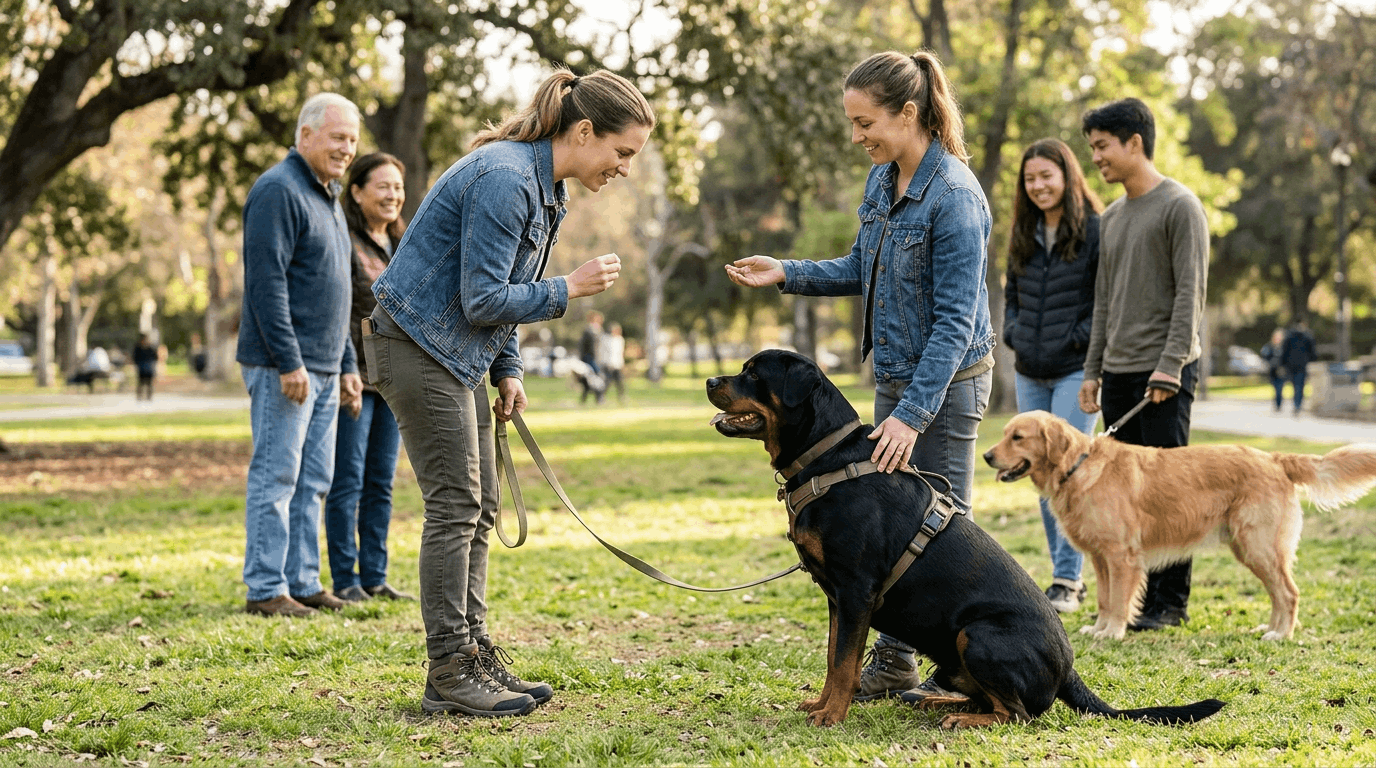
To successfully prevent rottweiler aggression, owners should focus on calm positive exposure to varied environments, sounds, surfaces, people, and situations gradually.
The goal involves teaching dogs that unfamiliar experiences do not automatically represent threats.
Positive controlled socialization often builds emotional resilience and adaptability. Puppies exposed calmly to new experiences usually recover from uncertainty more confidently later in life.
Poor socialization sometimes creates fear-based reactivity because dogs never learn how to process unfamiliar situations safely.
Importantly, socialization should remain structured and positive rather than overwhelming or chaotic.
Avoid Encouraging Overprotective Behavior
Many owners unintentionally reinforce overprotective tendencies because they mistake excessive guarding for loyalty or strength.
Owners trying to prevent rottweiler aggression should avoid praising unnecessary barking, lunging, or defensive behavior around harmless situations.
Constantly encouraging suspicion may increase anxiety and emotional instability over time.
Emotionally balanced Rottweilers usually observe calmly before reacting. They rely on owner guidance rather than making impulsive defensive decisions independently.
Healthy protection involves confidence and control, not chronic hypervigilance.
Dogs should learn that owners manage situations calmly and safely. This understanding reduces emotional pressure on dogs to control environments themselves.
Consistency Creates Emotional Stability
Clear predictable structure helps dogs feel secure. In contrast, inconsistent expectations often create confusion, frustration, and emotional instability.
To prevent rottweiler aggression effectively, owners should maintain consistent rules, routines, and behavioral expectations across all environments.
Dogs become calmer when they understand what behaviors succeed consistently.
For example, allowing rough behavior occasionally while punishing it later creates confusion. Similarly, inconsistent corrections may increase anxiety and defensive reactions.
Calm consistency supports trust and emotional balance much more effectively than unpredictable discipline.
Stable leadership does not require harshness. Instead, it involves fairness, communication, and predictable guidance over time.
Impulse Control Reduces Reactive Behavior
Impulse control helps dogs respond thoughtfully rather than emotionally during exciting or stressful situations.
Owners working to prevent rottweiler aggression should prioritize teaching calm behaviors such as waiting, settling, focusing, and responding reliably under distraction.
Simple exercises often strengthen emotional regulation greatly. Waiting at doors, maintaining leash focus, and practicing calm greetings all help improve self-control gradually.
Dogs lacking impulse control sometimes react quickly without processing situations calmly first.
Strong emotional regulation becomes especially important for powerful breeds because physical reactions carry greater consequences.
Calm repetition and positive reinforcement usually build impulse control more effectively than punishment-based methods.
Exercise Supports Emotional Balance
Rottweilers require both physical and mental stimulation regularly. Without adequate outlets, frustration and excess energy sometimes contribute to behavioral problems.
Owners hoping to prevent rottweiler aggression should provide structured exercise alongside mental enrichment daily.
Walks alone may not fully satisfy intelligent working breeds. Training games, scent work, obedience exercises, and problem-solving activities often support emotional wellness more effectively.
Understimulated dogs sometimes develop frustration-based behaviors including reactivity, destructiveness, excessive barking, or hypervigilance.
Balanced exercise routines help reduce stress while improving emotional stability and focus significantly.
Fear Often Hides Behind Aggression
Many aggressive reactions actually stem from fear or insecurity rather than confidence.
Understanding emotional triggers helps owners better prevent rottweiler aggression before defensive habits intensify.
Fearful dogs may bark, growl, lunge, or display intimidating behavior because they feel uncertain or unsafe.
Punishing fear responses harshly often worsens emotional instability instead of improving behavior.
Calm desensitization and confidence-building exercises generally produce healthier long-term results.
Owners should focus on helping dogs feel secure rather than forcing interactions beyond emotional comfort levels.
Body Language Reveals Emotional State
Dogs communicate emotional discomfort long before serious aggression appears. Learning canine body language helps owners intervene early and safely.
To properly prevent rottweiler aggression, owners should recognize warning signs such as stiff posture, intense staring, tucked tails, lip licking, freezing, raised hackles, or avoidance behavior.
Subtle signs often appear before barking or lunging occurs.
Ignoring early communication sometimes forces dogs toward more dramatic reactions because milder signals go unnoticed repeatedly.
Observant owners usually identify stress patterns earlier, allowing calmer intervention before escalation develops.
Calm Leadership Builds Trust
Emotionally balanced dogs often thrive under calm confident leadership rather than emotional intensity or intimidation.
Owners attempting to prevent rottweiler aggression should remain composed during stressful situations whenever possible.
Yelling, physical punishment, or anxious handling sometimes increase emotional tension rather than reducing it.
Dogs often mirror human emotional energy closely. Calm handlers usually encourage calmer canine responses naturally.
Leadership should focus on communication, trust, and predictability instead of fear-based control.
Dogs feeling emotionally supported often develop stronger confidence and better decision-making abilities long term.
Training Should Continue Beyond Puppyhood
Many owners relax structure once puppies complete basic obedience training. However, adolescence and adulthood still require ongoing guidance and reinforcement.
To consistently prevent rottweiler aggression, owners should continue practicing obedience, socialization, and emotional regulation throughout life.
Adolescence especially may temporarily increase testing behaviors, impulsiveness, or environmental sensitivity.
Continued training helps reinforce healthy habits during developmental changes.
Regular structured engagement also strengthens communication and emotional connection between dogs and owners.
Avoid Isolation and Chronic Stress
Environmental stress strongly influences emotional behavior. Isolation, boredom, chaotic households, or constant overstimulation sometimes contribute to defensive tendencies over time.
Owners trying to prevent rottweiler aggression should create environments supporting relaxation, structure, and emotional fulfillment consistently.
Dogs spending long periods isolated without stimulation may develop frustration or anxiety-related behaviors gradually.
Healthy routines generally include exercise, rest, interaction, training, and mental engagement balanced appropriately.
Stable emotional environments help reduce chronic stress while supporting calmer long-term behavior overall.
Professional Guidance Can Help Early
Some behavioral warning signs require experienced professional support before problems escalate further.
Owners working to prevent rottweiler aggression should seek qualified trainers or veterinary behaviorists if they notice escalating reactivity, intense fear responses, or unpredictable behavior.
Early intervention often produces far better outcomes than waiting until aggression becomes severe.
Positive reinforcement trainers experienced with working breeds usually help develop safer and more effective long-term strategies.
Professional guidance should focus on emotional stability, communication, and confidence-building rather than intimidation-based methods.
Children and Boundaries Matter
Rottweilers often bond deeply with families, although clear boundaries remain important around children and visitors.
Families attempting to prevent rottweiler aggression should teach respectful interactions consistently for both dogs and children.
Dogs should always have safe spaces allowing rest without interruption or pressure.
Children should avoid rough handling, climbing, startling sleeping dogs, or interfering during feeding.
Supervised calm interactions help build safer healthier relationships over time.
Respecting canine communication reduces stress and prevents unnecessary defensive reactions significantly.
Building Long-Term Emotional Stability
Emotionally balanced behavior develops gradually through genetics, environment, training, and daily experiences combined.
Owners focused on how to prevent rottweiler aggression should prioritize confidence, trust, socialization, and emotional regulation consistently rather than relying solely on correction after problems appear.
Healthy Rottweilers usually display calm awareness instead of constant tension or suspicion.
Strong emotional stability allows dogs to process unfamiliar situations thoughtfully while responding appropriately under guidance.
Most importantly, prevention involves relationship-building as much as obedience itself. Dogs feeling secure, understood, and mentally fulfilled generally develop healthier long-term behavior patterns.
Rottweilers thrive when owners provide structure, consistency, exercise, socialization, and calm leadership throughout every stage of life. Through thoughtful prevention and emotional support, these loyal intelligent dogs can become remarkably stable, affectionate, and trustworthy companions for years to come.
FAQ
1. What causes aggressive behavior in Rottweilers?
Fear, poor socialization, inconsistent training, chronic stress, and insecurity often contribute to aggressive reactions.
2. Can socialization reduce overprotective behavior?
Yes, positive controlled socialization usually helps dogs feel calmer and more confident around unfamiliar situations.
3. Why is impulse control important for Rottweilers?
Impulse control helps dogs respond calmly instead of reacting emotionally during exciting or stressful situations.
4. Should owners punish growling immediately?
Growling often signals discomfort or fear, so understanding the cause matters more than harsh punishment.
5. When should owners seek professional training help?
Professional guidance helps when reactivity, fear, guarding, or unpredictable behavior begins increasing consistently.