
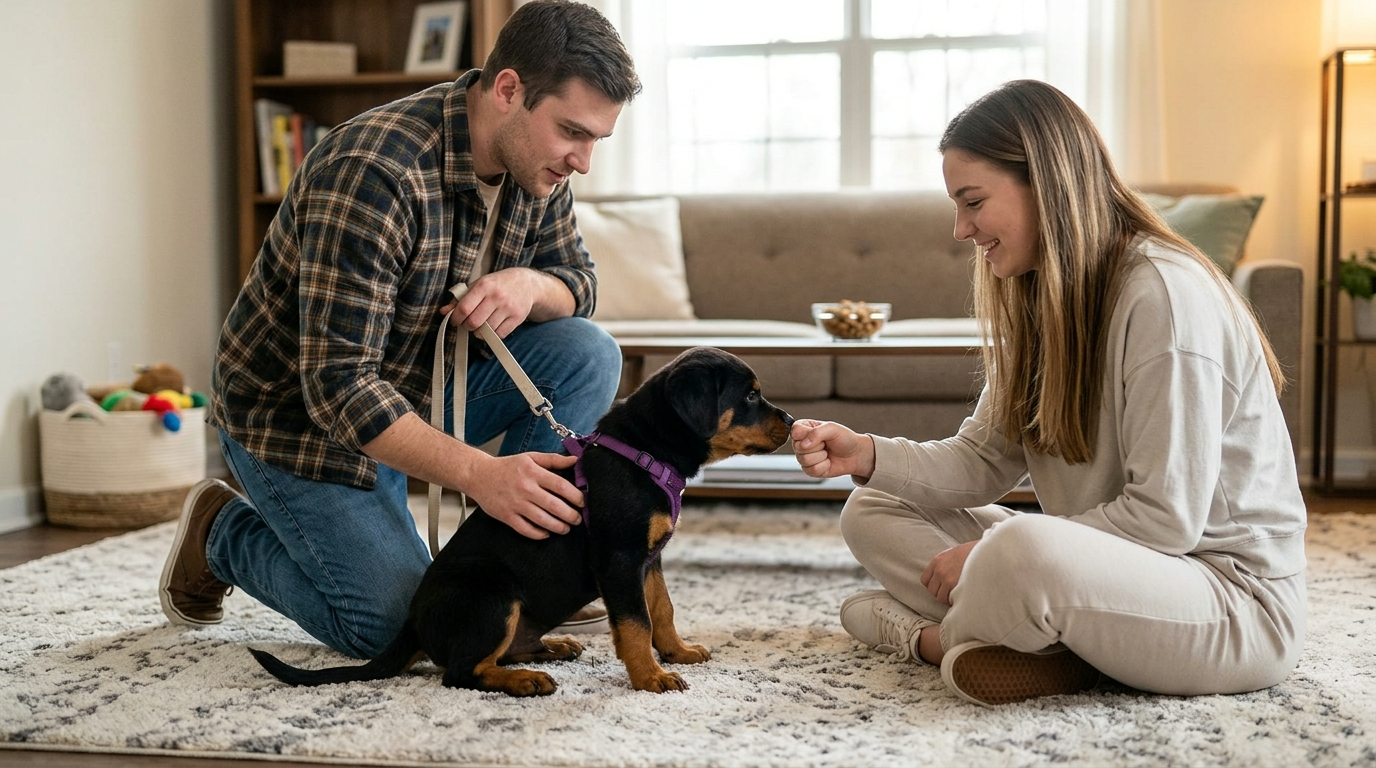
Learning how to introduce Rottweiler puppy safely to other dogs is one of the most important early training steps. Because Rottweilers grow into strong, confident adults, early social experiences shape lifelong behavior. Therefore, calm and structured introductions prevent fear, aggression, and overstimulation.
Puppies naturally feel curious, yet they can also feel unsure in new situations. When introductions happen too quickly, negative impressions may form. However, positive and controlled meetings build confidence and social intelligence.
To introduce Rottweiler puppy safely, focus on gradual exposure rather than forced interaction. Supervision, neutral environments, and patient timing make a significant difference. With thoughtful planning, your puppy can learn to greet other dogs politely and confidently.
Strong early social foundations support balanced adult temperament and reliable behavior.
Why Early Socialization Matters
Socialization teaches puppies how to communicate appropriately with their own species. Because Rottweilers develop protective instincts, early exposure reduces unnecessary suspicion later.
When you introduce Rottweiler puppy safely, you help your dog interpret body language correctly. Play bows, tail positions, and vocal cues become easier to understand through experience.
The ideal window for positive exposure begins between 8 and 16 weeks. During this stage, puppies remain more open to new interactions. However, socialization should continue well beyond this early period.
Poor early experiences can create lasting fear. Therefore, careful management protects emotional stability.
Positive first meetings shape trust, confidence, and adaptability.
Choosing the Right First Dog to Meet
Selecting the right introduction partner is critical. Calm, well-socialized adult dogs make the best mentors.
To introduce Rottweiler puppy safely, avoid overly dominant or hyperactive dogs initially. Instead, choose balanced companions who display relaxed body language.
Size differences do not always matter, but temperament does. A stable adult dog often corrects inappropriate play gently without causing fear.
Avoid dog parks for first meetings. Chaotic environments overwhelm puppies easily.
Additionally, ensure the other dog is healthy and vaccinated. Safety remains the top priority.
Thoughtful selection sets the tone for future positive interactions.
Preparing the Environment for Success
Location influences behavior significantly. Neutral territory prevents territorial reactions from either dog.
When you introduce Rottweiler puppy safely, choose open spaces such as quiet parks or fenced yards unfamiliar to both dogs.
Keep both dogs on loose leashes initially. Tension in the leash can transfer anxiety.
Allow brief sniffing while maintaining control. If either dog stiffens or growls, calmly create distance.
Avoid crowded or noisy settings at first. Gradual exposure supports confidence.
Calm environments encourage relaxed body language and natural communication.
Reading Canine Body Language
Understanding body signals helps prevent escalation. Loose wagging tails and relaxed posture suggest comfort.
To introduce Rottweiler puppy safely, watch for signs of stress such as stiff legs, raised hackles, or fixed staring. These cues signal discomfort.
Playful movements include bouncing, play bows, and soft eye contact. Interrupt if play becomes too intense.
High-pitched yelps often indicate overexcitement. Short breaks help restore balance.
Remain calm throughout the interaction. Dogs sense tension quickly.
Observing carefully ensures safe, positive exchanges.
Managing Leash Introductions Properly
Leashes provide control but can create tension if handled poorly. Hold the leash loosely to prevent restrictive pressure.
When you introduce Rottweiler puppy safely, approach gradually rather than head-on. Parallel walking reduces direct confrontation.
Allow short sniffing sessions, then separate briefly. Repeated short greetings build familiarity.
Reward calm behavior immediately. Praise reinforces positive responses.
Avoid pulling abruptly unless safety demands it. Sudden corrections may increase anxiety.
Controlled leash meetings build initial trust before off-leash interaction begins.
Transitioning to Supervised Off-Leash Play
Once both dogs appear relaxed, supervised off-leash interaction may begin in a secure area.
To introduce Rottweiler puppy safely, ensure fences remain secure and distractions minimal.
Keep sessions brief at first. Five to ten minutes often suffices for early meetings.
Monitor energy levels closely. If play escalates too quickly, separate calmly.
Encourage positive play patterns. Interrupt mounting or excessive dominance behaviors gently.
Short, structured sessions build healthy play habits and prevent overstimulation.
Gradual progression fosters confidence without overwhelming the puppy.
Handling Fear or Overexcitement
Some puppies may freeze or retreat during first meetings. Others may become overly excited.
When you introduce Rottweiler puppy safely, avoid forcing interaction. Instead, create space and allow gradual approach.
Reward small signs of bravery, such as sniffing or relaxed posture.
For overly excited puppies, practice brief obedience commands during breaks. Sit and focus cues help restore calmness.
Patience remains essential. Confidence builds through repetition.
Balanced exposure prevents negative associations from forming.
Introducing Household Dogs
Introducing a puppy to resident dogs requires extra planning. Established dogs may guard space or resources.
To introduce Rottweiler puppy safely in the home, begin with neutral territory meetings outside.
After successful outdoor interactions, allow supervised indoor exploration.
Separate feeding areas prevent food guarding. Provide individual resting spaces to reduce competition.
Supervise all early interactions closely. Interrupt tension immediately.
Gradual integration strengthens trust between household dogs.
Clear structure reduces misunderstandings and builds harmony.
Preventing Resource Guarding Early
Resource guarding can emerge if boundaries remain unclear.
When you introduce Rottweiler puppy safely to other dogs, manage toys and treats carefully.
Remove high-value items during early meetings. Once trust develops, reintroduce shared play objects gradually.
Teach your puppy trade commands. Exchanging toys for rewards prevents possessiveness.
Consistent reinforcement of calm sharing habits builds cooperation.
Early prevention eliminates larger problems later.
Ongoing Socialization Beyond Puppyhood
Socialization does not end after a few meetings. Continued exposure reinforces stability.
To introduce Rottweiler puppy safely long-term, vary meeting partners and environments gradually.
Practice obedience during social outings. Structured interactions strengthen emotional control.
Adolescent phases may temporarily increase testing behavior. Maintain consistent expectations during these stages.
Positive experiences build lasting resilience.
Long-term social balance depends on ongoing guidance and patience.
Common Mistakes to Avoid
Rushing introductions often creates fear. Slow progression builds confidence.
When you introduce Rottweiler puppy safely, avoid forcing physical contact.
Do not assume play always equals safety. Monitor closely for signs of stress.
Avoid punishment during early social experiences. Negative associations may form quickly.
Stay calm and observant rather than reactive.
Thoughtful pacing prevents unnecessary setbacks.
Conclusion: Building Positive Canine Relationships
Learning how to introduce Rottweiler puppy safely ensures strong social skills and emotional balance. Early positive interactions shape adult temperament and reduce behavioral challenges.
Through calm planning, structured exposure, and consistent supervision, puppies develop confidence and communication skills.
Each successful meeting strengthens resilience and trust.
Patience and preparation protect both your puppy and other dogs from negative experiences.
When handled thoughtfully, early social introductions create a foundation for lifelong stability, cooperation, and peaceful coexistence.
FAQ
1. At what age should a Rottweiler puppy meet other dogs?
Most puppies can begin safe social meetings after vaccinations, typically around 8 to 12 weeks.
2. Should I take my puppy to a dog park immediately?
Dog parks can overwhelm young puppies. Structured, calm introductions work better initially.
3. What if my puppy seems scared during introductions?
Create distance, remain calm, and allow gradual re-engagement without pressure.
4. How long should first meetings last?
Short sessions of five to ten minutes help prevent overstimulation.
5. Can early socialization prevent aggression later?
Positive and consistent exposure greatly reduces fear-based reactions and supports balanced behavior.