
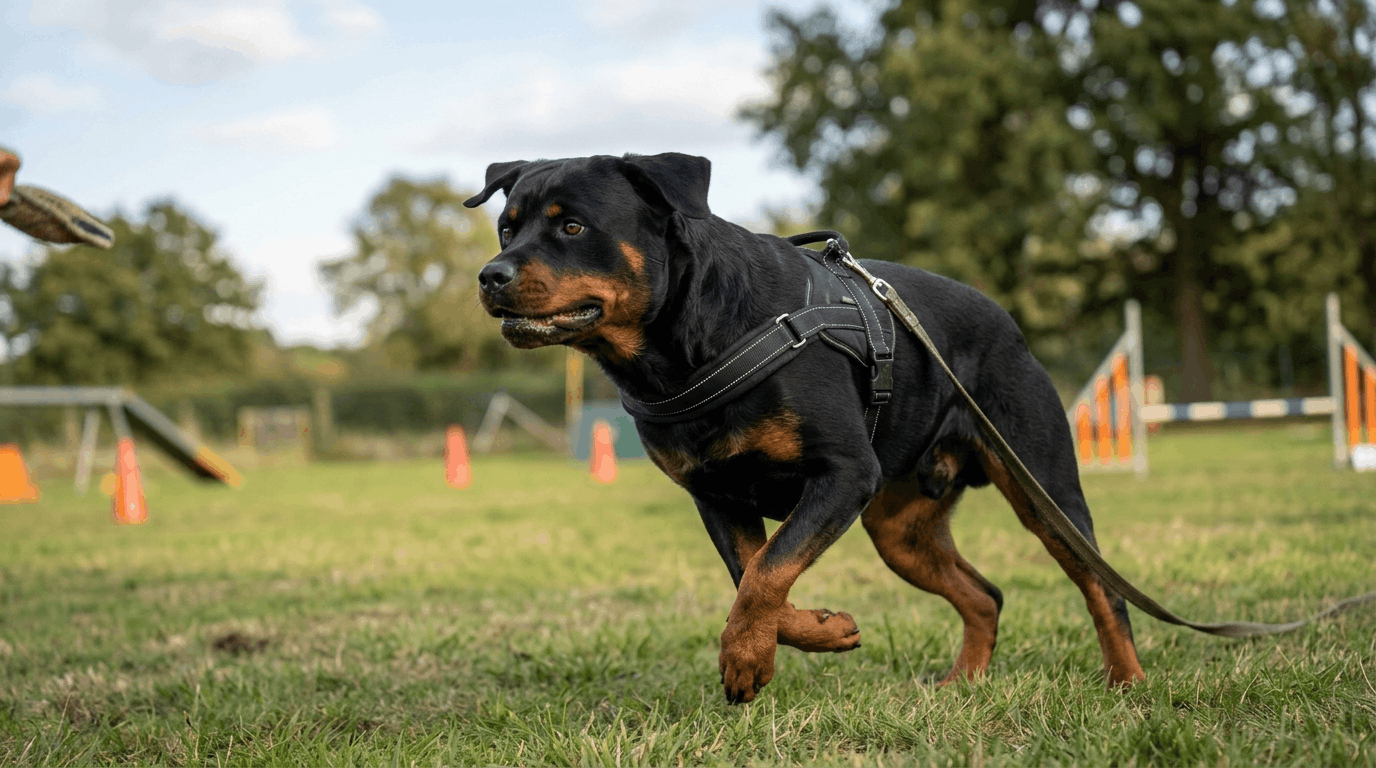
Understanding rottweiler drive motivation focus is the key to unlocking your dog’s full potential at home and during training. While rottweilers are naturally powerful and intelligent, their behavior depends heavily on how their energy and instincts are managed. When you learn how to channel their drive properly, you create a dog that is not only obedient but also calm, focused, and highly responsive.
Many owners struggle because they try to suppress energy instead of guiding it. However, rottweilers thrive when their drive is given direction. By working with their natural instincts, rather than against them, you can shape better behavior and build a stronger bond. As a result, rottweiler drive motivation focus becomes the foundation for long-term success in training and daily life.
Understanding The Natural Drive Of A Rottweiler
Rottweilers are bred to work, protect, and stay alert. Because of this, they naturally have a strong drive that pushes them to stay active and engaged. This drive is not a problem; instead, it is a powerful advantage when managed correctly. When you understand rottweiler drive motivation focus, you begin to see your dog’s energy as an opportunity rather than a challenge.
Drive often shows up as excitement, curiosity, or even stubbornness. For example, a dog that pulls on the leash is not always misbehaving; sometimes, they simply have unchanneled energy. Therefore, recognizing the difference between disobedience and unmanaged drive helps you respond more effectively.
Additionally, every rottweiler has a slightly different level of drive. Some may be highly energetic, while others are more relaxed. However, all benefit from structured outlets that give their energy a purpose. When you provide these outlets, rottweiler drive motivation focus becomes easier to manage and refine.
Why Motivation Is The Key To Better Behavior
Motivation plays a central role in shaping behavior. Without it, even the most intelligent dog may ignore commands. When you tap into what your rottweiler values, whether it is food, toys, or praise, you create a powerful incentive for learning.
Positive reinforcement works best because it encourages your dog to repeat good behavior. For instance, rewarding a calm sit or a focused heel builds habits over time. As a result, rottweiler drive motivation focus improves naturally through repetition and reward.
However, motivation is not just about treats. Engagement also matters. When training feels like a game, your dog becomes more enthusiastic and attentive. This approach turns training into a shared experience rather than a chore, strengthening both behavior and connection.
Consistency is essential here. If rewards are given randomly or commands change often, your dog may lose interest. Therefore, clear expectations and consistent reinforcement ensure that rottweiler drive motivation focus continues to develop in a positive direction.
Building Focus Through Daily Training Habits
Focus is what turns energy into controlled behavior. Without focus, even a well-trained dog can become distracted. That is why daily training habits are crucial for maintaining rottweiler drive motivation focus.
Start with simple exercises that encourage attention. For example, ask your dog to make eye contact before giving a command. This small habit teaches them to look to you for guidance. Over time, this improves responsiveness in more challenging situations.
Short training sessions are often more effective than long ones. Because rottweilers are intelligent, they can become bored if sessions drag on. Instead, keep training engaging and varied. This approach keeps your dog mentally stimulated while reinforcing key behaviors.
Distractions should also be introduced gradually. Begin in a quiet environment, then slowly add more challenging settings. This step-by-step process helps your dog maintain focus even in busy environments. As a result, rottweiler drive motivation focus becomes reliable in real-world situations.
Channeling Energy Into Positive Outlets
Energy needs direction, especially for a powerful breed like the rottweiler. Without proper outlets, excess energy can lead to unwanted behaviors such as chewing, barking, or jumping. However, when energy is channeled correctly, it becomes a tool for growth.
Physical exercise is one of the most effective ways to manage energy. Daily walks, structured play, and controlled activities help burn off excess energy. At the same time, these activities reinforce discipline and obedience.
Mental stimulation is equally important. Puzzle toys, scent games, and training drills keep your dog’s mind active. When both physical and mental needs are met, rottweiler drive motivation focus improves significantly.
Additionally, structured play can be used as a reward. For example, a game of tug or fetch after a successful command reinforces positive behavior. This method links energy release with obedience, creating a balanced approach to training.
Balancing Excitement And Calm Behavior
While energy is important, balance is essential. A well-trained rottweiler knows when to be active and when to relax. Teaching this balance is a key part of developing rottweiler drive motivation focus.
Start by rewarding calm behavior just as much as active behavior. For instance, praise your dog when they settle quietly on their bed. This teaches them that calmness is also valuable.
Transitions are also important. After playtime or exercise, guide your dog into a calm state. Use commands like “place” or “settle” to signal the shift. Over time, your dog learns to switch between energy and relaxation with ease.
Consistency helps reinforce this balance. When expectations remain clear, your dog becomes more predictable and easier to manage. As a result, rottweiler drive motivation focus becomes well-rounded rather than overly intense.
Avoiding Common Mistakes That Reduce Focus
Many training challenges come from simple mistakes. For example, inconsistent commands can confuse your dog and reduce focus. Similarly, overusing treats without clear structure can weaken motivation over time.
Another common issue is a lack of patience. Training takes time, and rushing the process can lead to frustration for both you and your dog. Instead, focus on steady progress and celebrate small improvements.
Ignoring mental stimulation is another mistake. Physical exercise alone is not enough for a breed this intelligent. Without mental challenges, your dog may lose focus and develop unwanted habits. Therefore, always include activities that engage the mind.
By avoiding these mistakes, you create a clearer path for rottweiler drive motivation focus to develop naturally and consistently.
Strengthening The Bond Through Engagement
A strong bond enhances every aspect of training. When your dog trusts you, they are more likely to follow your lead. This connection is built through consistent interaction and positive experiences.
Spending time together during training, walks, and play strengthens this bond. Additionally, clear communication helps your dog understand what you expect. When your tone is calm and confident, your dog responds more positively.
Engagement also means being present. Pay attention to your dog’s signals and adjust your approach when needed. This responsiveness builds trust and improves communication. Over time, rottweiler drive motivation focus becomes stronger because your dog sees you as a reliable guide.
Adapting Training As Your Rottweiler Grows
Training needs change as your dog matures. Puppies often have shorter attention spans, while adult dogs can handle more complex tasks. Adapting your approach ensures continued progress.
For younger dogs, focus on basic commands and simple routines. As they grow, introduce more advanced training and challenges. This gradual progression keeps your dog engaged and prevents boredom.
Energy levels may also shift over time. Therefore, adjust exercise and training routines to match your dog’s needs. By staying flexible, you maintain effective rottweiler drive motivation focus throughout each stage of life.
Regular evaluation helps identify areas for improvement. If certain behaviors regress, revisit basic training and reinforce key habits. This ongoing process ensures long-term success.
Creating A Structured Environment For Success
A structured environment supports consistent behavior. When your dog knows what to expect, they feel more secure and focused. This structure includes routines, boundaries, and clear expectations.
For example, consistent feeding times and regular walks create stability. Additionally, designated spaces for rest and play help your dog understand where certain behaviors are appropriate.
Clear boundaries also reduce confusion. When rules are enforced consistently, your dog learns faster and behaves more predictably. As a result, rottweiler drive motivation focus becomes easier to maintain.
Combining structure with positive reinforcement creates a balanced approach. Your dog understands both what is expected and why it matters, leading to better overall behavior.
Conclusion
Unlocking rottweiler drive motivation focus is not about controlling your dog but about guiding their natural instincts. When you understand their energy, provide clear motivation, and build strong focus, you create a well-balanced companion that thrives in any environment.
Although the process takes time and consistency, the results are lasting. A rottweiler with properly managed drive is confident, responsive, and deeply connected to their owner. By staying patient and committed, you can transform energy into strength and create a dog that is both powerful and controlled.
FAQ
1. Why does my rottweiler lose focus during training?
Distractions, lack of motivation, or overly long sessions can reduce attention. Short, engaging sessions help improve focus.
2. How can I increase my dog’s motivation?
Use rewards your dog values, such as treats, toys, or praise, and keep training sessions fun and interactive.
3. What type of exercise is best for this breed?
A mix of physical activities and mental challenges works best to manage energy and maintain balanced behavior.
4. Can older rottweilers still improve their focus?
Yes, with consistent training and patience, dogs of any age can develop better focus and responsiveness.
5. How often should I train my rottweiler?
Daily short sessions combined with routine activities help reinforce habits and improve long-term results.