
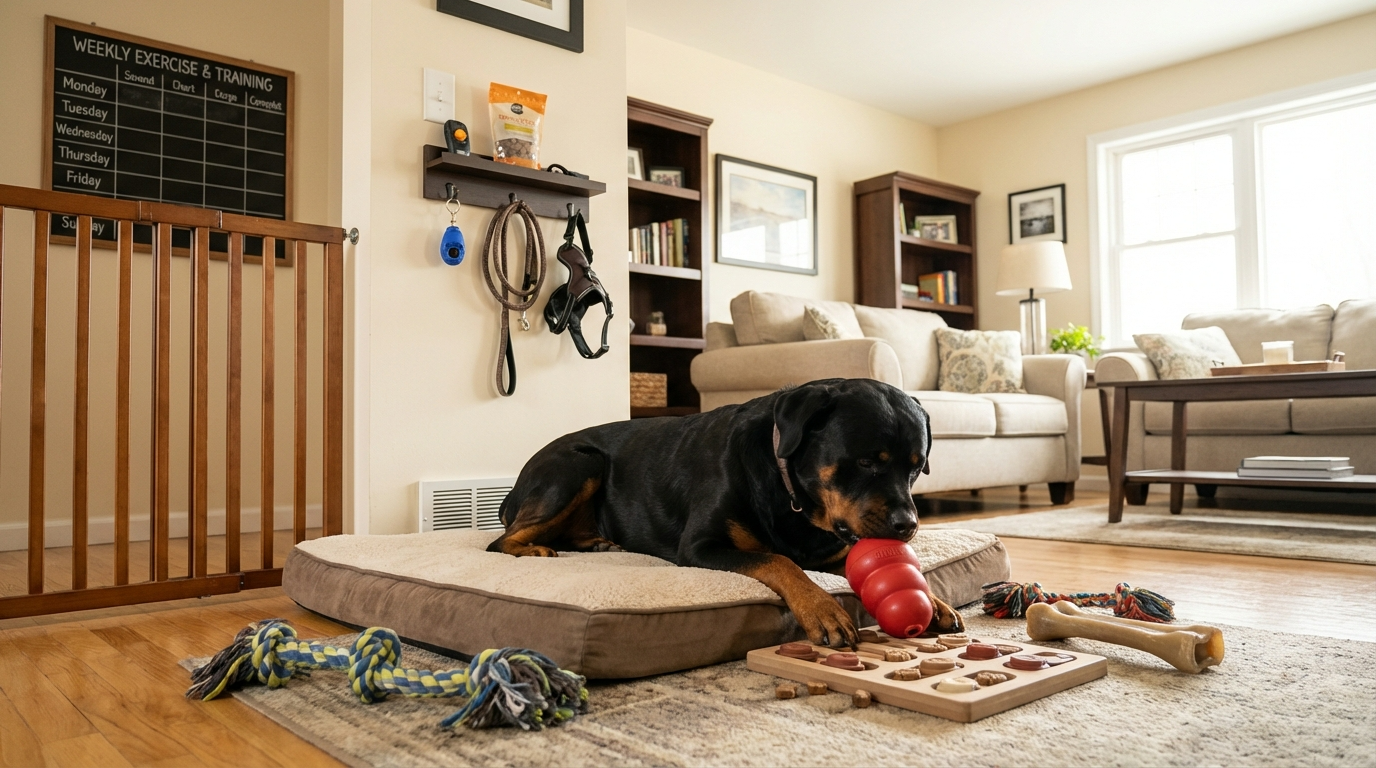
If you are trying to stop destructive behavior in your teenage dog, you are not alone. The adolescent stage can feel like a storm blowing through your living room. Shoes disappear. Couch corners get shredded. Trash cans become treasure chests.
It can feel personal. However, it is not. Teenage dogs are not plotting against you. They are navigating a confusing developmental phase. Hormones shift. Confidence grows. Impulse control weakens.
The good news is simple. You can stop destructive behavior with the right combination of structure, enrichment, and clear communication. Think of adolescence like remodeling a house. It gets messy before it becomes stronger.
With patience and consistency, your dog can move from chaos to control.
Why Teenage Dogs Develop Destructive Habits
Before you stop destructive behavior, you must understand why it starts. Adolescent dogs experience rapid mental and physical changes. Their bodies mature quickly. However, their brains are still developing.
During this stage, curiosity intensifies. Energy levels spike. Boundaries are tested. As a result, destructive habits often appear.
Boredom is a major trigger. A teenage dog left without stimulation will create entertainment. Unfortunately, that entertainment may involve your furniture.
Additionally, frustration plays a role. If exercise or social needs are unmet, energy builds like pressure in a sealed container. Eventually, it explodes through chewing or digging.
Therefore, destructive behavior is often a symptom, not the core problem.
Shift Your Mindset to Stop Destructive Behavior
Many owners respond to destruction with anger. While frustration is understandable, punishment alone rarely solves the issue.
To stop destructive behavior, shift from reaction to prevention. Instead of asking, “Why is my dog doing this to me?” ask, “What need is not being met?”
This mindset changes everything. You move from conflict to problem-solving.
Teenage dogs need guidance, not intimidation. Calm leadership builds trust. Fear creates confusion.
When you approach training with clarity, progress accelerates.
Increase Physical Exercise Strategically
Exercise is a powerful tool when you want to stop destructive behavior. However, it must be structured.
Random bursts of activity may temporarily tire your dog. Yet mental engagement is equally important.
Daily walks provide more than movement. They offer sensory stimulation. Allow sniff breaks. Encourage exploration. Controlled freedom satisfies curiosity.
Additionally, short play sessions burn energy safely. Tug, fetch, or flirt pole exercises work well. However, avoid overstimulation before rest periods.
Balanced activity reduces destructive urges. A satisfied dog rests more easily.
Mental Enrichment to Stop Destructive Behavior
Physical exercise alone is not enough. Teenage dogs crave mental challenges.
Puzzle toys are excellent tools. Food-dispensing toys require focus. Snuffle mats encourage natural foraging instincts.
You can also hide treats around the house for scent games. Because dogs rely heavily on smell, this activity engages their brains deeply.
Training sessions are another form of enrichment. Practice obedience skills. Teach new tricks. Keep sessions short and rewarding.
When the brain is engaged, boredom fades. As boredom decreases, destructive behavior often follows.
Create Clear Boundaries Indoors
If you want to stop destructive behavior, your home must support good habits.
Use baby gates to limit access to tempting areas. Store shoes in closed closets. Keep trash bins secured.
Management prevents rehearsal of bad behavior. Every time your dog successfully chews a forbidden item, the habit strengthens.
Crate training can also help when introduced properly. A crate should feel like a safe retreat, not punishment.
By controlling the environment, you reduce opportunities for destruction.
Teach Appropriate Chewing Alternatives
Chewing is natural. Especially during adolescence, dogs explore the world with their mouths.
Instead of trying to eliminate chewing entirely, redirect it. Provide durable chew toys suited to your dog’s size and strength.
Rotate toys regularly. Novelty keeps interest high.
If your dog grabs something inappropriate, calmly trade for a proper chew item. Reward the exchange. Over time, this teaches better choices.
To stop destructive behavior, you must replace the habit with a healthier outlet.
Establish a Predictable Daily Routine
Teenage dogs thrive on routine. Predictability reduces anxiety.
Feed meals at consistent times. Schedule walks and play sessions regularly. Plan quiet rest periods.
When life feels structured, your dog relaxes more easily. In contrast, chaotic schedules increase restlessness.
Routine acts like guardrails on a winding road. It keeps behavior from veering off course.
Consistency builds confidence. Confidence reduces destructive impulses.
Address Separation-Related Destruction
Sometimes destructive behavior occurs only when you leave. In that case, anxiety may be involved.
Gradual desensitization helps. Practice short departures. Pair absences with positive experiences, such as a stuffed food toy.
Avoid dramatic goodbyes. Keep greetings calm upon return.
If anxiety is severe, professional guidance may be needed. Early intervention prevents escalation.
Understanding the trigger allows you to stop destructive behavior effectively.
Avoid Common Mistakes That Reinforce Destruction
Certain responses unintentionally strengthen bad habits.
Yelling after discovering damage teaches little. Your dog connects punishment to your return, not the earlier act.
Chasing your dog when they grab an item may turn it into a game. Instead, remain calm and redirect.
Additionally, inconsistent rules confuse adolescent dogs. If couch access changes daily, clarity disappears.
Stopping destructive behavior requires steady communication.
Build Impulse Control Gradually
Impulse control develops slowly. However, you can strengthen it through training.
Practice commands like “leave it,” “wait,” and “place.” Reward patience generously.
Start in low-distraction environments. Then increase difficulty gradually.
Impulse control is like a muscle. Repetition strengthens it. As control improves, destructive behavior declines.
Short sessions yield better results than long, exhausting drills.
Provide Safe Social Outlets
Teenage dogs often seek stimulation from other dogs or people. Controlled socialization satisfies that need.
Arrange playdates with well-matched companions. Supervise interactions closely.
Structured classes also provide mental and social engagement.
When social needs are fulfilled, restlessness decreases.
Balanced exposure supports emotional development.
Monitor Progress and Adjust
Progress may not be linear. Some days feel effortless. Others feel chaotic.
Track patterns. Does destruction occur after missed walks? During certain times of day?
Identifying triggers allows targeted solutions.
Celebrate small wins. Fewer chewed items signal improvement.
Stopping destructive behavior takes patience. However, consistency compounds results.
Conclusion
Learning how to stop destructive behavior in teenage dogs requires understanding, structure, and consistency. Adolescence is a temporary phase marked by energy, curiosity, and developing impulse control. By meeting your dog’s physical and mental needs, setting clear boundaries, and reinforcing appropriate behavior, you transform chaos into cooperation. Although the process demands patience, the reward is a balanced, confident adult dog. With steady leadership and thoughtful planning, destructive habits fade, and harmony returns to your home.
FAQ
- Why do teenage dogs suddenly become destructive?
Adolescence brings hormonal changes, increased curiosity, and weaker impulse control. - How long does the destructive phase last?
Most dogs mature between 18 and 24 months, though training influences the timeline. - Should I punish my dog for chewing furniture?
Punishment after the fact is ineffective. Focus on prevention and redirection instead. - Can enrichment alone stop destructive behavior?
Enrichment helps greatly, but structure and clear boundaries are also essential. - When should I seek professional help?
If destruction becomes severe or linked to anxiety, consult a trainer or behavior specialist.