
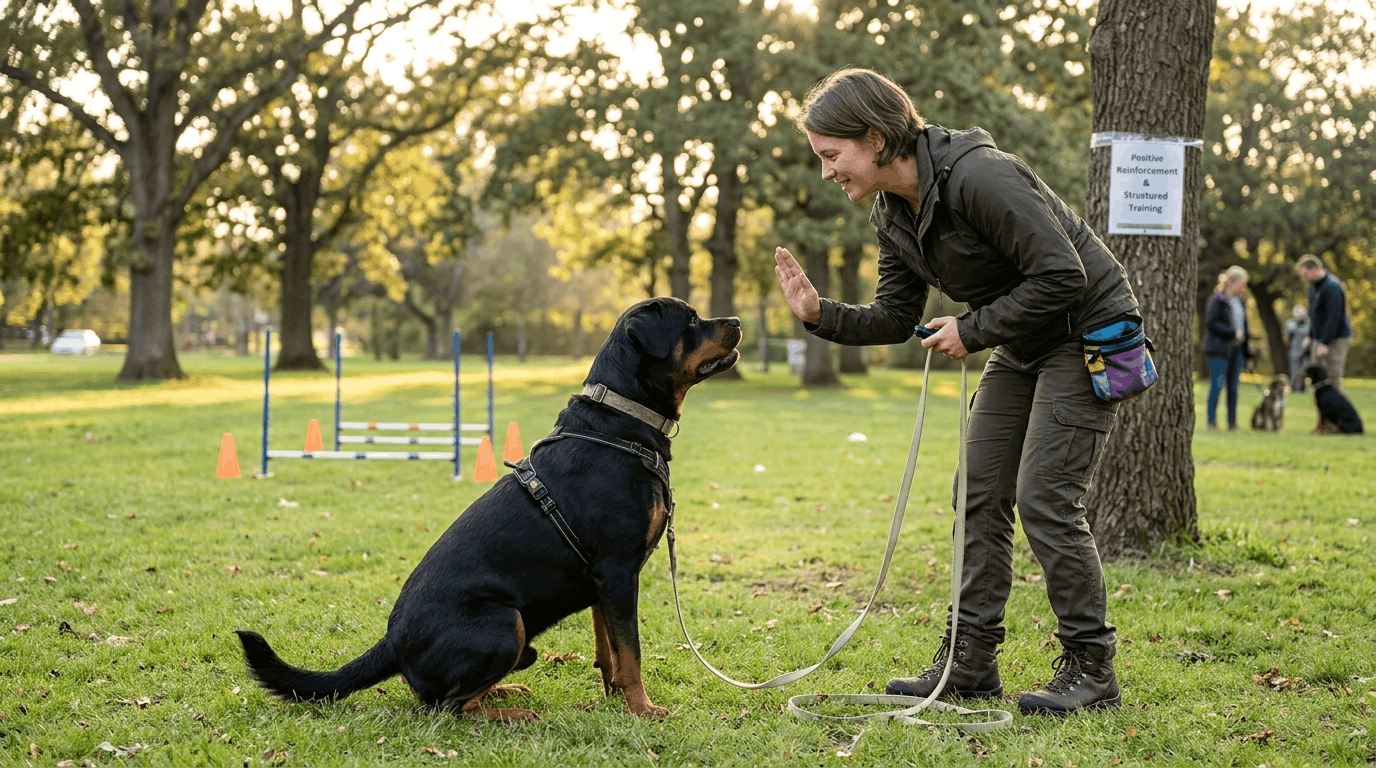
A unified rottweiler training approach is one of the most powerful ways to shape a calm, obedient, and confident dog. Rottweilers are intelligent and highly responsive, yet they can become confused when different people use different rules or commands. Therefore, creating a consistent system across the entire household helps your dog understand expectations clearly and respond reliably in every situation.
Many training problems do not come from the dog but from inconsistency in how people communicate. For example, if one person allows jumping while another corrects it, your dog receives mixed signals. Over time, this confusion can lead to stubborn behavior or slow learning. However, when a unified rottweiler training approach is in place, your dog learns faster and behaves more predictably.
Why Consistency Builds Better Rottweiler Behavior
Consistency is the foundation of effective training. Rottweilers are quick learners, but they rely on repetition and clarity to understand what is expected. When rules change from person to person, your dog struggles to form reliable habits. That is why a unified rottweiler training approach is essential for long-term success.
In a consistent environment, commands, routines, and expectations remain stable. As a result, your dog feels more secure and confident. This stability reduces anxiety and helps your rottweiler focus on learning rather than guessing what behavior is correct.
Additionally, consistency strengthens trust. When your dog knows what to expect, they begin to rely on your guidance. This trust improves responsiveness and creates a stronger bond between your dog and every family member.
Aligning Family Members With One Training Plan
A successful unified rottweiler training approach requires cooperation from everyone in the household. Each person must understand and follow the same rules, commands, and expectations. Without this alignment, even the best training techniques can fail.
Start by having a simple discussion about your goals. Decide which behaviors are acceptable and which are not. For example, agree on whether your dog can jump on furniture or greet people excitedly. Once these decisions are made, everyone must apply them consistently.
Commands should also remain the same. If one person says “down” and another says “lie,” your dog may become confused. Therefore, choose clear words and stick to them. This small step strengthens your unified rottweiler training approach and helps your dog respond faster.
Establishing Clear Rules And Boundaries
Rules and boundaries provide structure, which is essential for a rottweiler. Without clear limits, your dog may test behaviors or develop bad habits. However, when boundaries are well defined, your dog understands their role in the home.
For example, decide where your dog is allowed to go and where they should not. If certain rooms are off-limits, enforce that rule consistently. Similarly, establish guidelines for behaviors such as barking, chewing, or jumping.
Consistency is key when applying these rules. If boundaries change depending on the situation, your dog may become confused. On the other hand, a unified rottweiler training approach ensures that rules remain steady, making it easier for your dog to learn and follow them.
Creating Daily Routines That Support Training
Routines play a major role in reinforcing training. Rottweilers thrive in predictable environments where daily activities follow a consistent pattern. Therefore, incorporating structure into your routine supports a unified rottweiler training approach.
Feeding times, walks, and training sessions should happen at similar times each day. This predictability helps your dog feel secure and reduces stress. Additionally, it reinforces discipline by creating clear expectations.
Exercise is another important part of the routine. Rottweilers have high energy levels, so regular physical activity helps prevent boredom and unwanted behavior. At the same time, mental stimulation through training and games keeps your dog engaged.
When routines remain consistent, your dog becomes calmer and more focused. This stability strengthens your unified rottweiler training approach and improves overall behavior.
Using Consistent Communication And Body Language
Communication goes beyond words. Rottweilers pay close attention to tone, posture, and body language. Therefore, consistency in these areas is just as important as using the same commands.
For example, a calm and confident tone encourages positive responses, while a harsh or inconsistent tone may create confusion. Similarly, clear hand signals can reinforce verbal commands and improve understanding.
When everyone uses similar communication styles, your dog receives clear and consistent messages. This reduces uncertainty and helps your dog respond more reliably. As a result, a unified rottweiler training approach becomes more effective.
Reinforcing Behavior With Positive Methods
Positive reinforcement is a key part of any successful training plan. When your dog performs a desired behavior, reward them immediately with praise, treats, or play. This creates a strong connection between the behavior and a positive outcome.
Over time, your dog will repeat behaviors that lead to rewards. This method is far more effective than punishment, which can create fear and damage trust. Therefore, focus on guiding your dog toward success rather than correcting mistakes harshly.
Consistency in rewards is also important. If one person rewards a behavior while another ignores it, your dog may lose motivation. However, when everyone follows the same system, your unified rottweiler training approach produces better results.
Avoiding Common Mistakes In Training
Even with the best intentions, mistakes can happen. One common issue is inconsistency in enforcing rules. For example, allowing a behavior one day and correcting it the next confuses your dog and slows progress.
Another mistake is overusing treats without structure. While rewards are important, they should be used strategically. Gradually transitioning to praise helps maintain motivation without creating dependence on food.
Lack of patience can also affect training. Rottweilers learn quickly, but they still need time to develop habits. Rushing the process can lead to frustration. Instead, focus on steady progress and consistent practice.
By avoiding these mistakes, you strengthen your unified rottweiler training approach and create a clearer path for your dog to succeed.
Adapting Training As Your Rottweiler Grows
Training should evolve as your dog matures. Puppies require basic commands and simple routines, while adult rottweilers can handle more advanced training. Adjusting your approach ensures continued growth and engagement.
For younger dogs, keep sessions short and engaging. As your dog gains experience, introduce more complex commands and distractions. This progression keeps training challenging and prevents boredom.
Energy levels may also change over time. Therefore, adjust exercise and training routines accordingly. By staying flexible, you maintain a strong unified rottweiler training approach throughout each stage of your dog’s life.
Regular evaluation helps identify areas for improvement. If certain behaviors regress, revisit basic training and reinforce key habits. This ongoing process ensures long-term success.
Building Strong Relationships Through Training
Training is not just about obedience; it is also about building a strong relationship with your dog. When your rottweiler trusts and respects you, they are more likely to follow your guidance.
Spending time together during training, walks, and play strengthens this bond. Additionally, clear communication helps your dog understand what you expect. Over time, this connection improves both behavior and responsiveness.
When the entire family participates, your dog develops trust with everyone. This shared interaction reinforces your unified rottweiler training approach and creates a more balanced dynamic in the home.
Conclusion
A unified rottweiler training approach is essential for raising a well-behaved and confident dog. By aligning family members, establishing clear rules, and maintaining consistent routines, you create an environment where your rottweiler can thrive.
Although it takes effort and commitment, the results are worth it. A consistent approach reduces confusion, improves behavior, and strengthens the bond between your dog and your family. With patience and teamwork, your unified rottweiler training approach becomes the foundation for long-term success and a harmonious home.
FAQ
1. Why is consistency important in training a rottweiler?
Consistency helps your dog understand expectations clearly and prevents confusion during learning.
2. How do I get my family to follow the same training rules?
Discuss expectations together and agree on commands, routines, and boundaries to ensure everyone stays aligned.
3. Can inconsistent training cause behavior problems?
Yes, mixed signals can lead to confusion, slower learning, and unwanted habits.
4. How long does it take to see results with consistent training?
Results vary, but steady improvement usually appears within a few weeks of consistent practice.
5. Should I use treats every time during training?
Use treats initially, then gradually transition to praise and play to maintain long-term motivation.