
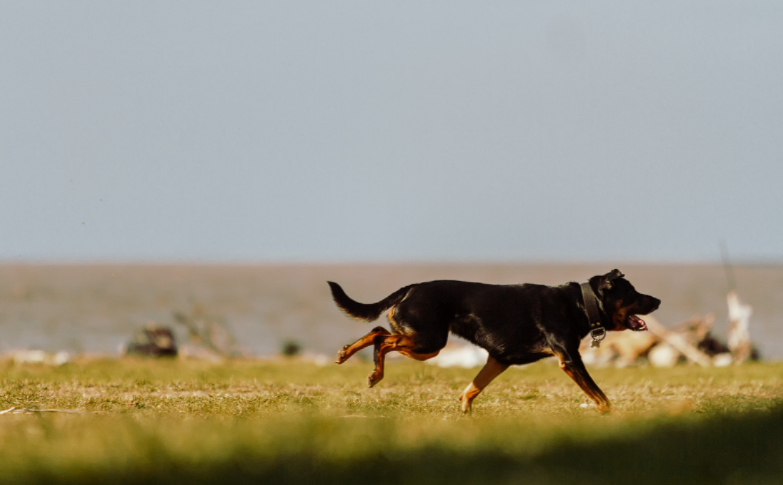
A well-balanced heel transforms walks from chaotic to calm. When your dog walks beside you — not ahead, not lagging — both of you move as a team. The heel position isn’t about control; it’s about communication, trust, and shared rhythm.
Teaching your dog to heel with balance and focus creates more than good manners. It builds awareness, patience, and confidence — for both you and your dog. Whether you’re training a young puppy or refining an adult dog’s skills, structured heel work turns daily walks into purposeful practice.
Understanding the Heel Position
The “heel” position means your dog walks beside your left leg, matching your pace without tension on the leash. Their shoulder should align roughly with your leg, not their nose or tail.
A balanced heel isn’t stiff or mechanical. It’s relaxed and responsive — your dog checks in with you naturally while staying calm and connected. This relationship-based approach helps prevent pulling, lunging, or weaving during walks.
1. Setting the Foundation Indoors
Start heel training in a distraction-free environment. Indoors or in your backyard, your dog can focus on your cues without competing stimuli.
Step-by-Step Foundation
- Start with treats or a toy in your left hand.
- Call your dog to your left side and say “Heel.”
- Take one or two slow steps forward.
- Reward instantly when your dog stays beside you.
- Gradually add more steps between rewards.
Keep sessions short — about 5 minutes — to build positive repetition without fatigue. This early stage builds trust and muscle memory.
2. Use Clear Visual and Verbal Cues
Dogs respond best to consistent, predictable cues. Pair your verbal cue (“Heel”) with clear body language.
Trainer Tips
- Keep your shoulders and hips facing forward — turning communicates direction.
- Use a calm, firm tone for “Heel.”
- Avoid jerking or pulling the leash; guide gently with your movement.
- Reward when your dog maintains position voluntarily.
Over time, your body movement becomes the primary cue, creating effortless synchronization.
3. Reward the Zone of Success
Instead of focusing on what your dog does wrong, reinforce when they’re in the correct position — the “heel zone.”
How to Reinforce Effectively
- Deliver the treat by your left thigh, not in front of you.
- Mark the behavior with a word like “Yes!” the instant they align correctly.
- Randomize rewards (not every step) to encourage focus and self-control.
Your dog learns that staying near your leg, not forging ahead, earns positive outcomes.
4. Incorporate Structured Walking Patterns
Once your dog understands heel position indoors, move outdoors to structured walking drills that teach responsiveness and balance.
Drills to Practice
- Straight Line Walks: Focus on pace consistency. Reward periodically for calm alignment.
- 90-Degree Turns: Use body movement, not leash tugs, to guide your dog.
- Figure-Eight Patterns: Encourage your dog to adjust smoothly through curves.
- Stop-and-Sit: Each time you stop, cue “Sit” to reinforce attention and stillness.
These drills teach adaptability — your dog learns to adjust automatically to your rhythm and movement.
5. Manage Energy Before You Heel
Overexcited dogs can’t focus on structure. Before heel training, help your dog release excess energy through brief, controlled play or scent work.
Pre-Heel Energy Release Ideas
- 5 minutes of fetch or tug with structure (start/stop on cue).
- Short sniff session on a loose leash.
- Calm focus exercises like “Look at me.”
This ensures your dog starts heel training calm but alert, not overstimulated.
6. Use the Leash as a Communication Line
The leash should be loose but present — a light connection that transmits calm communication.
Leash Handling Tips
- Keep your left hand steady near your waistline.
- Avoid constant tension — let the leash form a soft “J” shape.
- Correct gently with movement, not force.
- If your dog drifts ahead, stop and wait for them to return beside you.
A relaxed leash teaches awareness and self-control far better than correction alone.
7. Balance Reward and Discipline
Heel training isn’t about punishment — it’s about feedback. But balanced training also includes gentle corrections when your dog breaks position.
How to Apply Fair Feedback
- If your dog pulls ahead: stop walking until they return to position.
- If they lag: encourage with light voice or leash cue.
- When they realign: praise calmly, then continue.
Clear, unemotional feedback builds understanding without creating fear or resistance.
8. Practice Variable Paces and Real-World Situations
To build reliability, heel work must go beyond quiet sidewalks. Practice in gradually more dynamic environments to strengthen focus under real-world distractions.
Progressive Training Plan
- Start in low-traffic areas.
- Practice different paces — slow, normal, and brisk.
- Add mild distractions like passing people or parked cars.
- Work near new sounds (traffic, dogs, children) at safe distances.
Always increase difficulty slowly. Confidence and success matter more than speed of progression.
9. Teach “Free” and “Heel” Transitions
Dogs need both structure and freedom. Teaching transitions between walking freely and heeling creates balance and clarity.
How to Practice
- Start walking in heel position.
- After several steps, release with “Free!” and let your dog explore.
- After a short break, call them back with “Heel.”
- Reward each successful transition.
This teaches your dog that heel isn’t permanent — it’s a structured moment of teamwork. They’ll learn to switch focus easily when needed.
10. Maintain Calm Energy Throughout
Dogs mirror your energy. If you’re tense, they’ll respond with anxiety or overexcitement. Calm consistency is your greatest training tool.
Keep the Walk Balanced
- Breathe evenly and move with purpose.
- Avoid talking excessively or issuing rapid-fire cues.
- Stay patient during setbacks — consistency builds reliability.
- End walks with calm decompression, like quiet sniffing or gentle petting.
A composed handler creates a composed dog. That’s the essence of a balanced heel.
Conclusion
Heel position dog training is more than obedience — it’s partnership in motion. A balanced heel reflects mutual awareness, respect, and communication. Through structured, positive sessions, your dog learns that staying beside you is both rewarding and reassuring.
Over time, the leash becomes symbolic — not of control, but of connection. When your dog chooses to walk calmly by your side, every step becomes teamwork in its purest form.
FAQ
1. How long does it take to train a reliable heel?
With consistent daily practice, most dogs show improvement in 2–4 weeks.
2. Should I use treats during every heel session?
Yes at first, then gradually reduce frequency as your dog learns the behavior.
3. What if my dog constantly pulls ahead?
Stop walking immediately until they return to your side — consistency corrects pulling over time.
4. Can I train heel on the right side instead?
Yes, but choose one side and stay consistent for clarity.
5. Is the heel command necessary for every walk?
No. Alternate between structured heel time and relaxed walking for a healthy balance.