
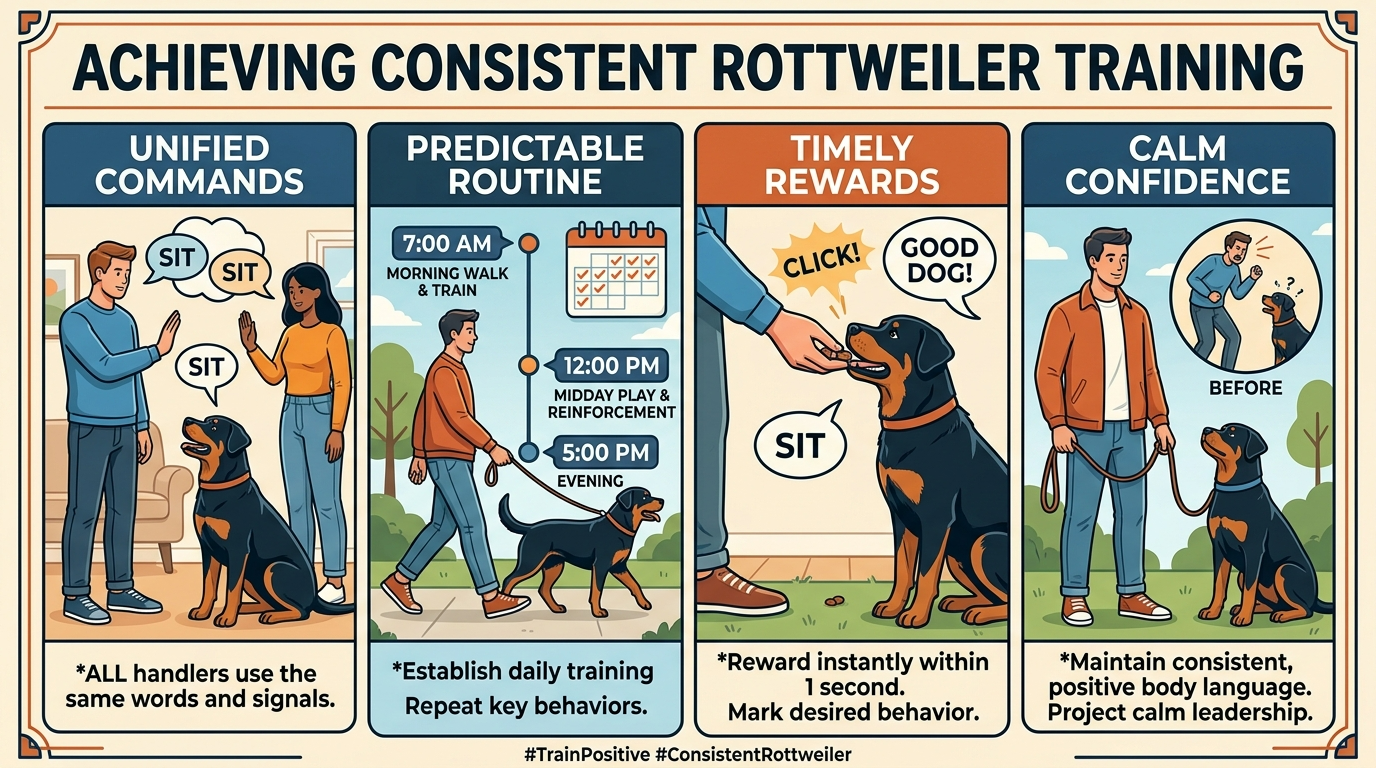
To fix inconsistent dog training, every member of your household must work as a unified team. When rules change from person to person, dogs become confused, frustrated, and unpredictable. Therefore, consistency is not optional; it is foundational.
Dogs learn through repetition and clear feedback. However, if one person allows jumping while another corrects it, mixed signals slow progress. Over time, inconsistent reinforcement weakens obedience and damages trust.
To fix inconsistent dog training effectively, you must establish shared rules, standardized commands, and daily communication. Structure creates clarity. Moreover, clarity builds reliability.
A well-trained dog reflects a well-coordinated household. When expectations remain steady, behavior improves dramatically. With simple systems and consistent leadership, you can restore balance and long-term obedience.
Understanding why inconsistency happens helps you solve it permanently.
Why Inconsistent Training Causes Confusion
Dogs do not understand context the way humans do. Instead, they rely on patterns. Therefore, mixed messages disrupt learning quickly.
When families attempt to fix inconsistent dog training, they often discover that rules vary unconsciously. For example, one person may use “down” for lying down, while another uses it to stop jumping.
Such differences create hesitation. Dogs begin guessing which response applies in each moment. Consequently, obedience appears unreliable.
In addition, inconsistent consequences weaken motivation. If jumping earns attention sometimes and correction other times, the behavior persists.
Predictability builds confidence. Without it, confusion grows.
Recognizing the problem marks the first step toward solving it.
Establishing Clear Household Rules
Before you can fix inconsistent dog training, define clear and specific rules. Vague expectations lead to inconsistent enforcement.
Decide whether the dog may sit on furniture. Determine greeting rules at the door. Clarify feeding schedules and treat policies.
Write these rules down. Visible reminders help maintain accountability.
Next, ensure every household member agrees fully. Compromise may be necessary, but alignment matters more than preference.
Children also require instruction. Simple guidelines prevent accidental reinforcement of unwanted behavior.
Clear rules eliminate gray areas. When boundaries remain steady, dogs respond more confidently and consistently.
Structure creates fairness and stability for everyone involved.
Standardizing Commands and Cues
Language consistency plays a critical role in obedience. Therefore, standardizing commands prevents confusion.
To fix inconsistent dog training, create a shared vocabulary. Use the same words and tone for each command.
For example, choose either “come” or “here,” but not both. Decide whether “off” or “down” signals leaving furniture.
Hand signals should remain uniform as well. Dogs respond to visual cues quickly, so alignment matters.
Practice commands together as a family. Group sessions reinforce shared technique.
Consistency in communication accelerates learning. Unified cues build clarity and trust.
When everyone speaks the same training language, obedience improves dramatically.
Aligning Consequences and Rewards
Consistency extends beyond commands. Rewards and corrections must also match.
If one person ignores barking while another intervenes, the dog learns to test boundaries selectively.
To fix inconsistent dog training, agree on how to respond to specific behaviors. Define clear consequences for jumping, chewing, or pulling.
Positive reinforcement should follow desired behavior immediately. Meanwhile, redirection should remain calm and predictable.
Avoid emotional reactions. Instead, respond systematically.
When outcomes remain consistent, behavior stabilizes quickly.
Clear cause and effect relationships strengthen learning and reduce testing.
Creating a Training Schedule
Without structure, even motivated families drift into inconsistency.
To fix inconsistent dog training, establish a weekly training schedule. Short daily sessions work best.
Rotate leadership during practice sessions. Each person should reinforce the same commands using identical methods.
Document progress. Tracking improvements increases accountability.
Consistency does not require long hours. Instead, it requires daily repetition.
Even five focused minutes per day builds momentum.
Scheduled practice prevents skill erosion and maintains clarity across the household.
Holding Family Meetings for Accountability
Open communication prevents regression.
When working to fix inconsistent dog training, schedule brief check-ins. Discuss progress, challenges, and adjustments.
Address confusion immediately rather than allowing it to grow.
Celebrate improvements together. Positive reinforcement benefits humans too.
If disagreements arise, revisit shared goals. The ultimate objective remains a calm and obedient companion.
Regular meetings reinforce alignment and commitment.
Accountability transforms intention into sustained action.
Managing Guests and Extended Family
Inconsistency often increases when visitors arrive. Guests may unknowingly disrupt routines.
To fix inconsistent dog training, prepare guests in advance. Politely explain greeting rules and boundaries.
Use physical management tools if necessary. Leashes, gates, or crates maintain structure.
Do not relax standards during social events. Temporary exceptions create lasting setbacks.
Consistent expectations protect progress.
Proactive communication prevents misunderstandings and reinforces leadership.
Training Children to Participate Properly
Children often contribute unintentionally to inconsistency.
To fix inconsistent dog training, teach children simple, repeatable guidelines. For example, require the dog to sit before petting.
Supervise early interactions closely.
Encourage calm voices and steady movements.
Reward children for following the rules consistently.
Clear structure empowers children to contribute positively rather than disrupt training.
Unified effort strengthens obedience faster.
Using Visual Reminders and Tools
Practical tools support consistency.
To fix inconsistent dog training, post command charts on refrigerators or bulletin boards.
Use shared training logs to track behaviors.
Digital reminders can prompt daily sessions.
Visual cues reduce reliance on memory.
Simple systems reinforce alignment effortlessly.
Organization supports consistency naturally.
Rebuilding Reliability After Inconsistency
If inconsistency has persisted for months, rebuilding takes patience.
To fix inconsistent dog training effectively, return briefly to foundational commands.
Practice in low-distraction environments.
Reward generously for correct responses.
Avoid frustration during retraining phases.
Consistency restores confidence over time.
Repetition rebuilds reliability gradually.
Commitment determines long-term success.
Maintaining Long-Term Consistency
Even after progress appears stable, vigilance matters.
To fix inconsistent dog training permanently, review rules periodically.
Reinforce expectations during life changes such as moves or schedule shifts.
Stay proactive rather than reactive.
Small lapses can compound quickly.
Ongoing awareness preserves stability.
Consistency becomes easier as habits solidify.
Unified leadership strengthens trust for years to come.
Conclusion: Unified Leadership Builds Lasting Obedience
When families work together, training accelerates. However, inconsistency undermines even the best intentions.
To fix inconsistent dog training, establish clear rules, unified commands, and shared accountability.
Structure eliminates confusion. Alignment strengthens trust.
With daily reinforcement and open communication, obedience becomes reliable and predictable.
Consistency is not restrictive; it is empowering.
A coordinated household produces a calm, confident, and well-trained companion.
Commitment today ensures long-term harmony tomorrow.
FAQ
1. Why does my dog obey one person but not another?
Different tones, rules, or consequences often create confusion and selective responses.
2. How long does it take to rebuild consistency?
With daily practice, noticeable improvement often appears within several weeks.
3. Should everyone train the dog equally?
Yes, shared participation reinforces unified expectations and strengthens reliability.
4. What if family members disagree on rules?
Hold a discussion and prioritize long-term behavioral stability over personal preference.
5. Can professional trainers help unify a household?
Yes, expert guidance often provides structure and accountability for families.