Training a Rottweiler successfully requires much more than teaching basic obedience commands occasionally. Consistency, structure, and communication play enormous roles in shaping long-term behavior and emotional stability. Many owners unknowingly confuse their dogs by using different words, mixed expectations, or inconsistent rules throughout the household. Establishing clear rottweiler commands at home helps create better communication, stronger obedience, calmer behavior, and more predictable responses in daily life.
Rottweilers are intelligent working dogs that learn patterns quickly. However, they also notice inconsistency extremely fast. When one family member allows jumping while another discourages it, dogs receive conflicting information that weakens training progress.
Standardized communication helps dogs understand expectations clearly without unnecessary confusion or frustration.
Most importantly, consistent command systems build trust because dogs feel more secure when daily routines and responses remain predictable.
Why Consistency Matters in Dog Training
Dogs learn best through repetition, clear associations, and predictable outcomes. Mixed communication often delays progress significantly because dogs struggle to understand which behaviors earn rewards consistently.
Using standardized rottweiler commands at home helps eliminate uncertainty while improving learning speed and reliability.
For example, using “down,” “off,” and “get down” interchangeably may confuse dogs trying to understand exactly what owners want.
Simple consistent wording creates clearer communication pathways and stronger behavioral habits over time.
Additionally, consistency helps reduce frustration for both owners and dogs during training sessions.
Clear predictable communication also improves emotional confidence because dogs understand how to succeed more easily.
Rottweilers Respond Well to Structure
Rottweilers thrive in environments providing calm leadership, reliable expectations, and consistent routines.
Organized rottweiler commands at home create structure that supports emotional stability and balanced behavior.
Dogs living with predictable rules often appear calmer because they understand boundaries clearly.
Inconsistent environments sometimes increase testing behavior, impulsiveness, or stubborn responses because expectations constantly change.
Structured communication does not mean harsh control or rigid correction. Instead, it means clear guidance repeated consistently over time.
Calm repetition often works far better than emotional reactions or constant command changes.
Choosing Simple Clear Commands
Effective command systems usually involve short clear words easy for dogs to recognize quickly.
Successful rottweiler commands at home often include simple terms such as “sit,” “stay,” “come,” “place,” “leave it,” and “down.”
Short commands generally create faster recognition compared to long complex phrases.
Additionally, families should avoid using multiple variations for identical behaviors whenever possible.
For example, everyone should use either “come” or “here” consistently rather than switching randomly between both.
Dogs learn patterns faster when words remain predictable across different people and situations.
Every Family Member Must Participate
Training consistency becomes difficult when household members follow different rules or communication styles.
Reliable rottweiler commands at home require cooperation between all family members interacting regularly with the dog.
If one person rewards jumping while another discourages it, confusion develops quickly.
Similarly, inconsistent leash expectations or feeding routines may weaken overall obedience reliability.
Families often benefit from discussing command wording and household rules together before formal training begins.
Unified communication creates much clearer learning experiences for dogs overall.
Tone of Voice Influences Responses
Dogs respond not only to words themselves but also to emotional tone, energy, and body language.
Calm confident rottweiler commands at home usually produce better results than loud frustrated repetition.
Many owners accidentally teach dogs to ignore commands by repeating them emotionally several times without follow-through.
Clear calm delivery often improves responsiveness significantly because communication feels more predictable and less stressful.
Owners should aim for firm but relaxed tone rather than aggressive intensity.
Emotionally controlled communication usually supports better focus and trust during training.
Reward Timing Matters Greatly
Positive reinforcement remains one of the most effective ways to strengthen reliable behavior long term.
Well-structured rottweiler commands at home should include immediate rewards when dogs respond correctly.
Rewards may involve treats, praise, toys, affection, or access to desired activities depending on individual motivation.
However, timing matters tremendously because delayed rewards weaken behavioral associations.
Dogs learn fastest when reinforcement occurs immediately after desired behavior appears.
Consistent reward timing helps strengthen understanding while encouraging reliable future responses.
Avoid Repeating Commands Excessively
Many owners unintentionally teach dogs to ignore commands by repeating them too often without consequences or guidance.
Effective rottweiler commands at home should remain meaningful rather than background noise.
For example, saying “sit” repeatedly while dogs continue ignoring instructions weakens command reliability gradually.
Instead, owners should calmly guide compliance after giving commands once whenever possible.
Clear expectations followed consistently usually create stronger obedience habits over time.
Body Language Supports Verbal Commands
Dogs naturally observe posture, movement, and facial expression alongside spoken language.
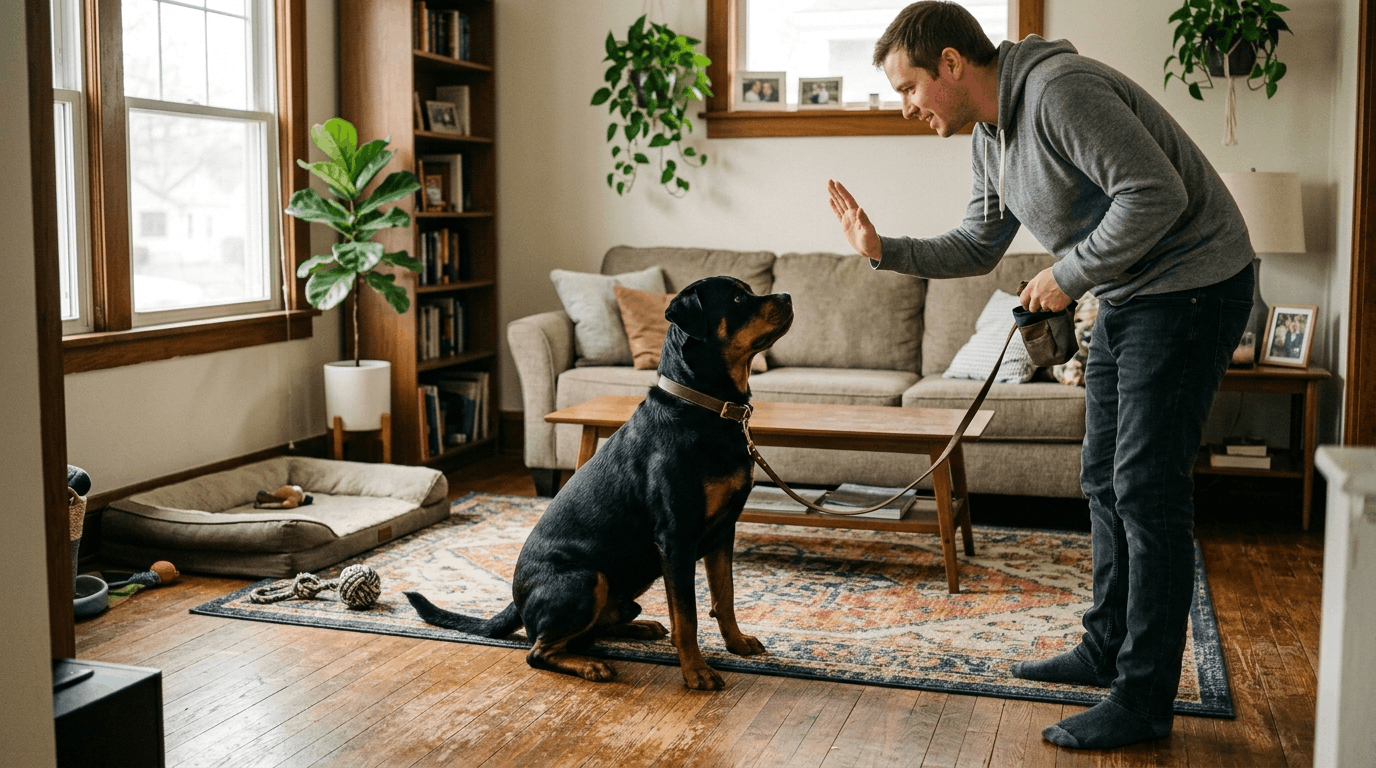
Consistent rottweiler commands at home often work best when paired initially with matching body cues supporting verbal understanding.
For example, hand signals frequently improve early learning because dogs process visual information extremely well.
However, owners should avoid exaggerated gestures becoming necessary permanently if verbal reliability remains the long-term goal.
Balanced communication combines calm body language with clear verbal cues effectively.
Routine Training Builds Better Habits
Short consistent practice sessions often produce better results than occasional lengthy training marathons.
Reliable rottweiler commands at home improve fastest through brief daily repetition integrated naturally into routines.
Owners can reinforce obedience during walks, feeding, greetings, playtime, and quiet household moments.
Frequent small successes help strengthen behavioral habits more effectively than inconsistent intense sessions alone.
Daily practice also improves reliability in real-life environments where distractions naturally occur.
Using Place Commands Creates Calmness
Place training remains especially useful for large intelligent breeds requiring emotional regulation and household structure.
Many families include “place” within standardized rottweiler commands at home because it encourages calm stationary behavior during busy situations.
Place commands help dogs relax during meals, guests visiting, or household activity instead of pacing constantly or becoming overexcited.
Calm stationary training also teaches valuable impulse control supporting emotional balance long term.
Consistency Reduces Behavioral Problems
Many frustrating dog behaviors develop partly because communication lacks clarity or predictability.
Clear rottweiler commands at home often reduce jumping, pulling, barking, counter surfing, and impulsive behavior significantly.
Dogs understanding household expectations usually feel more emotionally settled because boundaries remain reliable.
Confusion sometimes encourages testing behavior because dogs attempt to determine which rules actually apply consistently.
Predictable communication helps eliminate uncertainty while improving overall cooperation naturally.
Children Should Learn Proper Commands Too
Children interacting regularly with dogs should understand household command systems clearly for safety and consistency.
Organized rottweiler commands at home work best when children avoid inconsistent rough handling or emotional yelling during interactions.
Adults should supervise young children carefully while teaching respectful calm communication around dogs.
Simple command consistency from children often strengthens overall household structure greatly.
Dogs receiving predictable communication from everyone usually behave more reliably overall.
Correcting Mistakes Calmly Matters
Training mistakes happen naturally during learning processes for both humans and dogs.
Healthy rottweiler commands at home should focus more on redirection and guidance than emotional punishment or frustration.
Harsh reactions sometimes create fear, confusion, or weakened trust instead of improving understanding effectively.
Calm correction combined with immediate redirection usually supports clearer communication long term.
Dogs learn best when owners remain emotionally controlled and predictable during mistakes or setbacks.
Different Environments Require Practice
Dogs may understand commands well inside the home yet struggle outside where distractions increase dramatically.
Reliable rottweiler commands at home should eventually expand gradually into parks, sidewalks, public spaces, and social environments.
Generalization takes practice because dogs do not automatically transfer learning perfectly between environments.
Owners should increase distractions slowly while continuing positive reinforcement and calm repetition consistently.
Gradual exposure often strengthens long-term reliability far more effectively than overwhelming dogs too quickly.
Emotional Balance Improves Obedience
Calm emotionally balanced dogs generally respond more reliably than overstimulated anxious dogs.
Structured rottweiler commands at home help create emotional predictability supporting healthier behavioral regulation overall.
Dogs feeling safe and secure often focus better because mental energy no longer centers on uncertainty or environmental confusion constantly.
Consistent leadership supports emotional relaxation while reducing unnecessary stress behaviors gradually.
Building Long-Term Communication Success
Training does not end after dogs learn basic commands initially. Lifelong consistency remains extremely important for maintaining reliable behavior.
Effective rottweiler commands at home create communication systems that strengthen trust, cooperation, and emotional stability throughout every life stage.
Clear expectations, calm repetition, and consistent family participation help dogs understand household rules confidently and predictably.
Most importantly, standardized communication reduces frustration while improving relationships between dogs and owners tremendously.
Rottweilers are intelligent loyal dogs that respond exceptionally well to structured guidance and reliable routines. Through consistent commands, calm leadership, and unified household communication, owners can create better obedience, healthier emotional balance, and stronger lifelong companionship. Standardized training does not simply improve manners alone. It creates clearer understanding, greater trust, and a more peaceful household for everyone involved.
FAQ
1. Why should families use the same commands consistently?
Consistent wording helps dogs understand expectations clearly and improves learning reliability significantly.
2. How many commands should Rottweilers learn first?
Most dogs benefit from mastering a few basic commands before progressing into advanced training routines.
3. Can inconsistent rules confuse dogs?
Yes, mixed expectations often weaken obedience and create frustration or unpredictable behavior patterns.
4. Should owners repeat commands multiple times?
No, excessive repetition may teach dogs that responding immediately is unnecessary.
5. Do hand signals help during training?
Yes, visual cues often support faster understanding and clearer communication during early learning stages.