
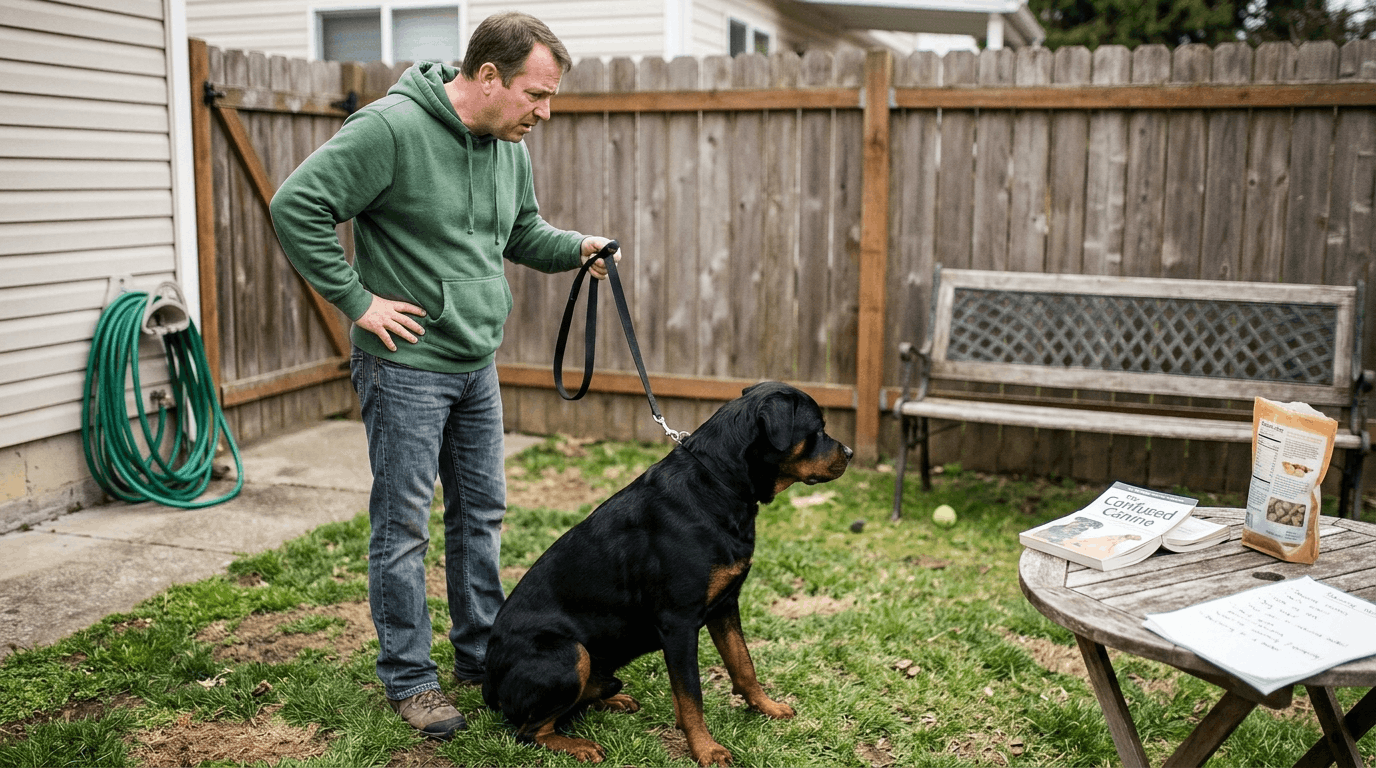
Inconsistent training rottweiler behavior is one of the most common reasons owners struggle with obedience and control. While rottweilers are intelligent and capable learners, they rely heavily on clear and repeated patterns to understand what is expected. Therefore, when rules, commands, or responses change frequently, your dog becomes confused and unsure of how to behave.
Many owners assume their dog is being stubborn or difficult. However, in most cases, the issue comes from mixed signals rather than the dog’s attitude. When inconsistent training rottweiler habits occur, your dog cannot form reliable associations between actions and outcomes. As a result, progress slows down, and unwanted behaviors may begin to appear.
How Mixed Signals Disrupt Learning
Dogs learn through repetition and consistency. When the same behavior produces different outcomes, confusion quickly follows. For example, if jumping on guests is allowed sometimes but corrected at other times, your dog cannot determine what is correct. This is a classic case of inconsistent training rottweiler communication.
Because rottweilers are highly observant, they pick up on small changes in tone, body language, and timing. Therefore, even subtle inconsistencies can affect learning. Over time, your dog may stop responding altogether because they no longer trust the outcome of their actions.
Additionally, inconsistent training rottweiler patterns weaken command recognition. When different words or gestures are used for the same command, your dog struggles to understand. This slows learning and creates frustration for both you and your pet.
Why Rottweilers Need Structure More Than Most Breeds
Rottweilers are confident and strong-willed, which makes structure even more important. Without clear boundaries, they may begin to test limits or ignore commands. Therefore, inconsistent training rottweiler environments often lead to behavior issues that seem difficult to control.
Structure provides a sense of security. When your dog knows what to expect, they become calmer and more focused. On the other hand, unpredictable rules can create anxiety or overexcitement. This imbalance often results in behaviors such as barking, pulling, or ignoring commands.
Because of their intelligence, rottweilers can quickly detect patterns. However, if those patterns change frequently, they lose clarity. This is why consistent routines and expectations are essential for success.
The Impact On Obedience And Recall
One of the most noticeable effects of inconsistent training rottweiler habits is poor obedience. Commands that should be simple, such as sit or stay, may become unreliable. This happens because your dog is unsure whether the command will be enforced or rewarded.
Recall is especially affected. If your dog is called sometimes and ignored at other times, they may stop responding altogether. Over time, this can become a safety concern, particularly in outdoor environments.
Consistency reinforces trust. When your dog knows that commands always mean the same thing, they respond more confidently. Therefore, eliminating inconsistent training rottweiler patterns is essential for building reliable obedience.
How Family Members Contribute To Confusion
In many households, different people interact with the dog in different ways. While this may seem harmless, it often leads to inconsistent training rottweiler behavior. For example, one person may enforce rules strictly, while another is more relaxed.
This variation creates mixed signals. Your dog may learn that certain behaviors are acceptable with one person but not with another. As a result, they begin to test boundaries and respond inconsistently.
To prevent this, all family members should agree on rules and commands. When everyone follows the same approach, your dog receives clear and consistent guidance. This alignment is key to avoiding inconsistent training rottweiler issues.
Why Inconsistent Rewards Slow Progress
Rewards play a crucial role in training. However, when rewards are given inconsistently, learning becomes less effective. For instance, if your dog is rewarded for a behavior one day but ignored the next, they may lose motivation.
Inconsistent training rottweiler reward systems weaken the connection between behavior and outcome. Over time, your dog may stop trying altogether because they are unsure if the effort will be rewarded.
Consistency in rewards helps build strong habits. By reinforcing desired behavior every time, you create clear expectations. This approach strengthens learning and encourages your dog to repeat positive actions.
The Emotional Effects Of Inconsistency
Training is not just about behavior; it also affects your dog’s emotional state. Inconsistent training rottweiler environments can lead to frustration, anxiety, or even fear. When your dog does not understand what is expected, they may become stressed.
This stress can manifest in different ways, such as excessive barking, chewing, or withdrawal. Additionally, a lack of clarity can reduce your dog’s confidence, making them less responsive to commands.
On the other hand, consistent training builds trust and stability. When your dog feels secure, they are more willing to learn and cooperate. Therefore, maintaining consistency is essential for both behavior and emotional wellbeing.
Recognizing Signs Of Confusion In Your Rottweiler
It is important to identify when your dog is confused rather than disobedient. Common signs include hesitation, inconsistent responses, or ignoring commands altogether. These behaviors often point to inconsistent training rottweiler patterns rather than stubbornness.
Another sign is regression. If your dog suddenly forgets commands they previously knew, inconsistency may be the cause. Additionally, unpredictable reactions to the same situation can indicate confusion.
By recognizing these signs early, you can adjust your approach. Addressing inconsistent training rottweiler issues quickly prevents them from becoming long-term problems.
How To Fix Inconsistent Training Habits
The first step in fixing inconsistent training rottweiler behavior is to establish clear rules. Decide what behaviors are acceptable and ensure they are enforced consistently. This clarity helps your dog understand expectations.
Next, standardize commands and communication. Use the same words, tone, and gestures for each command. This consistency strengthens recognition and improves response time.
Training sessions should also follow a regular schedule. Short, frequent sessions are more effective than occasional long ones. Additionally, consistent rewards reinforce learning and build motivation.
Involving all family members is crucial. Everyone should follow the same training plan to avoid mixed signals. This unified approach eliminates inconsistent training rottweiler patterns and accelerates progress.
Building Long Term Consistency
Consistency is not a one-time effort but an ongoing process. As your dog grows, continue reinforcing rules and routines. This helps maintain good behavior and prevents regression.
Gradually reduce reliance on treats and focus on praise or play as rewards. However, keep reinforcement consistent to maintain motivation. Over time, your dog will respond reliably even without food rewards.
Regular evaluation is also important. If behavior begins to decline, revisit your training methods and ensure consistency is maintained. By staying committed, you prevent inconsistent training rottweiler habits from returning.
Conclusion
Inconsistent training rottweiler behavior is often the hidden cause of confusion, poor obedience, and slow progress. While it may seem like a minor issue, its impact can be significant over time. However, the solution is straightforward: consistency in rules, communication, and rewards.
By creating a clear and unified approach, you give your rottweiler the structure they need to succeed. This not only improves behavior but also strengthens the bond between you and your dog. With patience and commitment, you can eliminate confusion and build a confident, well-trained companion that responds reliably in every situation.
FAQ
1. Why does my rottweiler ignore commands sometimes?
This often happens when training is inconsistent, causing confusion about what is expected.
2. Can inconsistent training cause long-term behavior issues?
Yes, it can lead to poor habits, slow learning, and reduced obedience over time.
3. How can I make training more consistent at home?
Use the same commands, enforce rules equally, and involve all family members in the same approach.
4. Should rewards always be given during training?
Rewards should be consistent at first, then gradually reduced while maintaining positive reinforcement.
5. How long does it take to fix inconsistent habits?
With consistent training, improvement can be seen within a few weeks, depending on the dog.