
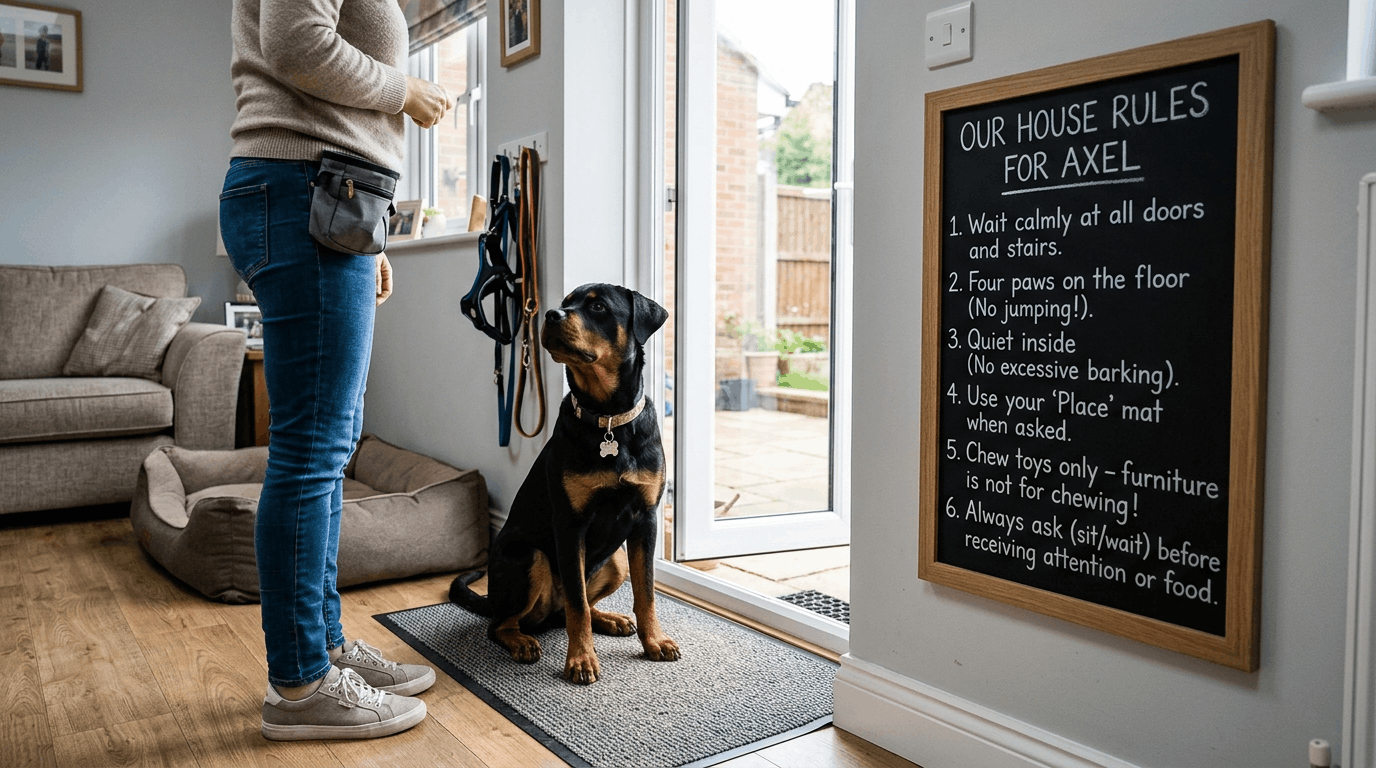
Setting rottweiler training house rules is one of the most important steps you can take to shape a calm, obedient, and confident dog. From the moment your rottweiler enters your home, they begin learning what is acceptable and what is not. Therefore, creating clear expectations early helps prevent confusion and builds trust between you and your dog. Without structure, even the most intelligent rottweiler can develop unwanted habits that become difficult to correct later.
Rottweilers are strong, smart, and naturally protective, so they need guidance that is consistent and fair. When rottweiler training house rules are clearly defined, your dog feels secure because they understand their role in the household. As a result, behavior improves naturally, and your dog becomes easier to manage in both familiar and new environments.
Why Structure Matters For Rottweiler Behavior
Structure is the foundation of any successful training plan. Rottweilers thrive when they know what to expect each day. In contrast, a lack of routine often leads to anxiety, overexcitement, or stubborn behavior. That is why rottweiler training house rules should cover daily routines, boundaries, and behavior expectations from the start.
For example, feeding times should remain consistent, and walks should follow a predictable schedule. When these routines stay stable, your dog begins to relax because there are no surprises. Additionally, structured routines reduce the likelihood of behavioral issues, such as excessive barking or destructive chewing.
Consistency is equally important across all family members. If one person allows a behavior while another corrects it, your dog becomes confused. Over time, this inconsistency weakens training progress. However, when everyone follows the same rottweiler training house rules, your dog learns faster and responds more reliably.
Defining Clear Boundaries Inside The Home
One of the first steps in establishing rottweiler training house rules is deciding what areas your dog can access. For instance, you may choose to keep bedrooms off-limits or limit access to certain furniture. Once these decisions are made, enforce them consistently so your dog understands the boundaries.
It is also helpful to teach your rottweiler where they should rest. Providing a designated bed or crate creates a sense of security. Over time, this space becomes a calm retreat where your dog can relax. This simple rule plays a key role in building effective rottweiler training house rules that support emotional stability.
Additionally, setting rules around jumping, begging, or rough play helps maintain control. Instead of reacting after the behavior occurs, guide your dog toward appropriate actions. For example, reward calm greetings instead of excited jumping. As a result, your dog learns how to behave properly without fear or confusion.
Creating Consistent Commands And Expectations
Clear communication is essential when developing rottweiler training house rules. Using consistent commands helps your dog understand what you want without hesitation. If you switch between different words for the same command, your dog may struggle to respond correctly.
For example, choose one word for each command, such as “sit,” “stay,” or “down,” and stick with it. At the same time, ensure every family member uses the same language. This consistency strengthens learning and prevents mixed signals.
Tone and body language also matter. Rottweilers are highly observant, so they pick up on subtle cues. When your tone remains calm and confident, your dog is more likely to respond positively. Over time, these small details reinforce rottweiler training house rules and improve overall obedience.
Establishing Daily Routines That Reinforce Rules
Daily routines support every aspect of rottweiler training house rules. Feeding, walking, training, and rest should follow a predictable pattern. When routines are consistent, your dog becomes more focused and easier to manage.
Exercise is especially important for this breed. Rottweilers have high energy levels, so regular walks and playtime help release that energy in a healthy way. Without proper exercise, your dog may become restless and ignore established rules. Therefore, physical activity should always be part of your daily structure.
In addition to exercise, include short training sessions throughout the day. These sessions reinforce commands and keep your dog mentally engaged. As a result, your dog remains attentive and responsive, making rottweiler training house rules more effective.
Using Positive Reinforcement To Strengthen Behavior
Positive reinforcement is one of the most effective tools in dog training. When your rottweiler follows a rule correctly, reward them immediately with praise, treats, or play. This creates a strong connection between good behavior and positive outcomes.
Over time, your dog begins to repeat behaviors that lead to rewards. This approach works far better than punishment, which can create fear and damage trust. Instead, focus on guiding your dog toward success by reinforcing desired actions.
However, timing is important. Rewards should come immediately after the behavior so your dog understands what they did right. With consistent practice, positive reinforcement strengthens rottweiler training house rules and builds a confident, cooperative dog.
Managing Common Challenges At Home
Even with clear rottweiler training house rules, challenges can arise. Common issues include leash pulling, excessive barking, and chewing. The key is to address these behaviors early before they become habits.
For example, if your dog pulls on the leash, stop walking until they return to your side. This teaches them that pulling does not lead to progress. Similarly, redirect chewing behavior to appropriate toys instead of punishing your dog.
Consistency remains the most important factor. If you respond differently each time, your dog will struggle to learn. On the other hand, clear and steady responses reinforce rottweiler training house rules and help your dog understand expectations.
Involving The Whole Family In Training
A successful training plan requires teamwork. Every family member should understand and follow the same rottweiler training house rules. This ensures your dog receives consistent guidance regardless of who is interacting with them.
Family meetings can help establish these rules. Discuss expectations, commands, and boundaries so everyone is on the same page. When children are involved, teach them how to interact with the dog calmly and respectfully.
Consistency across the household accelerates learning. As a result, your dog becomes more confident and reliable. This shared effort strengthens rottweiler training house rules and creates a more harmonious home environment.
Building Long Term Habits And Discipline
Training is not a one-time effort but an ongoing process. As your rottweiler grows, continue reinforcing rottweiler training house rules through daily routines and regular practice. Over time, these ongoing process. As your rottweiler grows, continue reinforcing rottweiler training house rules through daily routines and regular practice. Over time, these rules become habits that your dog follows naturally.
Gradually reduce reliance on treats and replace them with praise or play. This transition helps your dog respond to commands without expecting food every time. However, occasional rewards can still reinforce good behavior.
Patience is essential during this process. Some behaviors take time to develop, especially in young dogs. By staying consistent and positive, you build long-term discipline that lasts throughout your dog’s life.
Creating A Calm And Balanced Home Environment
Your home environment plays a major role in shaping behavior. A calm atmosphere helps your rottweiler feel secure and focused. In contrast, constant noise or chaos can lead to stress and unwanted behavior.
Use a steady tone when giving commands and avoid sudden reactions. This approach keeps your dog relaxed and responsive. Additionally, provide a quiet space where your dog can rest without distractions.
When your environment supports your training efforts, rottweiler training house rules become easier to maintain. Over time, your dog learns to remain calm even in challenging situations, which improves overall behavior.
Conclusion
Establishing rottweiler training house rules is essential for raising a well-behaved and confident dog. With clear boundaries, consistent routines, and positive reinforcement, your rottweiler learns what is expected and how to respond appropriately.
Although the process requires patience, the results are worth the effort. A structured approach creates a calm and reliable companion that fits seamlessly into your home. By staying consistent and involving the whole family, you ensure that rottweiler training house rules become a natural part of your dog’s daily life, leading to long-term success.
FAQ
1. When should I start setting rules for my rottweiler?
You should begin as soon as your puppy arrives home. Early guidance helps prevent confusion and builds good habits quickly.
2. How strict should household boundaries be?
Boundaries should be clear and consistent but not harsh. Focus on guidance rather than punishment to build trust.
3. Can older rottweilers still learn house rules?
Yes, adult dogs can learn new behaviors with patience, consistency, and positive reinforcement techniques.
4. How do I ensure my family follows the same training approach?
Hold simple discussions to agree on commands and rules so everyone stays consistent with the dog.
5. What if my dog ignores commands at home?
Reinforce training with short sessions, consistent rewards, and clear communication to improve responsiveness.