
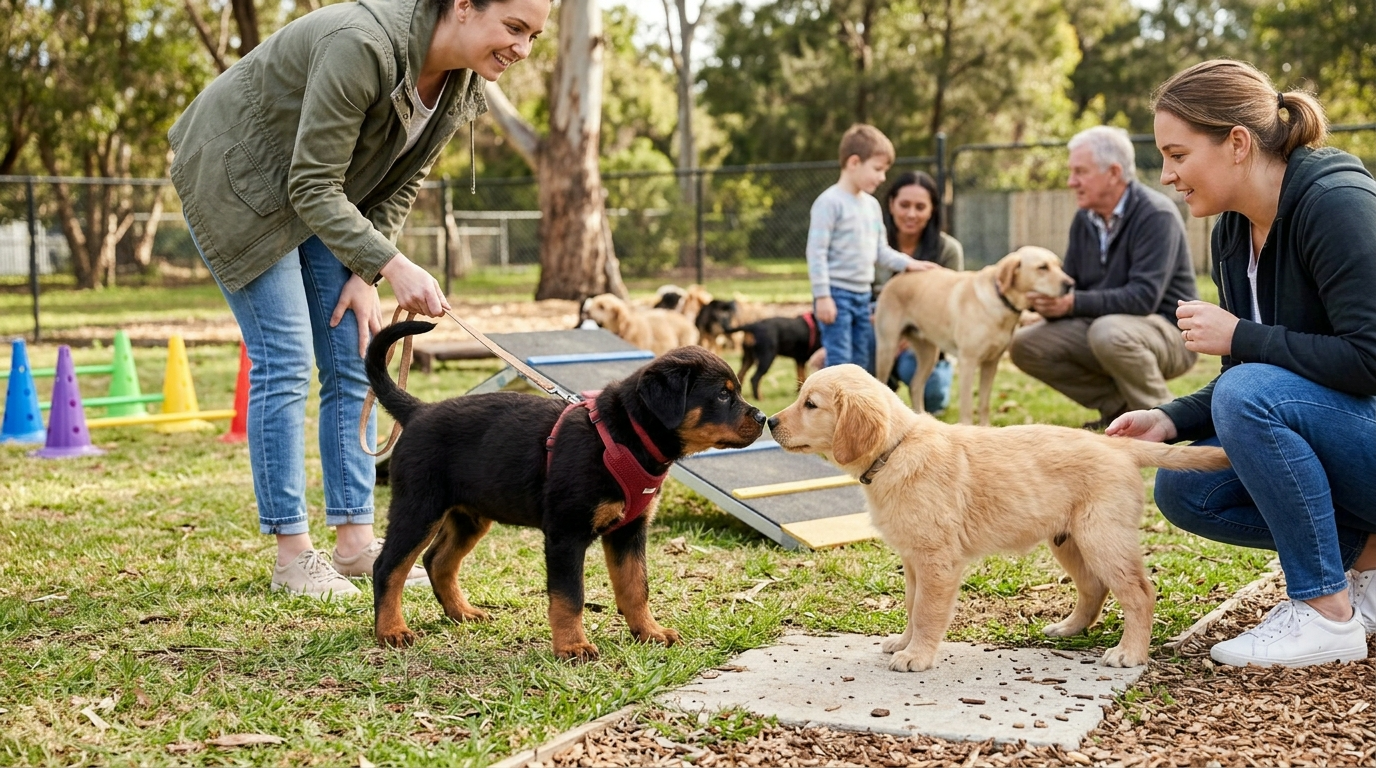
A structured Rottweiler puppy socialization timeline helps shape a confident, stable, and well-mannered adult dog. Because Rottweilers grow into powerful guardians, early exposure to people, environments, and experiences becomes essential. Without thoughtful guidance, natural protective instincts may develop into fear or reactivity.
The first year of life creates lasting behavioral patterns. Therefore, timing matters. Positive exposure during specific developmental windows builds resilience and emotional balance. Moreover, consistent leadership strengthens trust between you and your puppy.
A successful Rottweiler puppy socialization timeline focuses on gradual exposure rather than overwhelming experiences. Short, positive interactions build confidence far more effectively than forced introductions. When approached correctly, socialization becomes the foundation for lifelong stability and obedience.
Understanding what to prioritize at each stage allows you to guide your puppy with clarity and purpose.
Weeks 3–8: Early Breeder and Litter Social Development
Although many owners bring puppies home at eight weeks, socialization begins earlier. During weeks three through eight, puppies learn critical communication skills from their littermates and mother.
At this stage, the Rottweiler puppy socialization timeline centers on bite inhibition, body language, and early environmental exposure. Responsible breeders gently introduce new sounds, textures, and surfaces.
Handling by different people also supports adaptability. Puppies that experience calm human interaction early tend to adjust more easily later. However, overstimulation should be avoided.
Short exposure to mild household noises builds resilience. Meanwhile, time with siblings teaches social boundaries.
Even though owners may not yet be involved, selecting a breeder who understands this early phase makes a significant difference.
Weeks 8–12: The Critical Social Window
This period remains the most important stage in the Rottweiler puppy socialization timeline. Puppies display high curiosity and lower fear responses. Therefore, positive exposure during these weeks has lasting impact.
Introduce your puppy to various people, including children and adults. However, ensure each interaction remains calm and controlled. Gentle experiences build trust and confidence.
Expose your puppy to different environments. Walk on grass, pavement, and indoor surfaces. Introduce mild traffic noise gradually. Keep sessions short and positive.
Additionally, enroll in a reputable puppy class. Structured group settings encourage safe peer interaction. Supervised play teaches social cues and impulse control.
Because fear can imprint easily, avoid harsh corrections. Instead, reward calm behavior consistently.
This stage builds the emotional framework for adulthood.
Weeks 12–16: Reinforcing Confidence and Structure
As curiosity continues, mild fear periods may begin to appear. Therefore, the Rottweiler puppy socialization timeline must adapt carefully.
Continue exposing your puppy to new experiences, yet increase structure. Practice obedience commands in different environments. Ask for sit or focus before greeting others.
Controlled exposure to friendly dogs strengthens social skills. However, avoid chaotic dog parks. Calm, balanced companions provide better influence.
Introduce grooming routines gradually. Touch paws, ears, and mouth gently. Positive handling prevents resistance later in life.
Because Rottweilers develop strong protective instincts, teaching neutrality remains essential. Encourage observation rather than reaction when strangers pass by.
Balanced exposure combined with structured training creates stability and confidence.
Months 4–6: Expanding Environmental Exposure
At this stage, energy increases noticeably. Therefore, the Rottweiler puppy socialization timeline should expand into more diverse settings.
Take short trips to pet-friendly stores or quiet public spaces. Practice leash manners around mild distractions. Reward calm focus consistently.
Continue meeting new people, but emphasize controlled greetings. Your puppy should not assume every stranger wants interaction. Instead, teach patience and restraint.
Car rides, veterinary visits, and new household sounds should feel routine. Positive reinforcement during each outing builds emotional resilience.
Because teething may increase excitability, maintain consistent boundaries. Structured play and short training sessions support focus.
Gradual exposure during these months strengthens adaptability and emotional control.
Months 6–9: Navigating Adolescence
Adolescence introduces testing behavior and increased independence. Consequently, the Rottweiler puppy socialization timeline must emphasize reinforcement.
Revisit environments introduced earlier. Practice obedience in familiar places with added distractions. Consistency prevents regression.
Some puppies experience renewed fear phases. Therefore, avoid forcing interactions. Encourage calm observation instead of confrontation.
Structured social walks build confidence. Reward neutral behavior around other dogs and people.
Impulse control training becomes critical. Teach commands such as wait and leave it in stimulating settings.
Because adolescent Rottweilers grow stronger physically, consistent leadership ensures safe behavior. This stage solidifies earlier lessons and strengthens maturity.
Months 9–12: Strengthening Emotional Stability
Approaching adulthood, Rottweilers develop clearer protective instincts. The Rottweiler puppy socialization timeline should now focus on emotional regulation.
Continue exposing your dog to varied environments, but prioritize composure. Practice place commands in busy settings. Reward calm behavior near distractions.
Encourage neutral responses to strangers unless invited to interact. Controlled exposure prevents overprotectiveness.
Introduce longer-duration stays and recall exercises outdoors. These skills enhance reliability and confidence.
By reinforcing calm responses consistently, you prepare your Rottweiler for adult responsibilities. Emotional balance becomes the primary goal.
Steady guidance during this period shapes lifelong behavior patterns.
Socialization with Children and Families
Children require specific guidance during interactions. Therefore, supervision remains essential at every stage.
The Rottweiler puppy socialization timeline should include calm exposure to children of different ages. Teach kids to avoid rough play or sudden movements.
Reward your puppy for gentle behavior. Additionally, create safe retreat spaces where the dog can rest undisturbed.
Positive family integration builds trust. Over time, respectful interactions strengthen bonds and reduce misunderstandings.
Structured exposure ensures both safety and confidence.
Introducing Other Pets
Early introductions to household pets should remain controlled and gradual. Use barriers or leashes initially to ensure safety.
The Rottweiler puppy socialization timeline benefits from calm, supervised interactions with cats or smaller dogs. Reward neutrality rather than excitement.
Avoid forcing proximity. Allow curiosity without pressure.
Consistent, peaceful exposure builds coexistence skills. With patience, many Rottweilers live harmoniously alongside other animals.
Clear boundaries support long-term household balance.
Avoiding Common Socialization Mistakes
Overexposure can overwhelm a young puppy. Therefore, quality matters more than quantity.
The Rottweiler puppy socialization timeline should prioritize positive experiences over sheer volume. Forcing fearful interactions can create lasting anxiety.
Another mistake involves inconsistency. Exposure must remain ongoing, not limited to early weeks.
Additionally, skipping obedience integration reduces effectiveness. Social experiences should always include structure.
Balanced pacing prevents stress while encouraging adaptability.
Building Confidence Through Training Integration
Obedience and socialization work together. Therefore, practice commands during outings.
The Rottweiler puppy socialization timeline becomes stronger when paired with focus exercises. Ask for eye contact before greetings.
Reward calm body language consistently. Additionally, maintain steady leadership during every exposure.
Structured integration reinforces emotional control and strengthens trust.
Training provides guidance, while exposure builds resilience.
Conclusion: Shaping a Stable Adult Rottweiler
A carefully planned Rottweiler puppy socialization timeline builds the foundation for lifelong stability. By focusing on gradual exposure, consistent leadership, and positive reinforcement, owners shape confident and balanced companions.
Each developmental stage presents unique opportunities. Early weeks encourage curiosity, while adolescence strengthens emotional control.
Patience, structure, and consistency remain essential throughout the first year. When guided thoughtfully, your Rottweiler grows into a calm, reliable, and socially confident adult.
Strong foundations today create secure behavior tomorrow. With steady commitment, you nurture resilience, trust, and lasting companionship.
FAQ
1. When should socialization begin for a Rottweiler puppy?
Early exposure ideally begins with the breeder around three weeks and continues immediately after bringing your puppy home.
2. How many new experiences should a puppy have each week?
Focus on several positive interactions weekly rather than overwhelming daily exposure. Quality matters most.
3. Can socialization continue after the first year?
Yes, ongoing exposure and reinforcement help maintain confidence throughout adulthood.
4. What if my puppy shows fear during new situations?
Pause calmly, reduce intensity, and reward small steps toward confidence instead of forcing interaction.
5. Is puppy class necessary for proper development?
Structured classes provide safe peer interaction and professional guidance, making them highly beneficial.