
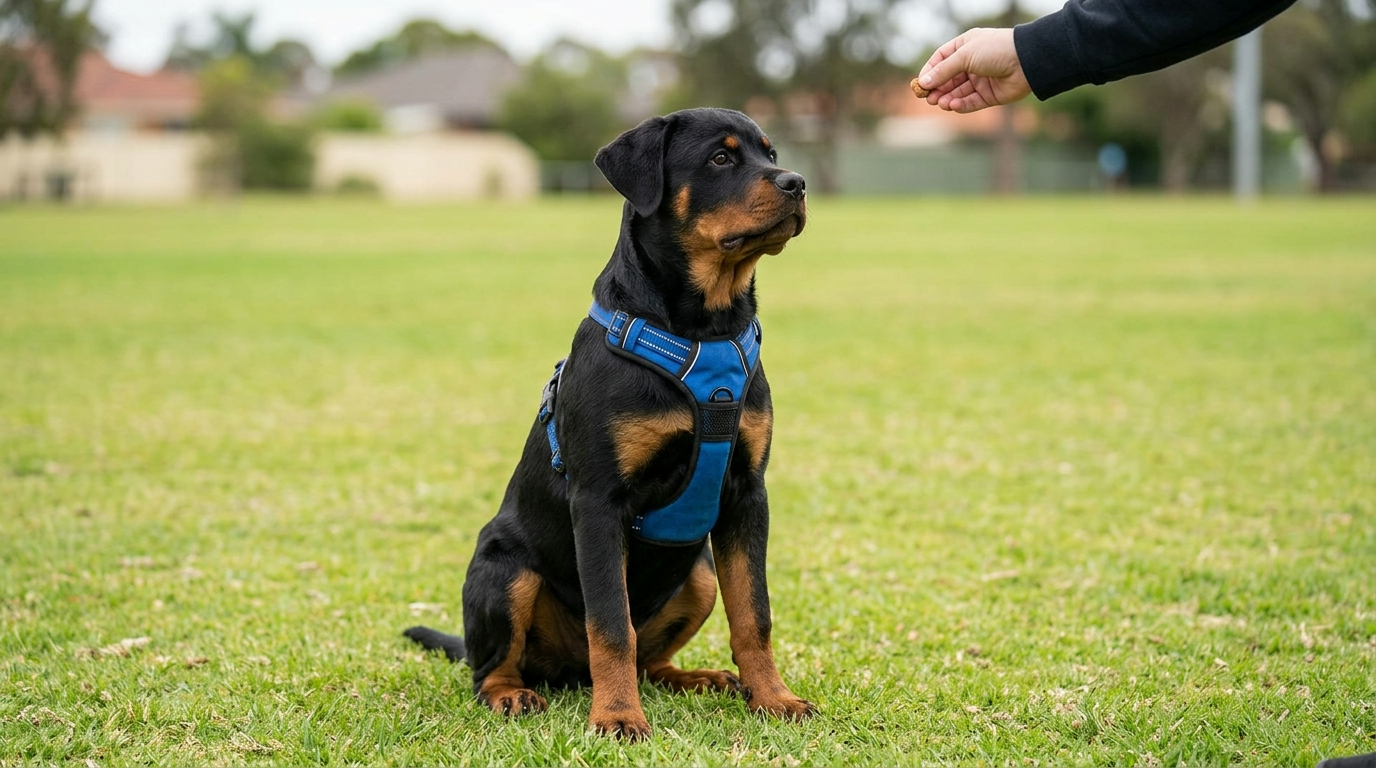
Advanced commands adolescent Rottweiler training becomes essential once your dog enters the teenage stage. During adolescence, energy rises, boundaries get tested, and focus often fades. However, this phase also offers the perfect opportunity to refine obedience and strengthen leadership.
Rottweilers mature slowly both mentally and physically. Therefore, structured guidance during this stage shapes lifelong behavior. Instead of relying only on basic sit and stay cues, you can introduce more complex tasks that challenge intelligence and impulse control.
Because this breed is powerful and confident, advanced commands adolescent Rottweiler programs must remain consistent and positive. Clear communication builds trust, while repetition reinforces reliability. With patience and structure, your dog transitions from impulsive teen to disciplined adult companion.
Understanding how to channel adolescent drive into productive training makes all the difference.
Why Adolescent Rottweilers Need Advanced Structure
Between six and eighteen months, Rottweilers test limits. Although they understand basic commands, they may ignore them when distracted. This behavior reflects development, not defiance.
Advanced commands adolescent Rottweiler routines provide mental engagement that reduces stubborn tendencies. Instead of repeating simple drills, introduce layered tasks requiring focus and self-control.
For example, adding duration to a stay command increases difficulty. Likewise, practicing recall around distractions strengthens reliability. Structured sessions help adolescents learn accountability.
Consistency remains critical. If rules change daily, confusion follows. Therefore, maintain firm yet calm leadership. Positive reinforcement strengthens cooperation, while harsh corrections damage trust.
As intelligence grows, so does independence. However, advanced guidance channels that independence into balanced confidence.
Strengthening the “Place” Command
The place command teaches your dog to settle on a designated surface until released. While many owners teach it early, adolescence requires refinement.
Advanced commands adolescent Rottweiler training extends duration and adds distractions. Begin by increasing the time your dog remains on the mat. Then introduce mild interruptions such as movement or door sounds.
Reward calm behavior consistently. If your dog breaks position, calmly reset without frustration. This approach reinforces discipline without tension.
Because Rottweilers possess strong guarding instincts, place training builds emotional regulation. Instead of reacting impulsively, they learn to pause and assess.
Eventually, this command becomes valuable during guest visits or busy environments. A disciplined response demonstrates maturity and leadership clarity.
Reliable Off-Leash Recall Development
Recall stands as one of the most important advanced skills. During adolescence, distractions intensify curiosity. Therefore, recall must remain sharp and immediate.
Advanced commands adolescent Rottweiler exercises should begin in controlled spaces. Start with a long training lead for safety. Call your dog with enthusiasm and reward swift responses.
Gradually increase environmental distractions. For instance, practice near other dogs or new settings. Always reinforce success immediately.
Never punish delayed responses. Instead, create stronger motivation through praise or high-value treats. Consistency builds trust and reliability.
Strong recall protects your dog in unpredictable situations. Moreover, it strengthens the bond between handler and companion.
Impulse Control Through “Leave It” and “Wait”
Adolescent Rottweilers often struggle with impulse control. Therefore, refining leave it and wait commands becomes crucial.
Advanced commands adolescent Rottweiler programs expand these cues into real-life applications. Practice leave it with food, toys, or outdoor distractions. Reinforce calm behavior consistently.
Similarly, use wait at doorways and during feeding. Gradually increase duration before release. Controlled repetition teaches patience.
Because Rottweilers are powerful, mastering impulse control enhances safety. Instead of lunging or reacting, they learn thoughtful restraint.
Clear communication ensures success. Keep sessions short but consistent. Over time, patience becomes habit rather than forced compliance.
Advanced Heel and Focus Training
Loose leash walking often deteriorates during adolescence. Increased strength and confidence can lead to pulling. Therefore, advanced heel work becomes essential.
Advanced commands adolescent Rottweiler drills include focus-based heeling. Encourage eye contact while walking. Reward consistent positioning beside your leg.
Introduce directional changes without warning. This technique requires your dog to pay attention continuously. As a result, focus improves naturally.
Gradually practice in busier environments. However, avoid overwhelming situations too quickly. Step-by-step exposure builds confidence.
A reliable heel command demonstrates discipline and strengthens handler authority. Moreover, it ensures safety during daily outings.
Distance Commands for Greater Control
Distance control separates adolescent obedience from adult discipline. Teaching sit, down, or stay from afar enhances responsiveness.
Advanced commands adolescent Rottweiler sessions should begin with short distances. Slowly increase space while maintaining clear signals. Hand gestures often reinforce verbal cues.
Practice in various environments. Dogs learn contextually, so changing locations strengthens understanding. Additionally, reward quick compliance consistently.
Distance commands prove useful in emergency situations. Instead of approaching physically, you can guide behavior remotely.
Consistent practice builds precision. Over time, your dog responds instantly regardless of position.
Structured Socialization with Obedience Integration
Socialization continues beyond puppyhood. Adolescents need structured exposure combined with obedience reinforcement.
Advanced commands adolescent Rottweiler training integrates commands during public outings. Ask for sit before greeting others. Require focus before crossing streets.
This approach reinforces manners in stimulating environments. Instead of reacting impulsively, your dog learns to defer to your guidance.
Positive experiences strengthen confidence. However, controlled settings prevent overwhelm. Always prioritize calm introductions.
When obedience accompanies social exposure, maturity develops steadily. Balanced experiences shape stable adult behavior.
Mental Stimulation Through Complex Tasks
Rottweilers thrive on mental challenges. Therefore, advanced exercises should include problem-solving tasks.
Advanced commands adolescent Rottweiler programs often incorporate scent detection or object discrimination. Teach your dog to identify specific items by name.
Puzzle toys also enhance cognitive growth. Short sessions prevent frustration while encouraging persistence.
Because boredom fuels misbehavior, structured mental engagement reduces destructive tendencies. Additionally, it channels energy constructively.
Regular cognitive challenges strengthen discipline and satisfaction. A mentally fulfilled dog responds better to commands overall.
Building Emotional Regulation Under Pressure
Adolescence brings emotional fluctuations. Some days feel calm, while others seem chaotic. Therefore, emotional regulation training becomes vital.
Advanced commands adolescent Rottweiler sessions should include calm-down drills. Teach a settle cue after play or excitement. Reward deep breathing and relaxed posture.
Practice controlled exposure to mild stressors. Gradually increase difficulty while reinforcing composure. Patience remains key.
When your dog learns to self-regulate, reactivity decreases significantly. Instead of escalating tension, they respond with calm awareness.
Strong emotional control enhances safety and strengthens your leadership presence.
Consistency and Leadership During Teenage Phases
Leadership defines success in adolescent training. Inconsistent expectations create confusion quickly.
Advanced commands adolescent Rottweiler development requires daily reinforcement. Short sessions maintain focus better than long drills.
Clear boundaries reduce testing behavior. For example, maintain rules about furniture access and greetings. Consistency builds trust and respect.
Avoid emotional reactions. Calm authority proves more effective than raised voices. Additionally, positive reinforcement maintains motivation.
Over time, adolescence transitions into maturity. Structured guidance ensures that transformation happens smoothly.
Preparing for Adult-Level Performance
The goal of advanced training during adolescence lies in adult readiness. Well-structured guidance produces confident and stable companions.
Advanced commands adolescent Rottweiler routines lay the foundation for advanced sports or working roles. Whether pursuing protection training or competitive obedience, early discipline matters.
However, even family companions benefit greatly. Balanced obedience ensures safe interactions and controlled behavior.
Gradual progression remains essential. Avoid pushing beyond developmental limits. Instead, build skill layers steadily.
With time and dedication, your Rottweiler grows into a composed adult with reliable responses.
Conclusion: Turning Teenage Energy Into Strength
Adolescence presents both challenge and opportunity. Energy rises, independence increases, and boundaries feel flexible. Yet this stage offers the best window for refinement.
Advanced commands adolescent Rottweiler training transforms impulsive behavior into disciplined focus. Through consistency, positive reinforcement, and structured challenges, maturity develops naturally.
Clear leadership fosters trust and cooperation. Moreover, advanced skill development strengthens safety and reliability.
When handled with patience and clarity, the teenage phase becomes a powerful foundation for adulthood. By investing in structured guidance today, you shape a confident, obedient, and emotionally balanced Rottweiler for years to come.
FAQ
1. At what age should advanced training begin?
Most Rottweilers can start complex training around six months, depending on maturity and foundational obedience.
2. How long should training sessions last?
Short sessions of 10 to 15 minutes work best to maintain focus and prevent frustration.
3. Can adolescent dogs learn off-leash control safely?
Yes, but begin in secure areas and use gradual progression with positive reinforcement.
4. What if my dog ignores commands during adolescence?
Return to controlled environments, reinforce basics, and rebuild consistency before increasing difficulty.
5. Is professional guidance necessary for advanced obedience?
While not mandatory, experienced trainers can accelerate progress and refine techniques effectively.