
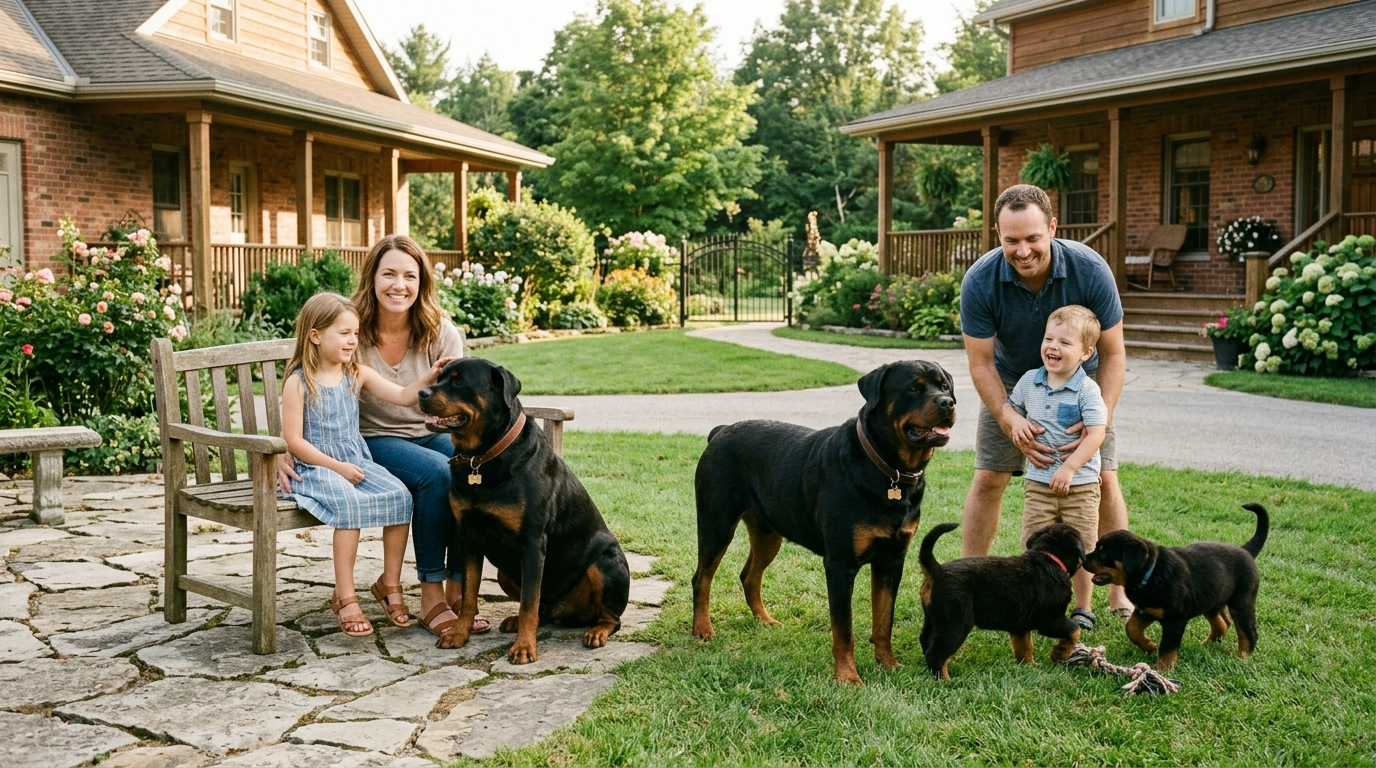
Rottweiler family guardians are known for their deep loyalty, natural protective instincts, and steady temperament. While many people focus on their strength, families quickly discover their gentle and devoted nature. When raised with structure and love, these dogs become reliable protectors and affectionate companions.
Because of their heritage as working dogs, Rottweilers develop strong bonds with their household. As a result, they instinctively watch over children, property, and daily routines. However, proper training and socialization remain essential for balanced behavior.
Understanding their temperament, training needs, and family compatibility helps you decide whether this powerful breed fits your home.
Understanding the Protective Nature of Rottweilers
Rottweilers were originally bred to herd livestock and guard property. Therefore, their instinct to protect runs deep. Unlike reactive breeds, they typically assess situations before responding.
Most Rottweilers remain calm and observant in familiar settings. However, when they sense a genuine threat, they act with confidence and control. This balance makes Rottweiler family guardians dependable rather than unpredictable.
Early exposure to different people and environments strengthens their judgment. Consequently, they learn to distinguish normal activity from real danger. Structured obedience training also teaches them when to respond and when to remain relaxed.
Because they thrive on purpose, Rottweilers feel most secure when given clear leadership. Families who provide consistent rules create stable and confident companions.
Why Loyalty Defines the Breed
Few breeds match the loyalty seen in Rottweiler family guardians. They form intense bonds with their owners and prefer staying close to their people.
Unlike independent breeds, Rottweilers often follow family members from room to room. This behavior reflects attachment rather than anxiety. In addition, they enjoy participating in daily routines.
Children especially benefit from this loyalty. When socialized early, Rottweilers develop patience and gentleness with kids. Although supervision remains important, many owners describe them as calm babysitters.
Trust grows through daily interaction, training sessions, and positive reinforcement. As that bond strengthens, so does their commitment to protecting the household.
Temperament Around Children and Guests
Many people question whether large protective breeds suit family life. Yet with proper upbringing, Rottweiler family guardians adapt beautifully to homes with children.
They typically display calm behavior indoors. Instead of constant hyperactivity, they conserve energy and remain observant. Because of this steady nature, they rarely react without cause.
When guests arrive, a well-trained Rottweiler may position themselves between the visitor and family members. However, once introduced properly, they usually relax and accept the new presence.
Socialization plays a critical role in shaping this balance. Puppy classes, neighborhood walks, and controlled introductions reduce fear and overprotection. As a result, the dog learns confidence instead of suspicion.
Families who invest time in training often find that their Rottweiler becomes both affectionate and composed.
Training Builds Reliable Guardianship
Strong protection instincts require responsible handling. Therefore, obedience training should begin early. Clear commands such as sit, stay, and recall create structure and predictability.
Positive reinforcement works best. Rottweilers respond well to praise, treats, and firm consistency. Harsh discipline, however, can damage trust and increase stubbornness.
Because Rottweiler family guardians are intelligent, they learn quickly. Mental stimulation through advanced training, scent games, or agility work prevents boredom. Furthermore, training sessions strengthen your leadership role.
Consistency matters more than intensity. Short daily sessions maintain engagement without overwhelming the dog. Over time, this routine shapes a confident and obedient guardian.
Without guidance, their natural assertiveness may surface in unwanted ways. With structure, however, they become steady and dependable companions.
Physical Strength and Confidence
Rottweilers possess powerful builds and muscular frames. This physical presence alone often deters intruders. However, strength without control offers little value.
Responsible owners channel that strength through training and exercise. Daily walks, controlled play, and structured activities help maintain both physical health and emotional balance.
Because they mature slowly, young Rottweilers require guidance during adolescence. At this stage, consistent rules prevent dominance issues. As they grow, maturity brings calm confidence.
Rottweiler family guardians rarely bark excessively. Instead, they rely on posture and awareness. When they do vocalize, owners should pay attention.
Their confident demeanor creates security for families. Even so, owners must remain committed to ongoing leadership and socialization.
Emotional Intelligence and Family Bonding
Beyond protection, Rottweilers display surprising emotional awareness. They often sense changes in mood or routine. Consequently, they stay close during stressful moments.
Many families report that their dogs become especially attentive when someone feels unwell. While not trained therapy animals, they offer comfort through quiet presence.
Rottweiler family guardians thrive when included in family life. Isolation in a yard limits their emotional connection and may cause behavioral problems. Therefore, indoor living strengthens loyalty and stability.
Daily interaction builds trust. Simple routines such as morning walks or evening relaxation time reinforce their sense of belonging. In turn, they protect what they consider their pack.
Because of this strong attachment, they do best with owners who appreciate hands-on companionship.
Are Rottweilers Suitable for First-Time Owners?
Although loyal and loving, this breed may challenge inexperienced handlers. Their intelligence demands clear boundaries and confident leadership.
First-time owners who commit to structured training often succeed. However, those seeking a low-maintenance pet may struggle. Rottweilers require time, attention, and consistency.
Before choosing Rottweiler family guardians, families should evaluate lifestyle and energy levels. Active households with routine schedules usually provide ideal environments.
Professional training support can also make a significant difference. Group classes and experienced trainers help shape good habits early.
When properly guided, even novice owners can enjoy the benefits of this devoted breed.
Health, Longevity, and Responsible Ownership
Like all breeds, Rottweilers face certain health risks. Hip dysplasia, heart conditions, and joint issues appear in some lines. Therefore, choosing reputable breeders matters greatly.
Regular veterinary checkups detect concerns early. In addition, maintaining a healthy weight reduces strain on joints and organs.
Rottweiler family guardians typically live between 8 and 10 years. Although this lifespan may seem short, quality care enhances vitality and mobility.
Balanced nutrition supports muscle development and immune strength. Meanwhile, moderate exercise keeps them agile without overstressing growing joints.
Responsible ownership also includes mental enrichment. Puzzle toys, obedience refreshers, and interactive play keep their minds sharp.
A healthy Rottweiler combines strength with steadiness. Proper care ensures that protection never overshadows companionship.
Common Misconceptions About the Breed
Unfortunately, media portrayals sometimes label Rottweilers as aggressive. In reality, behavior reflects upbringing and environment more than genetics alone.
Rottweiler family guardians raised with guidance and affection rarely display uncontrolled aggression. Instead, they show calm vigilance.
Another misconception suggests they cannot coexist with other pets. With early socialization, many live peacefully alongside cats and other dogs.
People also assume they require constant intense exercise. While they enjoy activity, they equally appreciate relaxed time indoors.
Education helps break these myths. When families understand their needs, they experience the breed’s balanced personality firsthand.
Creating the Ideal Home Environment
Structure forms the foundation of success. Clear routines, defined boundaries, and consistent leadership support positive behavior.
Because Rottweiler family guardians value proximity, homes with indoor access suit them best. A secure yard adds benefit, but isolation should never replace companionship.
Families should establish rules early. For example, determine sleeping areas and feeding times from the start. Consistency prevents confusion later.
Children must learn respectful interaction. Teaching kids not to disturb the dog while eating or resting promotes harmony.
Above all, commitment ensures success. Owners who invest time and patience build lifelong bonds rooted in trust and protection.
The Loyal Protector in Modern Family Life
Today’s families seek both companionship and security. Rottweilers uniquely combine these qualities.
Rottweiler family guardians protect without constant noise or chaos. They watch, assess, and respond only when necessary.
At the same time, they enjoy affection, play, and routine interaction. Their ability to switch between guardian and gentle companion defines their appeal.
Because modern homes vary widely, adaptability matters. Rottweilers thrive in suburban houses, rural properties, and even spacious urban settings when exercised properly.
Ultimately, success depends on guidance and understanding. When families meet their needs, these dogs offer unmatched devotion.
Conclusion: Strength Guided by Love
Rottweilers embody strength, intelligence, and loyalty. Yet beneath their powerful frame lies a deeply devoted heart.
Rottweiler family guardians flourish when provided with structure, affection, and consistent leadership. In return, they offer watchful protection and unwavering companionship.
Families willing to invest time in training and bonding often discover a remarkable partner. With responsible ownership, this breed transforms from misunderstood guardian to cherished family member.
Their legacy as protectors continues today, not through fear, but through loyalty and trust.
FAQ
1. Are Rottweilers naturally protective of children?
Yes, many develop strong bonds with children when socialized early. However, supervision and training always remain important.
2. Do they require professional training?
While not mandatory, structured training classes greatly improve behavior and confidence, especially for new owners.
3. Can this breed live in smaller homes?
They can adapt to smaller spaces if exercised daily and mentally stimulated. Indoor companionship matters most.
4. How much exercise do they need?
Most adults benefit from moderate daily walks and structured play. Mental engagement remains equally important.
5. Are they aggressive toward strangers?
Properly raised dogs usually remain calm and observant. They respond protectively only when genuine threats appear.