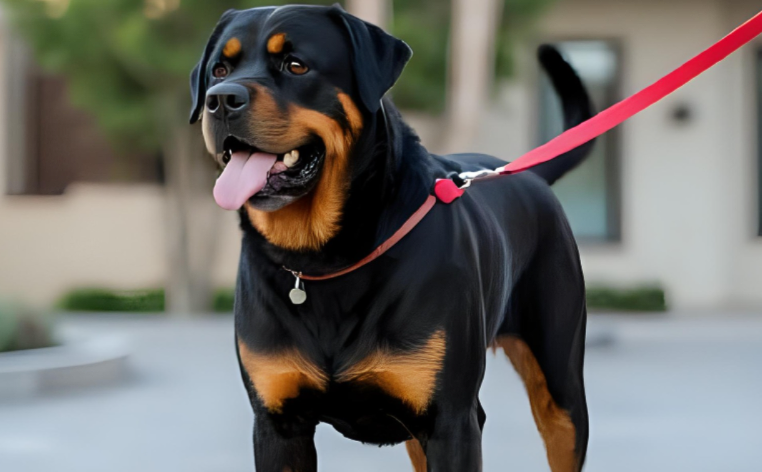
Walking a Rottweiler should feel like teamwork — not a tug of war. Yet, with their natural strength and determination, Rottweilers can easily overpower their owners if leash manners aren’t taught properly. The solution lies in structured leash exercises that channel power into focus, communication, and calm leadership.
These exercises don’t just improve walking behavior; they strengthen your bond and reinforce your role as a confident, trusted guide. Let’s explore how to transform your strong Rottweiler into a controlled, responsive walking partner.
Why Structured Leash Work Matters
Rottweilers are working dogs — alert, intelligent, and physically powerful. Without structure, walks can quickly turn into chaos: pulling, lunging, or reactive behavior toward distractions.
Structured leash exercises solve this by:
- Teaching impulse control and patience
- Building engagement and focus on the handler
- Preventing shoulder strain or leash frustration
- Reinforcing leadership through calm consistency
Leash work isn’t about restraint — it’s about communication through body language, timing, and trust.
1. Choosing the Right Leash and Equipment
Before training begins, make sure your setup supports both comfort and control.
Recommended Tools
- 6-foot leash: Provides enough space for learning without loss of control.
- Front-clip harness: Redirects pulling and distributes pressure safely.
- Flat collar or martingale: Useful for well-trained dogs needing minor corrections.
- Treat pouch: Keeps rewards accessible for immediate reinforcement.
Avoid retractable leashes — they teach your dog that pulling earns freedom. Structure comes from consistency, not flexibility.
2. The Foundation: Loose-Leash Walking
Every structured exercise begins with mastering loose-leash walking, where the leash remains relaxed, and your Rottweiler stays attentive at your side.
How to Teach It
- Start in a quiet area with minimal distractions.
- Hold the leash in both hands — one near your waist, one relaxed.
- Say your command: “Let’s go.”
- Reward your dog for walking beside you with a loose leash.
- The moment they pull, stop walking immediately.
- Wait for slack, then continue forward.
This teaches your Rottweiler that forward motion happens only when the leash is relaxed. Patience here builds lifelong control.
3. The “Stop and Go” Exercise
This simple exercise teaches self-control and responsiveness.
Steps
- Walk at a steady pace.
- Without warning, stop.
- If your Rottweiler continues forward, hold firm until they return to your side.
- Once they settle, praise calmly and move forward again.
Over time, your dog learns to monitor your pace and anticipate changes — a key element in leash communication.
This builds body awareness and teaches that pulling gets them nowhere, while focus earns progress.
4. The “Change of Direction” Drill
This drill builds attention and engagement. It’s especially useful for strong dogs that tend to lead or ignore handler cues.
How to Practice
- Walk forward for 10–15 steps.
- Say your Rottweiler’s name, then turn sharply in the opposite direction.
- Praise when they follow without tension.
- Randomize your turns — left, right, or full U-turns.
These changes teach your Rottweiler to stay tuned in. When they learn that movement direction depends on you, they start focusing naturally on your body language and pace.
5. The “Figure Eight” Pattern
The figure-eight pattern encourages coordination, focus, and balance. It’s perfect for developing smooth leash transitions around obstacles or in tight spaces.
How to Set It Up
- Place two markers (like cones or chairs) about 8 feet apart.
- Walk in a figure-eight pattern, maintaining a loose leash.
- Use turns to reinforce slow, calm pacing.
This exercise strengthens your Rottweiler’s ability to follow subtle cues and maintain leash discipline during curved or directional changes.
6. The “Heel and Release” Routine
Rottweilers love structure but also need freedom to explore. The heel and release routine teaches them to differentiate between focused walking and relaxed sniff time.
How to Train It
- Begin the walk with a clear “Heel” command.
- Keep them aligned beside your left leg for 30–60 seconds.
- Then release with “Free” or “Okay” to allow casual exploration.
- Alternate between heel and free several times during each walk.
This teaches emotional flexibility — calm discipline when needed, followed by freedom as a reward. It prevents frustration while reinforcing control.
7. The “Sit and Reset” Exercise
Strong dogs often build momentum during walks. This drill interrupts that energy and re-centers their focus.
How It Works
- Every few minutes, stop and say, “Sit.”
- Wait for calm eye contact before moving again.
- Reward with quiet praise or a small treat.
This consistent stop-start structure teaches your Rottweiler that patience and calm attention are part of walking — not optional behaviors.
8. Working Through Distractions
Once your Rottweiler can walk calmly in low-distraction areas, gradually expose them to real-world challenges.
Steps for Controlled Progress
- Start with mild distractions (like parked cars or quiet streets).
- Use distance to your advantage — stay far enough that your dog stays calm.
- Practice engagement cues like “Watch me” when distractions appear.
- Slowly decrease distance over multiple sessions.
This progressive exposure trains your Rottweiler’s emotional control — a crucial element for walking confidently anywhere.
9. The “Figure Focus” Exercise
This mental conditioning drill builds impulse control and focus even when your Rottweiler is excited.
How to Practice
- Stand still with your Rottweiler on leash.
- Scatter small treats around within leash distance.
- Say “Wait.”
- Only release them to collect treats when calm and focused.
This teaches that self-control — not lunging or pulling — earns rewards. It strengthens obedience even during high temptation.
10. Cooling Down: The “Calm Walk Home”
Every structured leash session should end with a cool-down walk. This reinforces emotional balance and teaches your Rottweiler to finish activities calmly, not overstimulated.
Cool-Down Guidelines
- Slow your pace and relax your grip.
- Use soft praise and quiet breathing.
- Allow your dog to sniff or walk beside you loosely.
This final phase communicates that walks end in peace, not excitement — reinforcing a calm state of mind for the rest of the day.
Troubleshooting Common Leash Problems
Even strong, well-trained Rottweilers can test boundaries. Here’s how to handle common issues:
Pulling Ahead: Stop immediately. Don’t move until the leash slackens. Then continue.
Lunging at Distractions: Step sideways to increase distance, redirect with “Heel” or “Watch me.”
Lagging Behind: Check for fatigue or discomfort. Use gentle encouragement, not pressure.
Overexcitement at Start: Wait calmly before leaving the house. Don’t begin until your Rottweiler is settled.
Patience and repetition turn problem walks into mindful training sessions.
Conclusion
Structured leash exercises transform powerful Rottweilers into calm, confident companions. By combining focus, timing, and leadership, you guide their natural strength into control — not chaos.
Remember, walking isn’t about domination or restriction; it’s about synchronized movement and trust. With daily structure, your Rottweiler learns that the leash is not a limitation — it’s a line of connection between calm minds working together.
FAQ
1. How long should I practice leash exercises each day?
Start with 10–15 minutes twice daily, gradually extending as your Rottweiler improves focus.
2. Should I use a prong collar for a strong Rottweiler?
Only under professional guidance. Positive, structured training usually achieves better long-term control.
3. What if my Rottweiler pulls toward other dogs?
Increase distance, redirect focus with engagement cues, and reward calmness before approaching closer.
4. Can leash training help with reactivity?
Yes. Structured exercises teach emotional control and attention, reducing reactive behavior.
5. How soon will I see progress?
Most Rottweilers show improvement within 2–3 weeks of consistent, calm practice.