
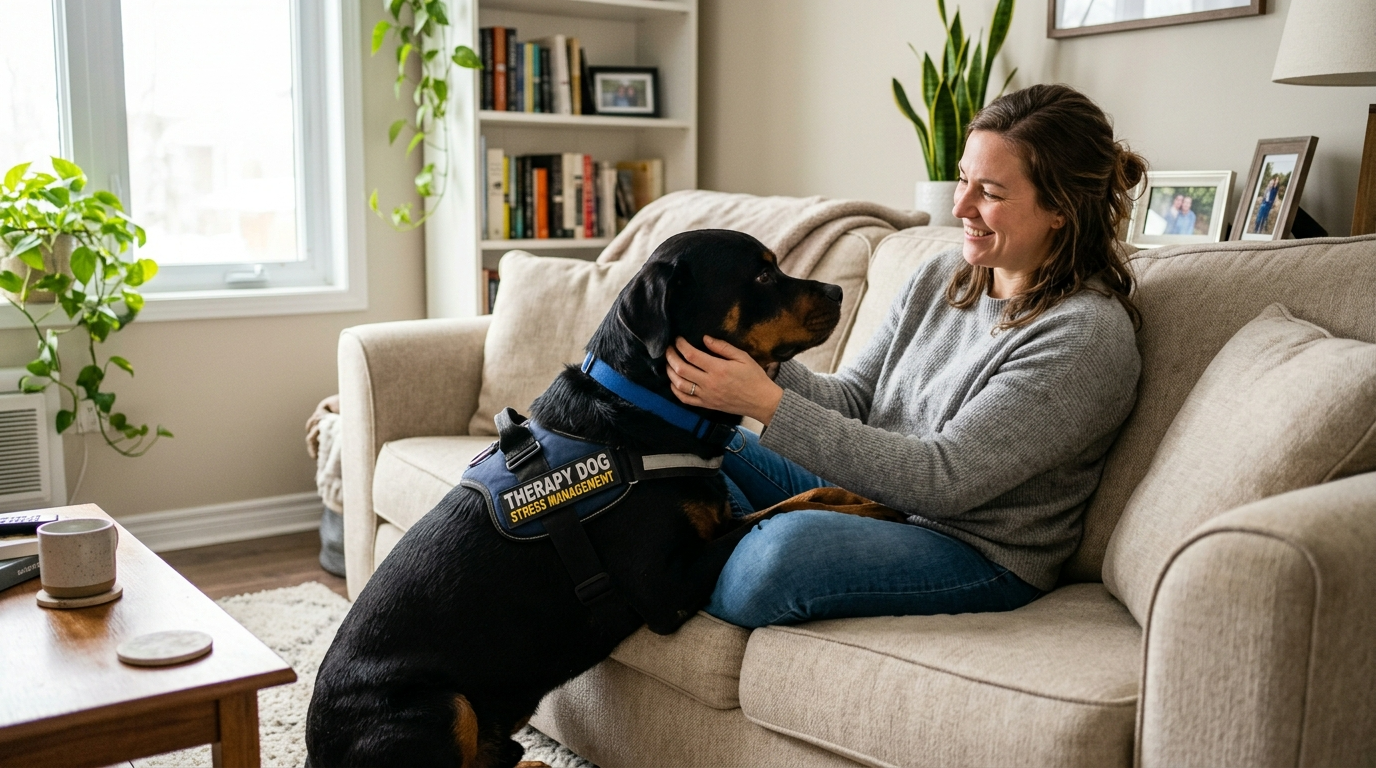
Stress management Rottweiler owners practice consistently can make the difference between confident leadership and daily frustration. Because Rottweilers are strong, intelligent, and protective, they require steady guidance. However, the responsibility of raising such a powerful breed can sometimes feel overwhelming.
From puppy training to behavioral challenges, emotional strain may surface unexpectedly. Therefore, maintaining personal balance becomes essential. When owners feel calm and confident, their dogs respond more positively. Conversely, stress often transfers directly to the dog.
Stress management Rottweiler owners adopt is not only about relaxation techniques. It also includes time management, realistic expectations, and structured routines. By developing healthy coping strategies, you create a stable environment for both yourself and your companion.
Understanding the connection between owner mindset and canine behavior helps prevent tension before it escalates.
Understanding the Emotional Demands of Ownership
Owning a Rottweiler carries unique responsibility. Because of their size and protective instincts, public perception may add pressure. Consequently, some owners feel constant need to prove their dog’s good behavior.
Stress management Rottweiler owners prioritize begins with awareness. Recognize that strong breeds require leadership, not perfection. Mistakes during training are normal, especially during adolescence.
Behavioral setbacks can feel discouraging. However, progress rarely follows a straight line. Patience becomes your greatest tool.
Additionally, outside opinions may increase anxiety. Not everyone understands the breed. Therefore, confidence in your training plan matters greatly.
By accepting the emotional demands honestly, you reduce unrealistic expectations and create room for growth.
Building Calm Leadership Through Routine
Structure reduces uncertainty. When daily routines remain predictable, both owner and dog experience less stress.
Stress management Rottweiler owners rely on includes consistent feeding times, regular walks, and structured training sessions. Routine creates clarity and stability.
Clear boundaries also reduce tension. When rules remain consistent, your dog understands expectations. As a result, fewer conflicts arise.
Time management plays a role as well. Planning exercise and training prevents last-minute frustration.
Moreover, scheduled downtime allows recovery. Balance between activity and rest protects emotional energy.
Predictability strengthens trust and lowers anxiety for everyone involved.
Recognizing Signs of Owner Burnout
Raising a strong working breed demands attention and energy. Therefore, burnout can occur if self-care gets neglected.
Stress management Rottweiler owners should practice begins with self-awareness. Irritability, fatigue, and frustration may signal overload.
If training sessions feel tense, pause briefly. Short breaks restore patience and perspective.
Delegating responsibilities can also help. Family members should share walking or feeding duties when possible.
Seeking professional training support reduces pressure. Expert guidance provides reassurance and practical solutions.
Caring for yourself enhances your ability to care for your dog effectively.
Managing Public Encounters with Confidence
Public outings sometimes create stress for large-breed owners. Because Rottweilers attract attention, scrutiny may follow.
Stress management Rottweiler owners adopt involves preparation. Practice obedience skills in low-distraction environments before visiting busy areas.
Maintain calm body language. Dogs read tension quickly. If you remain composed, your dog mirrors that steadiness.
Prepare polite responses to questions or comments. Confidence discourages unnecessary confrontation.
Additionally, avoid overwhelming settings until your dog demonstrates reliable behavior. Gradual exposure builds mutual assurance.
Public confidence grows through preparation and repetition.
Handling Behavioral Challenges Calmly
Adolescence, fear phases, and territorial behavior may increase stress. However, reactive responses rarely solve problems.
Stress management Rottweiler owners implement includes reframing challenges as training opportunities. Instead of reacting emotionally, analyze triggers objectively.
Break issues into manageable steps. For example, practice leash manners in quiet spaces before busy streets.
Positive reinforcement strengthens cooperation. Harsh discipline often escalates tension instead of resolving it.
When frustration rises, step back temporarily. Short pauses prevent emotional spillover.
Approaching challenges strategically builds confidence rather than anxiety.
Physical Health and Its Role in Stress Levels
Your physical condition influences emotional resilience. Lack of sleep or exercise increases irritability.
Stress management Rottweiler owners maintain often includes personal fitness. Regular activity benefits both owner and dog.
Walking your Rottweiler provides shared exercise. Additionally, outdoor time reduces cortisol levels naturally.
Balanced nutrition supports stable mood and energy. Skipping meals or overusing caffeine can amplify tension.
Hydration also matters. Dehydration contributes to fatigue and impatience.
When your body feels balanced, leadership improves naturally.
Creating Mental Space Through Mindfulness
Mindfulness practices improve focus and emotional control. Even brief breathing exercises can reset stress levels.
Stress management Rottweiler owners use effectively may include short meditation before training sessions. Calm breathing lowers heart rate and tension.
Visualization also helps. Picture successful training interactions before beginning.
Limit digital distractions during walks or playtime. Full presence strengthens connection.
Journaling training progress provides clarity. Recording small victories shifts focus away from setbacks.
Mental clarity enhances communication and patience.
Balancing Training Expectations Realistically
Perfection creates unnecessary pressure. Rottweilers, like all breeds, learn through repetition and mistakes.
Stress management Rottweiler owners embrace includes setting achievable goals. Instead of expecting flawless obedience, aim for steady improvement.
Celebrate small wins. A calm greeting or improved recall deserves recognition.
Compare progress only to previous performance, not to other dogs.
Professional benchmarks can guide expectations. However, individual temperament influences pace.
Realistic standards protect emotional well-being and encourage consistency.
Strengthening Support Systems
Community reduces isolation. Connecting with experienced Rottweiler owners offers perspective and advice.
Stress management Rottweiler owners benefit from support groups, trainers, or breed clubs. Shared experiences normalize challenges.
Regular communication with a veterinarian ensures health concerns do not increase anxiety unnecessarily.
Family involvement strengthens stability. Clear division of responsibilities prevents resentment.
Support systems reinforce confidence and reduce overwhelm.
Developing Long-Term Resilience
Ownership evolves over time. Early stages may feel intense, yet maturity brings balance.
Stress management Rottweiler owners cultivate involves long-term thinking. Temporary challenges rarely define lifelong behavior.
Reflect on growth regularly. Compare early training days to current stability.
Adapt strategies when necessary. Flexibility strengthens resilience.
Over time, mutual trust replaces early uncertainty. Emotional steadiness becomes natural.
Commitment to self-regulation benefits both you and your Rottweiler.
Conclusion: Calm Leadership Creates Strong Bonds
Raising a Rottweiler demands strength, patience, and consistency. However, emotional balance remains just as important as physical training.
Stress management Rottweiler owners practice daily shapes the tone of the entire relationship. When you remain calm, your dog mirrors that confidence.
Structured routines, realistic expectations, and strong support systems reduce overwhelm. Additionally, mindfulness and physical health strengthen resilience.
Leadership rooted in composure builds trust. Trust, in turn, fosters obedience and stability.
By prioritizing your own well-being, you create a secure and confident environment for your Rottweiler to thrive.
FAQ
1. Why does my dog react more when I feel anxious?
Dogs sense subtle body language changes and mirror emotional energy quickly.
2. How can I stay calm during public training sessions?
Prepare beforehand, practice breathing techniques, and focus on small training goals.
3. Is professional training helpful for reducing owner stress?
Yes, expert guidance builds confidence and offers structured solutions.
4. How much exercise helps reduce tension?
Regular daily walks and structured play sessions improve mood and mental clarity.
5. What if I feel overwhelmed raising a large breed?
Seek support, adjust expectations, and create consistent routines to regain balance.