If your dog ever seems bored, restless, or destructive at home, you might be missing one key element: mental enrichment. Puzzle toys are a fantastic way to engage your dog’s brain, satisfy their instincts, and build a calmer, happier companion.
In this article, you’ll learn:
- Why puzzle toys matter
- What to look for when choosing one
- Our top recommended puzzle toys with detailed highlights
Why Puzzle Toys Matter for Dogs
Puzzle toys aren’t just “fun extras” — they’re essential for a well-balanced dog. In fact, they help fulfill your dog’s natural drive to think, work, and solve problems.
According to experts:
- They engage your dog’s brain much more deeply than basic chew toys.
- They help reduce boredom, anxiety, and destructive behaviors by giving your dog a productive task.
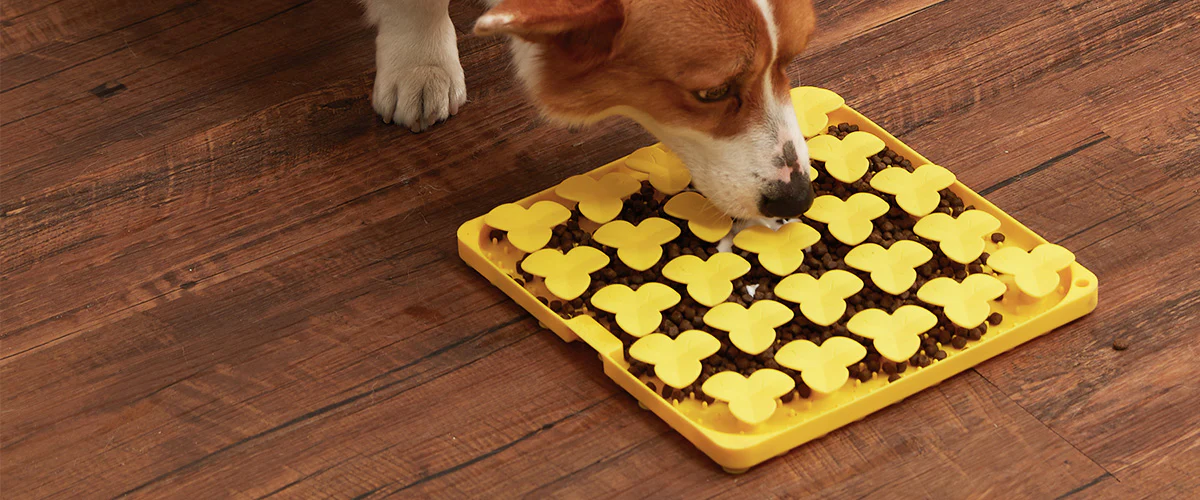
- They can also turn mealtime into enrichment by using toys that dispense treats or require problem-solving for food.
- Moreover, they help build confidence in dogs, particularly intelligent or working breeds, as they solve challenges and succeed.
In short, a dog whose mind is stimulated is far less likely to act out simply because they’re bored. Mental engagement leads to calmness, which, in turn, supports better behavior and emotional balance.
What to Look for in a Quality Puzzle Toy
When choosing puzzle toys, there are a few key factors to consider. First of all, think about your dog’s age, size, and personality. Additionally, evaluate how challenging each toy is.
Key Factors to Keep in Mind
- Difficulty level: It should be challenging but not frustrating. Experts recommend a toy that takes 5–10 minutes to solve initially.
- Durability: Especially for strong chewers. Materials should be sturdy and safe for long-term use.
- Size and design: Make sure the toy suits your dog’s size and play style. Big breeds may need heavier materials, while smaller breeds prefer lighter designs.
- Ease of cleaning: Treats and kibble can make these toys messy. Therefore, dishwasher-safe or easy-to-wash options are ideal.
- Variety and scalability: Ideally, you’ll have several puzzles of different difficulty levels so your dog doesn’t become bored or too proficient too fast.
Consequently, by rotating between these toy types, you’ll maintain novelty and long-term engagement without constantly buying new products.
Top Puzzle Toy Recommendations
Here are eight excellent puzzle toys worth considering. Use them for enrichment, slow feeding, or simply when your dog needs something meaningful to “do.”
Outward Hound Hide N’ Slide Puzzle Toy
A great all-round interactive toy with sliding compartments. As a result, it’s perfect for moderate difficulty and adaptable to many breed sizes.
KONG Classic Dog Toy
A durable, well-known treat dispenser that never goes out of style. For instance, you can stuff it with kibble, peanut butter, or frozen treats. It’s beginner-friendly yet still engaging for advanced dogs.
Nina Ottosson Interactive Dog Puzzle Toy
Nina Ottosson puzzles provide complex problem-solving challenges. Therefore, they’re ideal for smart dogs or those already familiar with basic puzzles.
Trixie Pet Puzzle Toy
This toy offers an intermediate-level challenge with multiple compartments. Additionally, it’s a great way to step up from beginner puzzles and maintain curiosity.
Snuffle Mat Dog Foraging Toy
A soft mat with hidden fabric folds where you can hide treats. Because of its design, it’s excellent for sniffing, calm enrichment, and slow feeding.
Brightkins Brain Teaser Treat Puzzle Dog Toy
A budget-friendly brain teaser that delivers a solid mental workout. Even though it’s small, it effectively keeps your dog’s attention for several minutes.
West Paw Zogoflex Qwizl Dog Puzzle Treat Toy
A tough, chew-proof puzzle ideal for heavy chewers. Moreover, it combines enrichment and durability, making it a long-lasting investment.
Dog Puzzle Toy Slow Feeder Feed & Fun
A slow-feeder puzzle bowl that turns every meal into a problem-solving session. Consequently, it prevents gulping and promotes calm, thoughtful eating.
How to Use Puzzle Toys Effectively
Once you’ve chosen the right toys, it’s important to use them strategically. To begin with, always introduce one new toy at a time so your dog isn’t overwhelmed.
Tips for Successful Enrichment
- Supervise early sessions to ensure your dog interacts safely and understands how the toy works.
- Rotate toys so that novelty remains high — even the best puzzle toy loses its “wow” factor over time.
- Use meals as puzzle time — fill a puzzle with your dog’s regular kibble to combine feeding with enrichment. However, remember to adjust calorie intake accordingly.
- Match difficulty to your dog’s skill and breed — for example, working breeds thrive on harder puzzles.
- Don’t rely only on puzzles — they complement exercise, socialization, and training but do not replace them.
In other words, puzzle toys are tools to enhance a structured routine, not substitutes for physical or social engagement.
Final Thoughts
Choosing the best puzzle toys for dogs means picking ones that truly fit your dog’s personality, energy level, and problem-solving ability. When used correctly, these toys can:
- Burn excess mental energy
- Prevent boredom and destructive behavior
- Build confidence and focus
- Turn mealtime into an enriching experience
Ultimately, the key is balance. Start with one or two quality puzzles, supervise early play sessions, and observe how your dog responds. Over time, you’ll develop a rotation system that keeps your dog’s mind sharp, behavior calm, and daily life deeply satisfying.
FAQ
1. How often should I use puzzle toys with my dog?
Use them daily or several times a week. Even so, 10–20 minutes of puzzle time can make a noticeable difference in behavior and focus.
2. Can puzzle toys replace walks or exercise?
No — they’re a complement, not a replacement. Dogs still need physical activity, social interaction, and training to stay healthy and fulfilled.
3. What if my dog gets frustrated with a puzzle?
Switch to an easier level, simplify the task, or help them succeed initially. After all, frustration can discourage learning.
4. Are all puzzle toys safe for strong chewers?
Not always. For that reason, heavy chewers should stick with durable brands like KONG or Zogoflex.
If your dog ever seems bored, restless, or destructive at home, you might be missing one key element: mental enrichment. Puzzle toys are a fantastic way to engage your dog’s brain, satisfy their instincts, and build a calmer, happier companion.
In this article, you’ll learn:
- Why puzzle toys matter
- What to look for when choosing one
- Our top recommended puzzle toys with detailed highlights
Why Puzzle Toys Matter for Dogs
Puzzle toys aren’t just “fun extras” — they’re essential for a well-balanced dog. In fact, they help fulfill your dog’s natural drive to think, work, and solve problems.
According to experts:
- They engage your dog’s brain much more deeply than basic chew toys.
- They help reduce boredom, anxiety, and destructive behaviors by giving your dog a productive task.
- They can also turn mealtime into enrichment by using toys that dispense treats or require problem-solving for food.
- Moreover, they help build confidence in dogs, particularly intelligent or working breeds, as they solve challenges and succeed.
In short, a dog whose mind is stimulated is far less likely to act out simply because they’re bored. Mental engagement leads to calmness, which, in turn, supports better behavior and emotional balance.
What to Look for in a Quality Puzzle Toy
When choosing puzzle toys, there are a few key factors to consider. First of all, think about your dog’s age, size, and personality. Additionally, evaluate how challenging each toy is.
Key Factors to Keep in Mind
- Difficulty level: It should be challenging but not frustrating. Experts recommend a toy that takes 5–10 minutes to solve initially.
- Durability: Especially for strong chewers. Materials should be sturdy and safe for long-term use.
- Size and design: Make sure the toy suits your dog’s size and play style. Big breeds may need heavier materials, while smaller breeds prefer lighter designs.
- Ease of cleaning: Treats and kibble can make these toys messy. Therefore, dishwasher-safe or easy-to-wash options are ideal.
- Variety and scalability: Ideally, you’ll have several puzzles of different difficulty levels so your dog doesn’t become bored or too proficient too fast.
Consequently, by rotating between these toy types, you’ll maintain novelty and long-term engagement without constantly buying new products.
Top Puzzle Toy Recommendations
Here are eight excellent puzzle toys worth considering. Use them for enrichment, slow feeding, or simply when your dog needs something meaningful to “do.”
Outward Hound Hide N’ Slide Puzzle Toy
A great all-round interactive toy with sliding compartments. As a result, it’s perfect for moderate difficulty and adaptable to many breed sizes.
KONG Classic Dog Toy
A durable, well-known treat dispenser that never goes out of style. For instance, you can stuff it with kibble, peanut butter, or frozen treats. It’s beginner-friendly yet still engaging for advanced dogs.
Nina Ottosson Interactive Dog Puzzle Toy
Nina Ottosson puzzles provide complex problem-solving challenges. Therefore, they’re ideal for smart dogs or those already familiar with basic puzzles.
Trixie Pet Puzzle Toy
This toy offers an intermediate-level challenge with multiple compartments. Additionally, it’s a great way to step up from beginner puzzles and maintain curiosity.
Snuffle Mat Dog Foraging Toy
A soft mat with hidden fabric folds where you can hide treats. Because of its design, it’s excellent for sniffing, calm enrichment, and slow feeding.
Brightkins Brain Teaser Treat Puzzle Dog Toy
A budget-friendly brain teaser that delivers a solid mental workout. Even though it’s small, it effectively keeps your dog’s attention for several minutes.
West Paw Zogoflex Qwizl Dog Puzzle Treat Toy
A tough, chew-proof puzzle ideal for heavy chewers. Moreover, it combines enrichment and durability, making it a long-lasting investment.
Dog Puzzle Toy Slow Feeder Feed & Fun
A slow-feeder puzzle bowl that turns every meal into a problem-solving session. Consequently, it prevents gulping and promotes calm, thoughtful eating.
How to Use Puzzle Toys Effectively
Once you’ve chosen the right toys, it’s important to use them strategically. To begin with, always introduce one new toy at a time so your dog isn’t overwhelmed.
Tips for Successful Enrichment
- Supervise early sessions to ensure your dog interacts safely and understands how the toy works.
- Rotate toys so that novelty remains high — even the best puzzle toy loses its “wow” factor over time.
- Use meals as puzzle time — fill a puzzle with your dog’s regular kibble to combine feeding with enrichment. However, remember to adjust calorie intake accordingly.
- Match difficulty to your dog’s skill and breed — for example, working breeds thrive on harder puzzles.
- Don’t rely only on puzzles — they complement exercise, socialization, and training but do not replace them.
In other words, puzzle toys are tools to enhance a structured routine, not substitutes for physical or social engagement.
Final Thoughts
Choosing the best puzzle toys for dogs means picking ones that truly fit your dog’s personality, energy level, and problem-solving ability. When used correctly, these toys can:
- Burn excess mental energy
- Prevent boredom and destructive behavior
- Build confidence and focus
- Turn mealtime into an enriching experience
Ultimately, the key is balance. Start with one or two quality puzzles, supervise early play sessions, and observe how your dog responds. Over time, you’ll develop a rotation system that keeps your dog’s mind sharp, behavior calm, and daily life deeply satisfying.
FAQ
1. How often should I use puzzle toys with my dog?
Use them daily or several times a week. Even so, 10–20 minutes of puzzle time can make a noticeable difference in behavior and focus.
2. Can puzzle toys replace walks or exercise?
No — they’re a complement, not a replacement. Dogs still need physical activity, social interaction, and training to stay healthy and fulfilled.
3. What if my dog gets frustrated with a puzzle?
Switch to an easier level, simplify the task, or help them succeed initially. After all, frustration can discourage learning.
4. Are all puzzle toys safe for strong chewers?
Not always. For that reason, heavy chewers should stick with durable brands like KONG or Zogoflex.
5. What treats should I use inside puzzle toys?
Use part of your dog’s regular kibble or small high-value treats. Furthermore, make sure you adjust daily calories to avoid overfeeding.