The best diet growing Rottweilers plays a crucial role in shaping strong bones, balanced muscle, and lifelong health. Because Rottweilers are a large and powerful breed, proper nutrition during puppyhood and adolescence directly affects their future mobility and vitality. Therefore, feeding decisions made early can either support steady development or contribute to preventable issues.
Growth happens quickly during the first 18 months. Consequently, calories, protein levels, and mineral balance must remain carefully controlled. Overfeeding can strain joints, while underfeeding may limit proper development. The best diet growing Rottweilers focuses on controlled growth rather than rapid weight gain.
By understanding portion control, nutrient ratios, and feeding schedules, owners can guide healthy maturation. With thoughtful planning and consistent monitoring, your Rottweiler can develop strength without unnecessary stress on bones and joints.
Understanding Nutritional Needs During Growth
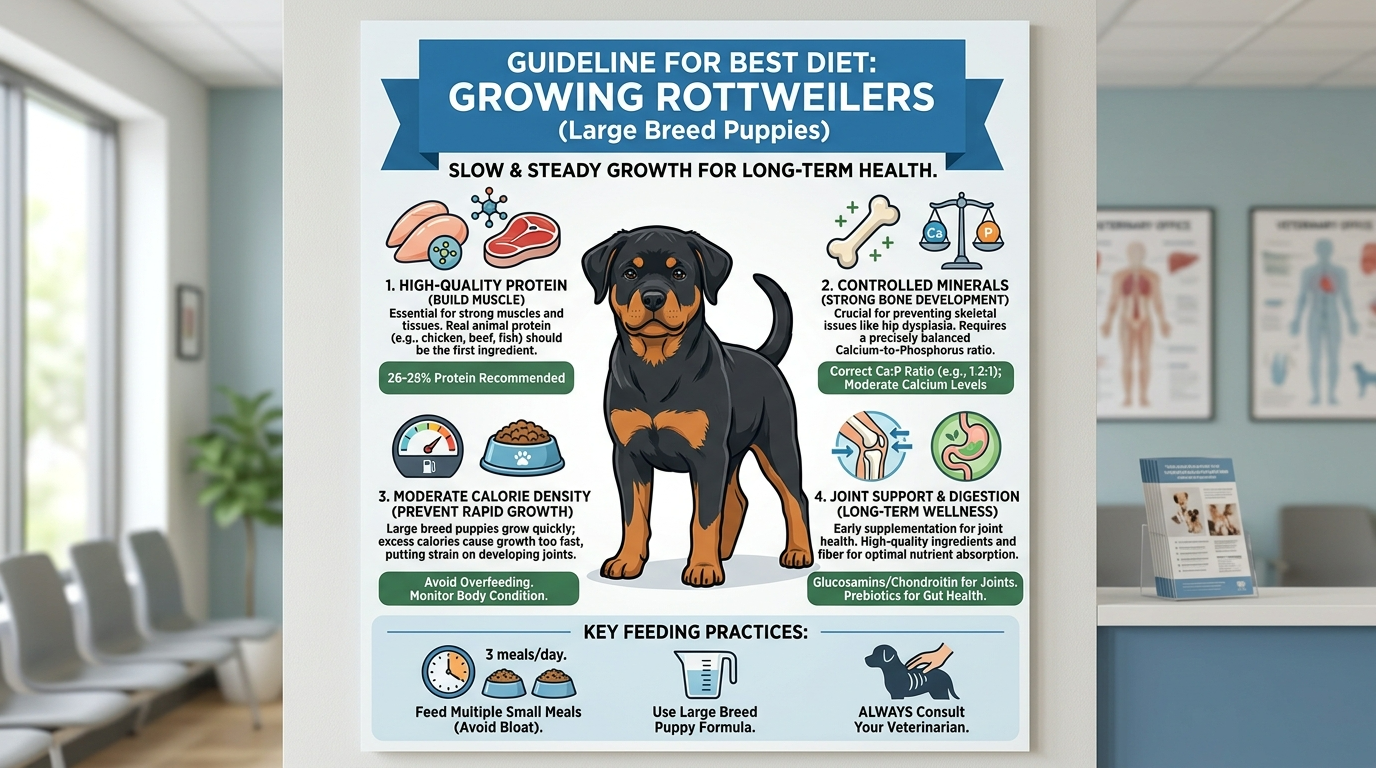
Large-breed puppies grow differently from smaller dogs. Instead of encouraging rapid size increases, nutrition should promote slow, steady development. The best diet growing Rottweilers emphasizes controlled calcium and phosphorus levels to protect joints.
Excess calcium may contribute to skeletal issues. Therefore, balanced large-breed puppy formulas remain essential. Additionally, high-quality animal protein supports muscle formation without excess fat accumulation.
Calorie density must match activity level. Active puppies burn more energy; however, portion control still prevents overgrowth. Monitoring body condition score helps determine whether adjustments are needed.
Hydration also supports digestion and organ function. Fresh water should always remain available. Moreover, consistent feeding times regulate metabolism and improve nutrient absorption.
By tailoring meals carefully, owners create a strong foundation for lifelong health.
Protein Quality and Muscle Development
Protein forms the building block of muscle and tissue growth. Because Rottweilers develop significant muscle mass, adequate protein intake becomes essential. However, quality matters more than quantity.
The best diet growing Rottweilers includes real animal-based protein as the primary ingredient. Chicken, beef, lamb, or fish provide complete amino acid profiles. Meanwhile, plant-based fillers should remain minimal.
Balanced protein intake supports strength without excessive weight gain. Overfeeding protein alone does not accelerate healthy growth. Instead, steady intake encourages proper development.
Furthermore, digestibility matters. Easily digestible protein reduces gastrointestinal stress and maximizes nutrient absorption. Puppies benefit from smaller, measured meals spread throughout the day.
Proper protein balance ensures lean muscle growth while protecting developing joints from unnecessary strain.
Calcium and Phosphorus Balance
Mineral ratios significantly influence skeletal health. Therefore, calcium and phosphorus must remain balanced carefully.
The best diet growing Rottweilers maintains an appropriate calcium-to-phosphorus ratio. Excess supplementation can disrupt natural bone development. For this reason, avoid adding extra calcium without veterinary guidance.
Large-breed puppy formulas are specifically designed to regulate these minerals. Additionally, controlled mineral levels help prevent hip and elbow complications.
Bone growth plates remain sensitive during early months. Consequently, stable mineral intake supports gradual maturation rather than rapid expansion.
Veterinary consultations provide reassurance. Blood tests or growth monitoring may identify potential concerns early. With proper mineral management, skeletal integrity remains strong and stable.
Healthy Fats for Brain and Coat Development
Fats provide concentrated energy and support neurological growth. Omega-3 and omega-6 fatty acids improve brain function and skin health.
The best diet growing Rottweilers includes fish oil or flaxseed as natural omega sources. These nutrients reduce inflammation and promote a shiny coat.
Balanced fat intake also enhances flavor and satiety. However, moderation remains critical. Excess fat may contribute to unwanted weight gain.
Because brain development continues during early life stages, essential fatty acids support cognitive growth. In addition, they help maintain joint lubrication.
By incorporating healthy fats thoughtfully, you strengthen both mental sharpness and physical resilience.
Feeding Schedule and Portion Control
Meal timing influences digestion and energy stability. Young puppies benefit from three to four small meals daily. As growth stabilizes, two meals usually suffice.
The best diet growing Rottweilers depends not only on ingredients but also on proper portions. Measuring food accurately prevents overfeeding.
Growth spurts may require temporary adjustments. However, avoid drastic increases without monitoring body condition. Consistent weigh-ins help track progress.
Free-feeding is discouraged. Structured mealtimes create discipline and improve digestive health. Additionally, scheduled feeding helps detect appetite changes quickly.
Routine builds stability. When meals occur at predictable times, metabolism remains steady and efficient.
Avoiding Rapid Growth and Obesity
Fast growth may appear impressive, yet it increases joint stress significantly. Therefore, gradual development protects long-term mobility.
The best diet growing Rottweilers emphasizes lean body condition rather than bulk. Visible waistlines and palpable ribs indicate healthy weight.
Excess weight during puppyhood strains hips and elbows. Moreover, obesity in adolescence increases arthritis risk later in life.
Regular exercise complements balanced feeding. Short play sessions and controlled walks support muscle tone without overexertion.
Monitoring growth charts helps identify trends. When weight rises too quickly, minor portion reductions often restore balance.
Sustainable growth supports longevity and comfort well into adulthood.
Transitioning to Adolescent Nutrition
Around six to eight months, growth patterns begin to shift. Caloric needs may change based on activity level.
The best diet growing Rottweilers evolves gradually. Transition slowly between formulas to avoid digestive upset. Mixing old and new food over seven days ensures smoother adaptation.
Adolescents require slightly lower calorie density than young puppies. However, protein quality should remain high.
Monitoring behavior also helps guide adjustments. Increased energy or appetite shifts may signal the need for recalibration.
Steady transitions prevent unnecessary stress. Gradual changes support digestive stability and nutrient absorption.
Homemade vs Commercial Diets
Some owners prefer preparing homemade meals. While this approach allows ingredient control, it demands precise nutritional balancing.
The best diet growing Rottweilers can include commercial large-breed puppy food formulated by veterinary nutritionists. These products meet established growth standards.
Homemade diets require professional guidance. Without proper formulation, deficiencies may develop silently.
If choosing home-prepared meals, consult a certified veterinary nutritionist. Balanced recipes protect skeletal and organ health.
Convenience and accuracy often make high-quality commercial diets a reliable choice. However, informed decisions ensure safety either way.
Supplements: Necessary or Optional?
Supplements attract attention, yet not all are essential. Many complete large-breed formulas already contain joint-supporting nutrients.
The best diet growing Rottweilers typically provides adequate glucosamine and omega fatty acids. Therefore, additional supplementation may be unnecessary.
Before adding vitamins or minerals, consult your veterinarian. Excess supplementation can disrupt natural balance.
Probiotics may benefit sensitive digestive systems. Additionally, fish oil supplements sometimes enhance coat quality when recommended professionally.
Thoughtful supplementation supports health only when guided carefully. More is not always better.
Monitoring Growth and Adjusting Diet
Consistent monitoring ensures continued success. Regular weigh-ins and body condition assessments reveal subtle shifts.
The best diet growing Rottweilers remains flexible. As activity increases, calorie needs may rise modestly. Conversely, slower growth phases may require reductions.
Veterinary checkups confirm that skeletal development remains on track. Additionally, joint evaluations detect early concerns.
Keeping feeding logs provides clarity. Tracking portions and reactions allows informed adjustments.
Through attentive observation, owners maintain steady development and prevent avoidable complications.
Conclusion: Building Strength Through Smart Nutrition
Nutrition shapes the future of every Rottweiler. Balanced feeding during early stages determines joint health, muscle strength, and longevity.
The best diet growing Rottweilers focuses on controlled growth, mineral balance, and high-quality protein. By avoiding rapid weight gain, you protect developing joints from strain.
Structured feeding schedules and consistent monitoring create stability. Moreover, professional guidance ensures safe adjustments as your dog matures.
Thoughtful dietary planning builds a resilient foundation. With proper nutrition and responsible portion control, your Rottweiler can grow into a strong, agile, and confident adult companion.
FAQ
1. How often should large-breed puppies be fed?
Young puppies benefit from three to four meals daily, gradually transitioning to two meals as they mature.
2. Is grain-free food recommended for Rottweiler puppies?
Grain-free diets are not automatically superior. Balanced nutrition and veterinary guidance matter most.
3. Should I add calcium supplements to support bone growth?
Extra calcium is usually unnecessary and may cause imbalance. Always consult a veterinarian first.
4. How can I tell if my puppy is overweight?
You should feel ribs easily without excess fat covering. A visible waist also indicates proper condition.
5. When should I switch to adult dog food?
Most Rottweilers transition between 15 and 18 months, depending on growth and veterinary advice.