
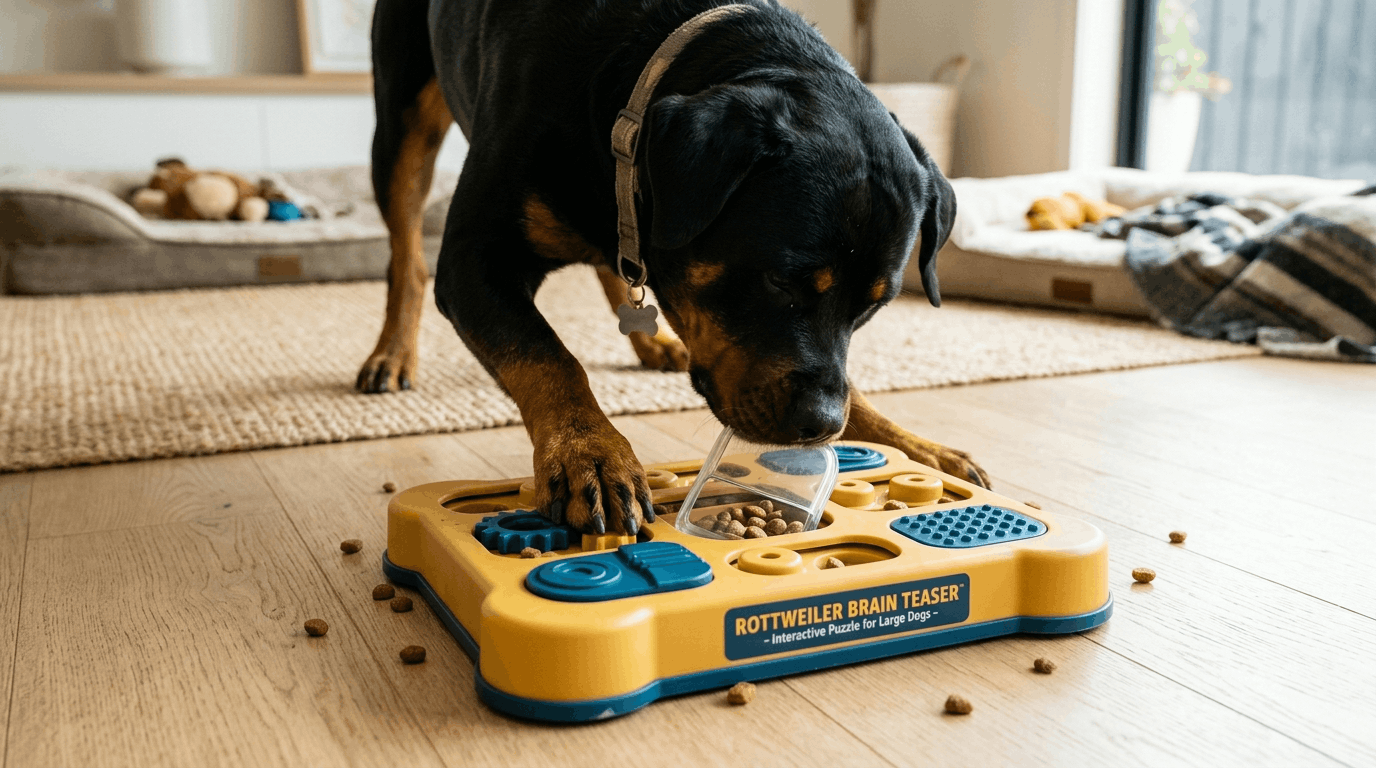
Rottweilers are powerful, intelligent dogs with strong appetites and high food motivation. While their enthusiasm around meals often appears harmless, eating too quickly may contribute to overeating, digestive discomfort, weight gain, and unhealthy feeding habits over time. Fortunately, puzzle feeders for rottweilers offer a practical and mentally enriching way to slow down meals while encouraging healthier eating behavior.
Many Rottweilers consume food rapidly because of natural food drive, excitement, boredom, or competition around meals. Some dogs finish entire bowls within seconds without chewing properly. Over time, this habit may increase risks associated with bloating, poor digestion, excessive calorie intake, and constant food obsession.
The best puzzle feeders for rottweilers help transform mealtime into a mentally stimulating activity rather than a rushed feeding event. These tools encourage dogs to work for food gradually through licking, pawing, nudging, or problem-solving behaviors.
Most importantly, puzzle feeding supports both physical and mental wellness simultaneously. Intelligent breeds like Rottweilers often benefit greatly from activities engaging their minds alongside their bodies.
Why Fast Eating Becomes a Problem
Many owners underestimate how quickly poor feeding habits affect overall health and behavior. Rapid eating often encourages dogs to swallow air, consume excessive calories, and remain mentally unsatisfied after meals.
Puzzle feeders for rottweilers help address these issues by slowing food intake naturally and increasing feeding engagement.
Fast eaters sometimes experience vomiting, bloating, gas, or digestive discomfort after meals. Additionally, dogs finishing meals instantly may continue begging or scavenging because feeding lacks mental stimulation and satisfaction.
Some Rottweilers also develop obsessive food behaviors when meals disappear too quickly. They may become hyperfocused on food, counter surf constantly, or display frustration between feedings.
Slower feeding encourages better digestion while helping dogs feel fuller and calmer afterward.
How Puzzle Feeders Work
Puzzle feeders create challenges requiring dogs to interact with food gradually instead of consuming everything immediately from an open bowl.
Many puzzle feeders for rottweilers involve compartments, grooves, moving pieces, rolling dispensers, or textured surfaces that release food slowly during interaction.
Dogs may use paws, noses, tongues, or problem-solving behaviors to access kibble or treats step by step.
Some feeders remain stationary, while others roll or move unpredictably to increase mental engagement further.
The goal involves slowing food consumption while stimulating natural canine behaviors such as foraging, searching, and problem-solving.
Interactive feeding often transforms mealtime into an enriching activity supporting emotional and mental balance alongside physical nutrition.
Mental Stimulation Helps Reduce Food Obsession
Rottweilers are highly intelligent working dogs requiring regular mental engagement. Without enough stimulation, boredom sometimes increases food fixation and overeating behaviors.
Puzzle feeders for rottweilers provide valuable cognitive exercise that helps reduce frustration and improve emotional satisfaction.
Dogs solving feeding challenges often remain mentally occupied longer compared to dogs eating rapidly from standard bowls.
Mental stimulation also tires dogs cognitively, which may reduce destructive behavior, excessive barking, or restlessness later in the day.
Many owners notice calmer post-meal behavior once puzzle feeding becomes part of regular routines.
Intelligent dogs frequently benefit from activities requiring focus and independent thinking rather than passive consumption alone.
Supporting Healthy Weight Management
Weight management remains extremely important for large breeds because excess body fat increases stress on joints, hips, and overall long-term health.
Puzzle feeders for rottweilers may help support healthier weight control by slowing calorie intake and improving meal satisfaction naturally.
Dogs eating slowly often recognize fullness signals more effectively than dogs inhaling food rapidly.
Additionally, puzzle feeding increases physical and mental effort during meals, creating more engagement without adding excessive calories.
Owners sometimes overfeed unintentionally because fast eaters appear constantly hungry. However, mentally stimulating feeding methods may improve satisfaction significantly without increasing portions.
Healthy body condition helps support mobility, joint health, endurance, and long-term wellness throughout every life stage.
Reducing Bloat and Digestive Stress
Large deep-chested breeds such as Rottweilers may face increased risk for gastric dilatation-volvulus, commonly known as bloat. Although puzzle feeders cannot eliminate this risk entirely, slower eating habits may help reduce certain contributing factors.
Many puzzle feeders for rottweilers encourage calmer slower consumption that may reduce excessive air swallowing during meals.
Rapid eating sometimes increases digestive stress because dogs consume large amounts of food too quickly without proper chewing.
Slower feeding may support improved digestion and reduce post-meal discomfort or regurgitation in some dogs.
Owners should still avoid intense exercise immediately before or after feeding because activity timing also influences digestive safety.
Choosing the Right Puzzle Feeder
Not every feeding toy suits every dog equally. Size, durability, difficulty level, and feeding style all matter when selecting appropriate tools.
The best puzzle feeders for rottweilers should remain durable enough for strong jaws and enthusiastic interaction.
Heavy-duty rubber feeders, slow-feed bowls, rolling dispensers, and treat puzzles often work well for large intelligent breeds.
Owners should avoid flimsy plastic products easily damaged by powerful chewers.
Difficulty level also matters greatly. Feeders too simple may fail to provide enough engagement, while overly difficult puzzles sometimes create frustration.
Starting with moderate challenges usually helps dogs build confidence and interest gradually.
Slow-Feed Bowls Versus Interactive Puzzles
Some owners assume all feeding tools function identically. However, slow-feed bowls and advanced interactive puzzles provide different experiences.
Simple puzzle feeders for rottweilers may include maze-like bowls slowing physical eating speed primarily.
More advanced puzzles require problem-solving behaviors involving movement, scent tracking, or manipulation to access food gradually.
Slow-feed bowls work well for beginners transitioning away from rapid eating habits.
Interactive puzzles generally provide stronger mental enrichment and longer engagement sessions overall.
Many owners combine both approaches depending on feeding situations and activity goals.
Using Puzzle Feeders Safely
Safety always matters when introducing new feeding tools. Dogs should never feel frustrated, overwhelmed, or unsupervised with unsafe products.
Owners using puzzle feeders for rottweilers should monitor early sessions carefully while ensuring dogs understand how to interact successfully.
Feeders should remain appropriately sized to prevent choking hazards or accidental swallowing of removable pieces.
Cleaning also remains important because food residue and saliva buildup may encourage bacterial growth over time.
Rotating feeding tools regularly helps maintain novelty while reducing boredom.
Most importantly, owners should introduce puzzle feeding gradually rather than replacing all meals immediately with highly difficult challenges.
Preventing Frustration During Feeding
Mental stimulation should remain rewarding rather than emotionally stressful. Therefore, puzzle difficulty must match the individual dog’s skill level and confidence.
Some puzzle feeders for rottweilers may initially frustrate dogs if food access feels too difficult or confusing.
Owners should begin with simple puzzles allowing quick success before increasing complexity gradually.
Encouragement and patience help dogs learn feeding mechanics more comfortably.
If frustration signs appear repeatedly, easier designs may work better temporarily until confidence improves.
Positive feeding experiences support healthier emotional responses and stronger long-term engagement overall.
Creating Better Mealtime Routines
Structured feeding routines strongly influence emotional balance and eating habits. Puzzle feeding often works best within calm predictable schedules.
Puzzle feeders for rottweilers may become valuable parts of broader enrichment routines supporting both physical and mental wellness.
Owners should feed meals in calm environments without excessive excitement or competition from other pets whenever possible.
Some dogs benefit from separate feeding spaces reducing pressure or rushing behaviors around food.
Consistent meal timing also helps regulate digestion and emotional expectations more effectively.
Structured routines often create calmer feeding behavior while reducing food-related anxiety or obsession.
Using Puzzle Feeders for Indoor Enrichment
Bad weather, busy schedules, or limited outdoor activity sometimes reduce daily stimulation opportunities. Interactive feeding helps fill those gaps productively.
Many puzzle feeders for rottweilers provide excellent indoor enrichment during rainy days or lower-activity periods.
Food-dispensing toys encourage movement, problem-solving, and independent engagement inside the home.
This mental activity may help reduce boredom-related behaviors such as pacing, chewing, barking, or attention-seeking.
Indoor enrichment becomes especially valuable for intelligent working breeds requiring regular cognitive stimulation beyond physical exercise alone.
Supporting Emotional Wellness Through Feeding
Mealtime experiences influence emotional health more than many owners realize. Feeding should involve calm engagement rather than frantic consumption or constant competition.
Puzzle feeders for rottweilers help encourage slower calmer eating while creating positive cognitive engagement around food.
Dogs often appear more relaxed and emotionally satisfied after mentally stimulating feeding sessions compared to rapid passive eating.
Mental enrichment during meals also supports confidence, independence, and healthy frustration tolerance gradually over time.
Owners sometimes focus solely on calorie intake while overlooking emotional feeding experiences that strongly affect behavior and overall wellness.
Long-Term Benefits of Interactive Feeding
The benefits of puzzle feeding extend far beyond slowing food intake temporarily. Over time, interactive feeding often supports healthier habits, better emotional regulation, and improved daily enrichment overall.
Consistent use of puzzle feeders for rottweilers may help reduce overeating, improve digestion, encourage mental stimulation, and support healthier weight management long term.
These tools also provide opportunities for independent problem-solving and structured engagement throughout daily routines.
Most importantly, puzzle feeding encourages dogs to interact thoughtfully with food rather than consuming meals mindlessly within seconds.
Rottweilers thrive when both body and mind remain actively engaged. Through slower feeding, cognitive enrichment, and healthier eating patterns, puzzle feeders can become valuable tools supporting long-term physical and emotional wellness throughout every stage of life.
FAQ
1. Why do Rottweilers benefit from puzzle feeders?
Puzzle feeders slow eating, provide mental stimulation, and help reduce overeating or boredom-related behaviors.
2. Can slow feeding improve digestion?
Yes, slower eating may help reduce air swallowing, bloating, and digestive discomfort in some dogs.
3. Are puzzle feeders good for intelligent breeds?
Yes, mentally stimulating feeding tools often work especially well for intelligent working breeds like Rottweilers.
4. How do owners choose safe feeding puzzles?
Durable materials, proper sizing, easy cleaning, and appropriate difficulty levels usually matter most.
5. Should puzzle feeders replace regular exercise?
No, interactive feeding supports enrichment but should complement regular physical exercise and training routines.