Rottweilers are strong, intelligent, and loyal dogs that thrive when owners maintain consistent care routines at home. Although their short coats may appear low maintenance compared to long-haired breeds, daily hygiene still plays an important role in supporting skin health, comfort, odor control, and overall wellness. A proper rottweiler hygiene routine can also help owners identify health concerns early before they become more serious.
Many people assume short-haired breeds require very little grooming. However, Rottweilers still shed, accumulate dirt, develop ear buildup, and experience dental problems without regular maintenance. Additionally, their large size means hygiene issues may become uncomfortable quickly if neglected.
The best rottweiler hygiene routine focuses on consistency rather than overly complicated care schedules. Small daily habits often prevent larger grooming or health problems from developing later.
Most importantly, hygiene care should feel calm and positive rather than stressful or forceful. Dogs usually cooperate better when routines remain predictable and gentle.
Why Daily Hygiene Matters for Rottweilers
Cleanliness affects much more than appearance alone. Healthy hygiene habits support skin condition, infection prevention, comfort, and emotional wellness over time.
A consistent rottweiler hygiene routine may help reduce skin irritation, unpleasant odors, ear infections, dental disease, and excessive shedding.
Rottweilers are active dogs that frequently spend time outdoors. Dirt, moisture, bacteria, and debris can accumulate on paws, under nails, and around skin folds surprisingly quickly.
Regular hygiene checks also allow owners to monitor for lumps, cuts, parasites, hot spots, or signs of discomfort early.
Daily handling during grooming routines helps strengthen trust and comfort with physical care as well. Dogs accustomed to touch and inspection often tolerate veterinary visits and grooming more calmly.
Good hygiene supports healthier long-term wellness while improving household cleanliness and comfort too.
Brushing the Coat Regularly
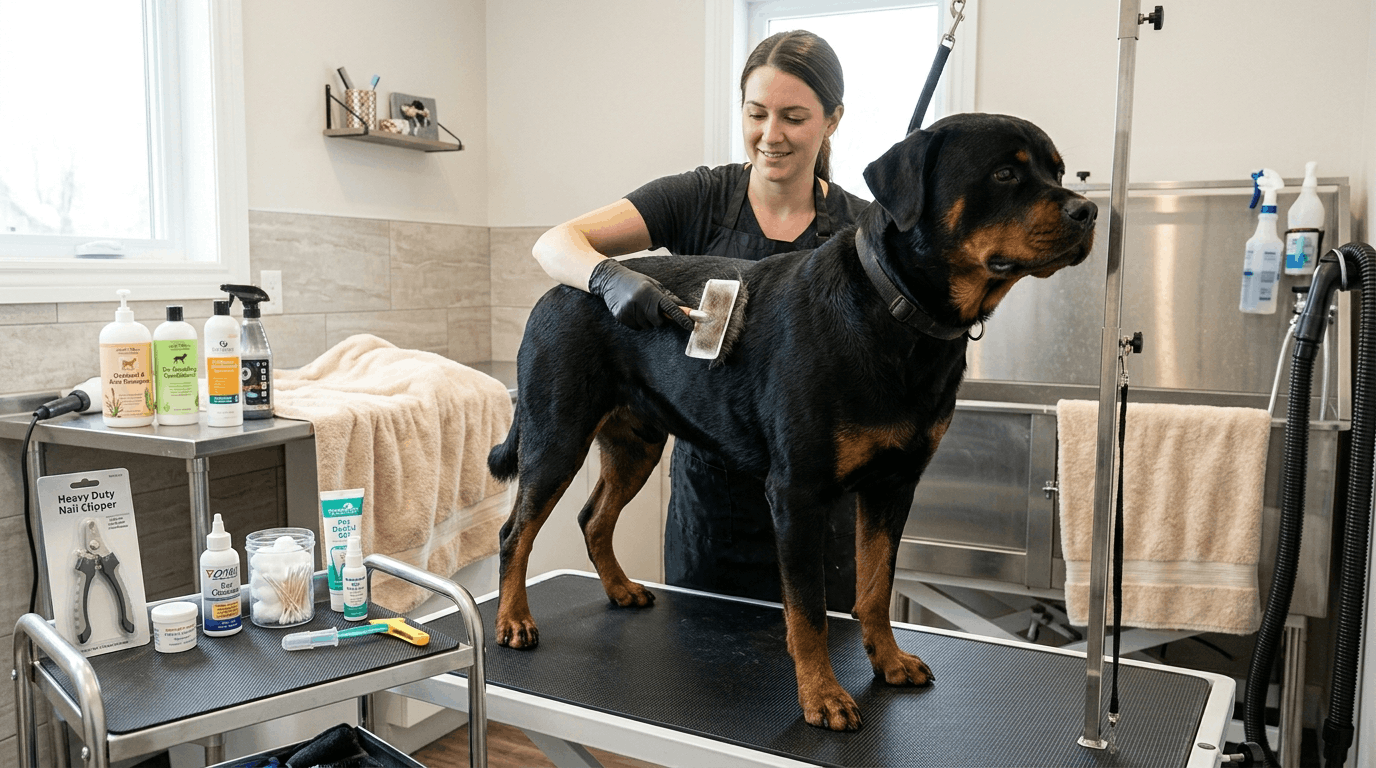
Although Rottweilers have short coats, brushing remains an important part of proper maintenance. Regular brushing helps remove loose fur, dirt, and dead skin while distributing natural oils throughout the coat.
A healthy rottweiler hygiene routine usually includes brushing several times each week, although daily brushing during shedding seasons often helps reduce loose hair significantly.
Rubber curry brushes, grooming mitts, or soft-bristle brushes generally work well for short-coated breeds.
Brushing also stimulates circulation while helping owners check for skin irritation, bumps, or parasites hidden beneath the coat.
Many Rottweilers enjoy brushing sessions because gentle grooming often feels relaxing and comforting when introduced positively.
Consistent coat care usually supports shinier fur and healthier skin over time.
Keeping Skin Healthy and Comfortable
Skin health strongly influences overall comfort and coat condition. Dryness, irritation, allergies, or trapped moisture may create discomfort if left untreated.
A balanced rottweiler hygiene routine should include regular skin inspections, especially after outdoor activities or bathing sessions.
Owners should monitor for redness, flaky patches, excessive scratching, hot spots, or unusual odor. Early detection often prevents minor irritation from becoming more serious.
Bathing frequency matters as well. Overbathing may strip natural oils from the skin, while infrequent cleaning sometimes allows odor and buildup to increase excessively.
Most healthy Rottweilers benefit from occasional bathing using gentle dog-safe shampoos formulated for skin balance and coat health.
After bathing, coats should dry thoroughly because trapped moisture may contribute to irritation or bacterial growth.
Cleaning the Ears Properly
Ear hygiene remains especially important because bacteria, wax, moisture, and debris may accumulate gradually inside the ears.
A complete rottweiler hygiene routine should include regular ear checks for redness, odor, discharge, or irritation.
Healthy ears usually appear clean, pale pink, and free from strong odor. Excessive scratching or head shaking sometimes signals infection or discomfort needing veterinary attention.
Owners should clean ears gently using veterinarian-approved ear cleaners and soft cotton pads. Cotton swabs inserted deeply into ear canals should always be avoided.
After swimming or bathing, ears should dry carefully because moisture retention sometimes increases infection risk.
Consistent ear maintenance often prevents more painful issues from developing later.
Dental Care for Long-Term Health
Dental hygiene strongly affects overall health in dogs. Unfortunately, many owners overlook oral care until serious tartar buildup or gum disease develops.
A proper rottweiler hygiene routine should include regular tooth brushing whenever possible.
Plaque and bacteria may contribute to bad breath, gum inflammation, tooth loss, and even internal health complications over time.
Dog-safe toothpaste and soft canine toothbrushes usually work best. Introducing brushing gradually helps dogs feel more comfortable with oral handling.
Dental chews and veterinarian-approved oral products may also support healthier teeth between brushing sessions.
Fresh breath alone should not determine dental health because significant disease sometimes develops without obvious odor initially.
Consistent dental care often improves comfort, eating habits, and long-term wellness dramatically.
Maintaining Healthy Paws and Nails
Paws experience constant environmental exposure through walks, outdoor play, and daily activity. Consequently, regular paw care becomes essential for active breeds like Rottweilers.
A thorough rottweiler hygiene routine includes checking paws daily for cuts, cracked pads, debris, swelling, or irritation.
Owners should also inspect between toes because mud, moisture, grass seeds, or small objects may become trapped unnoticed.
Nail maintenance remains equally important. Overgrown nails may affect posture, walking comfort, and joint stress over time.
Most dogs require regular trimming or natural wear through exercise. However, some active dogs still develop uneven nail growth needing maintenance.
Introducing nail handling early usually improves long-term cooperation significantly.
Managing Drool and Facial Cleanliness
Some Rottweilers drool moderately, especially after exercise, eating, or drinking water. Saliva buildup around the mouth sometimes contributes to odor or skin irritation if ignored.
A simple rottweiler hygiene routine often includes wiping the mouth area gently after meals or outdoor activity.
Soft damp cloths usually work well for removing saliva residue and dirt comfortably.
Owners should also monitor for redness around lips or chin because trapped moisture occasionally irritates sensitive skin.
Facial cleaning routines remain quick and manageable when performed consistently.
Bathing Without Overdoing It
Bathing frequency depends on lifestyle, activity level, and skin condition. However, excessive bathing may dry the skin unnecessarily while insufficient cleaning sometimes increases odor or buildup.
A balanced rottweiler hygiene routine generally includes occasional baths combined with regular brushing and spot cleaning.
Dogs spending significant time outdoors may require more frequent washing during muddy seasons or after swimming.
Owners should always use dog-safe shampoos because human products often disrupt canine skin balance.
Warm water and calm handling usually help large dogs feel more comfortable during bathing sessions.
Afterward, drying thoroughly remains extremely important, especially around chest areas, under legs, and skin folds where moisture may linger.
Keeping Bedding and Living Spaces Clean
Environmental cleanliness strongly affects hygiene and skin health. Dirty bedding, damp blankets, or dusty living areas may contribute to odor and irritation over time.
An effective rottweiler hygiene routine should include regular washing of bedding, blankets, toys, and food bowls.
Clean sleeping areas help reduce bacteria, allergens, and lingering odor while supporting healthier skin and coat condition.
Vacuuming floors and furniture regularly also helps manage shedding and environmental debris more effectively.
Owners sometimes focus heavily on grooming while overlooking environmental hygiene that directly affects dogs daily.
Monitoring Odor Changes
Every dog has a natural scent, although sudden or unusually strong odor may signal underlying hygiene or health concerns.
A healthy rottweiler hygiene routine includes paying attention to changes in coat smell, breath odor, ears, or skin condition.
Persistent bad breath may indicate dental disease. Strong ear odor often suggests infection, while sour skin smells sometimes relate to bacterial or yeast imbalance.
Owners should avoid masking odor with heavy fragrances because underlying causes still require attention.
Monitoring scent changes helps identify problems earlier while supporting healthier long-term care.
Creating Positive Hygiene Experiences
Many dogs resist grooming because they associate handling with stress or discomfort. Therefore, emotional comfort matters greatly during hygiene routines.
A successful rottweiler hygiene routine should feel calm, predictable, and rewarding whenever possible.
Treats, praise, and gentle handling help dogs cooperate more willingly during brushing, ear cleaning, or nail care.
Short positive sessions usually work better than long overwhelming grooming attempts.
Owners should also remain patient during training because large dogs sometimes require gradual desensitization to certain procedures.
Positive experiences build trust while reducing anxiety around physical handling over time.
Adjusting Hygiene Through Different Seasons
Weather changes often affect coat condition, shedding, and hygiene needs throughout the year.
During warmer months, a rottweiler hygiene routine may involve more frequent paw cleaning, bathing, and outdoor debris checks.
Winter weather sometimes introduces salt exposure, dry skin, or muddy conditions requiring additional paw and coat maintenance.
Seasonal shedding periods may also increase brushing needs significantly.
Owners should remain flexible while adapting care routines based on climate, activity, and environmental exposure.
Supporting Long-Term Wellness Through Hygiene
Daily care habits do much more than keep dogs visually clean. Consistent hygiene supports comfort, emotional stability, skin health, and early health monitoring throughout life.
A balanced rottweiler hygiene routine helps owners build stronger bonds while maintaining healthier living conditions for both dogs and families.
Most importantly, hygiene routines should remain manageable and sustainable long term. Simple consistent habits usually create better results than occasional intensive grooming efforts.
Rottweilers thrive when owners combine structure, attention, and gentle handling into everyday care routines. Through regular brushing, ear cleaning, dental care, paw maintenance, and environmental cleanliness, owners can support healthier, happier, and more comfortable dogs throughout every stage of life.
FAQ
1. How often should Rottweilers be brushed?
Most Rottweilers benefit from brushing several times weekly, especially during seasonal shedding periods.
2. Do Rottweilers need regular ear cleaning?
Yes, routine ear checks and gentle cleaning help prevent wax buildup and possible infections.
3. How can owners reduce Rottweiler odor at home?
Regular brushing, proper bathing, dental care, and clean bedding often help reduce strong odors effectively.
4. Should Rottweilers have their teeth brushed regularly?
Yes, regular dental care supports healthier gums, fresher breath, and reduced plaque buildup over time.
5. Why is paw care important for active dogs?
Daily paw checks help identify cuts, debris, cracked pads, and nail issues before discomfort worsens.