Finding the right approach to feeding and activity can feel overwhelming at first, but rottweiler nutrition balance is the foundation of a healthy and happy dog. Because rottweilers are strong, muscular, and naturally energetic, their needs differ from smaller or less active breeds. As a result, understanding how calories and exercise work together becomes essential for maintaining ideal weight and overall well-being.
Many owners focus only on food quality, which is important, but that is only part of the picture. Without proper activity, even the best diet can lead to weight gain. On the other hand, too much exercise without adequate nutrition can affect energy levels and muscle development. Therefore, achieving rottweiler nutrition balance requires a thoughtful combination of both factors.
Understanding Caloric Needs For Rottweilers
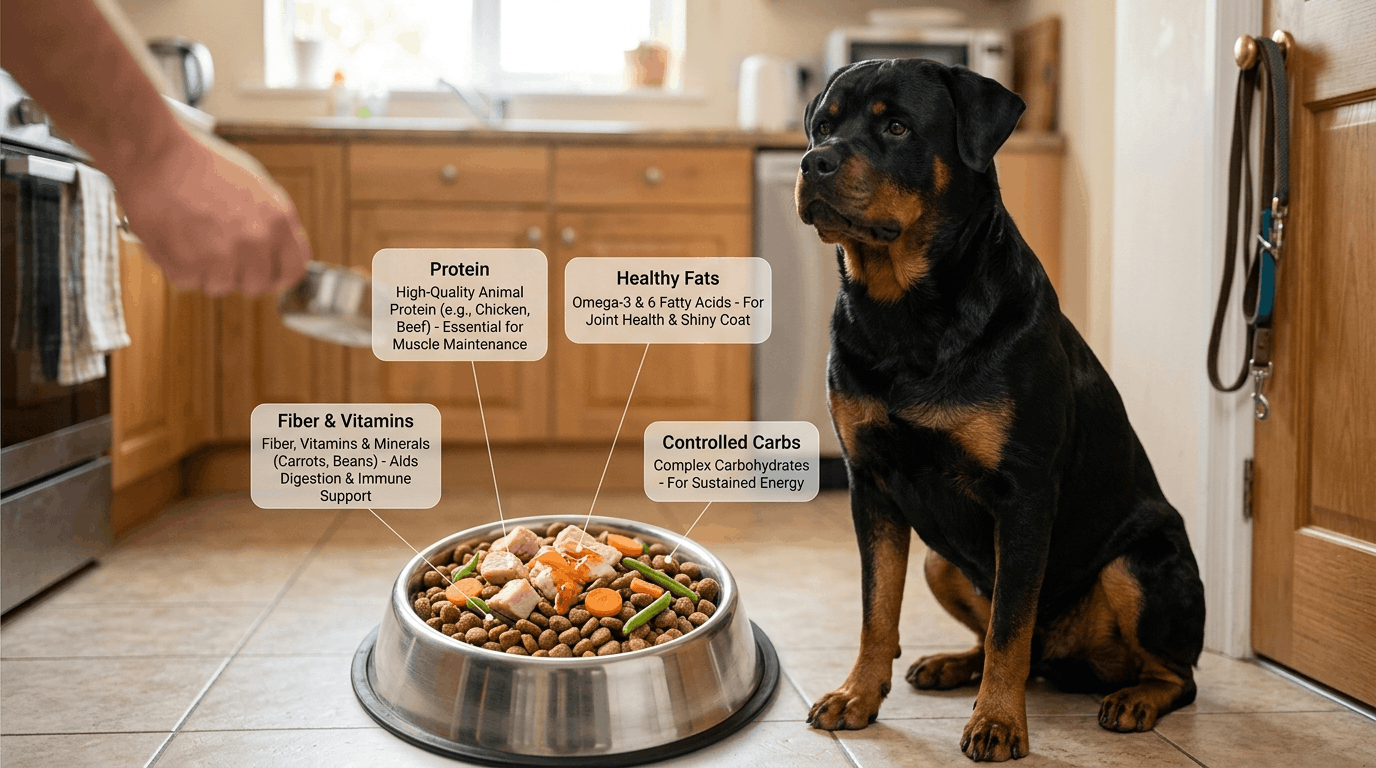
Calories provide the energy your dog needs for daily activity, growth, and bodily functions. However, not all dogs require the same amount. Age, weight, metabolism, and activity level all influence how many calories your rottweiler needs each day.
For example, a growing puppy requires more calories per pound than an adult dog. This is because their body is developing rapidly. In contrast, an older rottweiler may need fewer calories due to a slower metabolism and reduced activity. Because of this, adjusting food intake over time is essential for maintaining rottweiler nutrition balance.
Additionally, body condition is a better indicator than strict feeding guidelines. If your dog is gaining excess weight, it may be a sign of overfeeding. Conversely, if they appear too thin, increasing calorie intake might be necessary. Therefore, regularly assessing your dog’s physical condition helps you stay on track.
It is also important to consider the calorie density of food. Some foods contain more calories in smaller portions, which can lead to overfeeding if not measured carefully. Paying attention to portion sizes ensures your dog receives the right amount of energy without excess.
The Role Of Exercise In Maintaining Balance
While nutrition provides fuel, exercise determines how that energy is used. This is why rottweiler nutrition balance depends heavily on regular physical activity. Without enough movement, excess calories are stored as fat, which can lead to obesity and related health issues.
Rottweilers thrive on both physical and mental stimulation. Daily walks, play sessions, and training activities help burn calories while also keeping their mind engaged. Because of this, exercise is not just about weight management but also about overall health and behavior.
However, it is important to match exercise levels with your dog’s age and condition. Puppies require shorter, less intense sessions to protect their developing joints. Adult dogs, on the other hand, benefit from longer and more structured activity.
Consistency also plays a key role. Regular exercise routines support rottweiler nutrition balance by creating predictable energy use. When activity levels fluctuate too much, it becomes harder to adjust food intake accurately.
Finding The Right Balance Between Food And Activity
Achieving rottweiler nutrition balance means aligning calorie intake with daily energy expenditure. While this may sound simple, it requires observation and adjustment over time. Every dog is unique, so there is no one-size-fits-all formula.
Start by establishing a baseline. Feed your dog according to recommended guidelines, then monitor their weight and energy levels. If your dog gains weight, consider reducing portions slightly or increasing activity. If they lose weight or seem low on energy, adjustments may be needed in the opposite direction.
In addition, treat intake should be factored into daily calories. Many owners overlook this detail, yet treats can quickly add extra calories. Limiting treats or choosing healthier options helps maintain rottweiler nutrition balance without sacrificing training rewards.
Hydration also supports this balance. Proper water intake aids digestion, energy levels, and overall health. Ensuring your dog always has access to fresh water complements both nutrition and exercise efforts.
Common Mistakes That Disrupt Balance
Even with good intentions, certain habits can interfere with rottweiler nutrition balance. Recognizing these mistakes allows you to make better decisions and avoid long-term issues.
One common mistake is overfeeding. Because rottweilers often have a strong appetite, it is easy to give more food than needed. Over time, this leads to gradual weight gain, which may go unnoticed until it becomes a problem.
Another issue is inconsistent exercise. Skipping walks or reducing activity without adjusting food intake creates an imbalance. As a result, excess calories accumulate, affecting your dog’s health.
Feeding table scraps is another factor. While occasional treats may seem harmless, human food often contains extra calories and ingredients that are not ideal for dogs. This can disrupt rottweiler nutrition balance and lead to digestive issues.
Additionally, ignoring changes in your dog’s life stage can cause problems. As your dog ages, their nutritional needs evolve. Failing to adjust feeding and exercise accordingly can lead to weight and health challenges.
Adapting Nutrition For Growth And Aging
Your approach to rottweiler nutrition balance should change as your dog grows. Puppies, adults, and senior dogs all have different requirements, so flexibility is essential.
During the puppy stage, growth is rapid, and energy needs are high. Providing nutrient-rich food supports development while moderate exercise builds strength. However, overfeeding during this stage can lead to excessive weight gain, which may affect joint health.
As your dog reaches adulthood, maintaining weight becomes the priority. Balanced meals and consistent exercise routines help sustain muscle mass and overall fitness. At this stage, monitoring changes in activity level is especially important.
In later years, metabolism slows, and activity often decreases. Because of this, reducing calorie intake while maintaining gentle exercise supports rottweiler nutrition balance. This approach helps prevent obesity while preserving mobility and quality of life.
The Long Term Impact Of Proper Balance
Maintaining rottweiler nutrition balance has long-term benefits that extend beyond weight control. A well-balanced approach supports joint health, cardiovascular function, and overall vitality. As a result, your dog enjoys a higher quality of life.
In addition, balanced nutrition and exercise contribute to better behavior. Dogs with proper energy levels are less likely to develop destructive habits or anxiety-related behaviors. This makes daily life more enjoyable for both you and your pet.
Furthermore, preventing obesity reduces the risk of serious health conditions such as diabetes, heart disease, and joint problems. By focusing on balance early, you can avoid many of these issues later on.
Consistency remains key. Small daily habits, such as measured feeding and regular exercise, add up over time. These habits create a stable routine that supports your dog’s health and well-being.
Conclusion
Achieving the right balance between calories and exercise is essential for your dog’s health, and rottweiler nutrition balance plays a central role in this process. By understanding your dog’s needs, monitoring their condition, and making thoughtful adjustments, you create a sustainable approach to care.
Although it may take time to find the perfect routine, the effort is well worth it. A balanced rottweiler is healthier, more energetic, and easier to manage. Over time, this balance strengthens your bond and ensures your dog enjoys a long and active life.
FAQ
- How many calories does a rottweiler need daily?
The amount varies based on age, weight, and activity level, so monitoring body condition is essential. - Can too much exercise affect my dog’s health?
Yes, excessive exercise can strain joints, especially in puppies, so moderation is important. - What are signs my dog is overweight?
A lack of visible waistline and difficulty feeling ribs are common indicators of excess weight. - Should I adjust food intake when activity changes?
Yes, changes in exercise levels should be matched with adjustments in calorie intake. - Are treats harmful to my dog’s diet?
Treats are fine in moderation, but they should be included in your dog’s daily calorie count.