
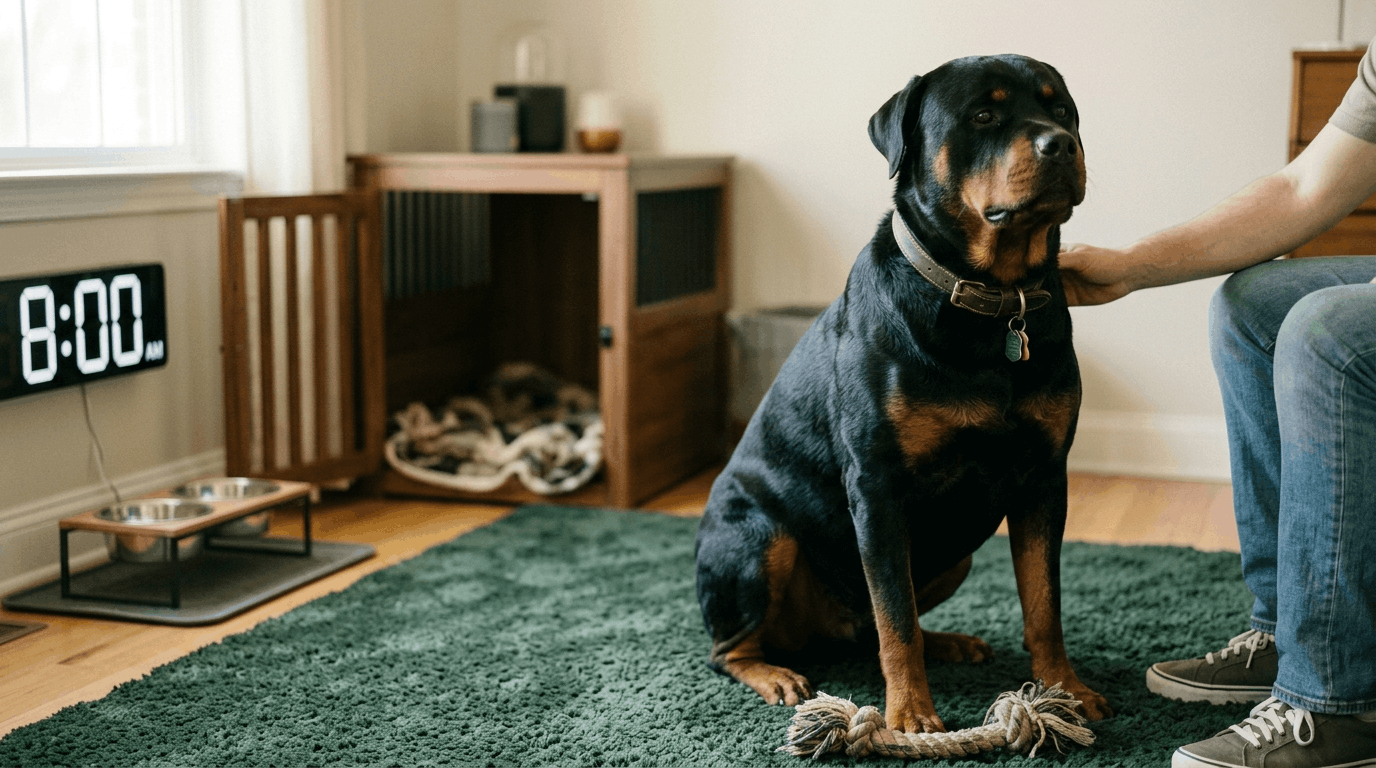
When you bring a rottweiler into your life, one of the most important lessons you will learn is that consistency reduces rottweiler anxiety in ways that go far beyond basic training. These dogs are intelligent, loyal, and deeply connected to their environment, which means even small changes can affect their emotional state. Because of this, a stable and predictable routine becomes essential for helping them feel secure and balanced.
At first, many owners underestimate how sensitive rottweilers can be to inconsistency. However, over time, it becomes clear that structure and repetition create a sense of safety. When your dog knows what to expect, they relax more easily, respond better to commands, and show fewer signs of stress or fear.
How Structure Shapes Your Dog’s Emotional Stability
One of the key reasons consistency reduces rottweiler anxiety is that it removes uncertainty from their daily life. Dogs naturally seek patterns, and rottweilers are especially tuned to routines. When feeding, walking, and training happen at similar times each day, your dog begins to anticipate what comes next.
Because of this predictability, their stress levels decrease. Instead of constantly reacting to new or unexpected situations, they settle into a rhythm. This stability allows them to focus on learning and bonding rather than worrying about what might happen next.
In addition, structure helps your dog understand boundaries. Clear rules that are consistently enforced prevent confusion. For example, if your rottweiler is allowed on the couch one day but not the next, they struggle to understand expectations. Over time, this inconsistency can lead to anxiety-driven behaviors such as whining or restlessness.
As a result, maintaining consistent rules creates clarity. Your dog learns what is acceptable and what is not, which reduces uncertainty and builds confidence.
The Role Of Daily Routines In Reducing Stress
Daily routines play a major role in how consistency reduces rottweiler anxiety. From morning walks to evening downtime, each part of the day contributes to your dog’s emotional well-being. Even simple habits, such as feeding at the same time, can make a noticeable difference.
For example, when meals are predictable, your dog does not feel the need to worry about food availability. Similarly, regular exercise helps release pent-up energy, which might otherwise turn into nervous or destructive behavior. Because rottweilers are active dogs, physical activity is essential for maintaining both mental and emotional balance.
Moreover, routines extend beyond physical needs. Mental stimulation, such as training sessions or puzzle toys, also plays a part. When these activities occur regularly, your dog begins to expect them, which adds another layer of stability to their day.
While flexibility is sometimes necessary, frequent changes can disrupt this balance. Therefore, keeping routines as consistent as possible supports a calmer and more confident dog.
Training Consistency Builds Trust And Confidence
Another reason consistency reduces rottweiler anxiety is its impact on training. Rottweilers respond best when commands, rewards, and corrections remain predictable. When training methods change frequently, dogs become confused and may hesitate to respond.
Consistency in commands is especially important. Using the same words and tone helps your dog understand exactly what you expect. For instance, switching between different cues for the same action can create uncertainty. Over time, this confusion may lead to frustration or anxiety.
Equally important is consistent reinforcement. Rewarding good behavior every time it occurs strengthens positive habits. On the other hand, ignoring or inconsistently rewarding actions sends mixed signals. This lack of clarity can make your dog feel unsure, which often shows as nervous behavior.
As trust builds through consistent training, your rottweiler becomes more confident. They begin to rely on you as a stable guide, which significantly reduces stress in new or challenging situations.
Why Inconsistency Triggers Anxiety In Rottweilers
To fully understand why consistency reduces rottweiler anxiety, it helps to look at the effects of inconsistency. When routines change frequently or rules are unclear, your dog struggles to predict outcomes. This uncertainty creates stress, even if the changes seem minor to you.
For example, irregular schedules can disrupt your dog’s internal rhythm. Skipping walks or delaying meals may seem harmless, but over time, these changes create tension. Your dog may become restless, vocal, or even destructive as they try to cope.
Inconsistent reactions from owners also contribute to anxiety. If a behavior is sometimes punished and sometimes ignored, your dog cannot determine what is expected. This confusion often leads to hesitation or fear-based responses.
Additionally, inconsistent social exposure can affect confidence. If your rottweiler is only occasionally exposed to new environments, they may struggle to adapt. However, regular and controlled exposure helps them feel more comfortable over time.
Because of these factors, maintaining consistency is not just helpful but essential for emotional stability.
Creating A Consistent Environment At Home
Establishing a stable environment is one of the most effective ways consistency reduces rottweiler anxiety. This begins with simple steps that gradually shape your dog’s daily experience. While perfection is not necessary, reliability is key.
Start by setting regular times for meals, walks, and bedtime. Even small adjustments toward consistency can have a noticeable impact. Over time, your dog will begin to anticipate these events, which creates a sense of control and calmness.
In addition, maintain consistent rules within the household. Everyone in the home should follow the same guidelines regarding behavior. This prevents mixed signals and ensures your dog receives clear communication.
Creating a designated space for rest also helps. A comfortable and quiet area allows your rottweiler to relax without distractions. When they know they have a safe place to retreat, their overall anxiety levels decrease.
Although life can be unpredictable, aiming for consistency in everyday interactions builds a strong foundation for your dog’s well-being.
Long Term Benefits Of A Consistent Approach
Over time, the effects of consistency become even more noticeable. As your dog grows and matures, the habits you establish early continue to shape their behavior. This is why consistency reduces rottweiler anxiety not just in the short term but throughout their life.
A consistent approach leads to better behavior overall. Dogs that understand expectations are less likely to develop problematic habits. They respond more reliably to commands and adapt more easily to new situations.
In addition, consistent routines strengthen the bond between you and your dog. When your rottweiler trusts you to provide stability, they become more connected and responsive. This relationship creates a positive cycle where trust reduces anxiety, and reduced anxiety improves behavior.
Furthermore, a calm and confident dog is easier to manage in social settings. Whether meeting new people or visiting unfamiliar places, a well-adjusted rottweiler handles these experiences with greater ease.
Conclusion
In the end, consistency reduces rottweiler anxiety by creating a predictable and secure environment where your dog can thrive. While training techniques and tools matter, the daily habits you establish play an even bigger role. By maintaining routines, reinforcing clear rules, and providing steady guidance, you help your rottweiler feel safe and confident.
Although challenges may arise, staying consistent allows your dog to navigate them with less stress. Over time, this approach transforms not only your dog’s behavior but also your overall relationship. A calm, balanced rottweiler is the result of patience, structure, and a commitment to consistency that pays off every single day.
FAQ
- How quickly can routines help calm a rottweiler?
Most dogs respond within a few weeks, although full results depend on consistency and patience. - Can changing schedules cause stress in dogs?
Yes, frequent changes can create confusion and lead to anxious behaviors over time. - Is training or routine more important for reducing anxiety?
Both matter, but routines often provide the foundation that supports effective training. - What signs show a dog is feeling anxious?
Common signs include pacing, whining, destructive behavior, and difficulty settling down. - Can older dogs still benefit from consistent routines?
Absolutely, even adult dogs show improvement when clear and stable routines are introduced.