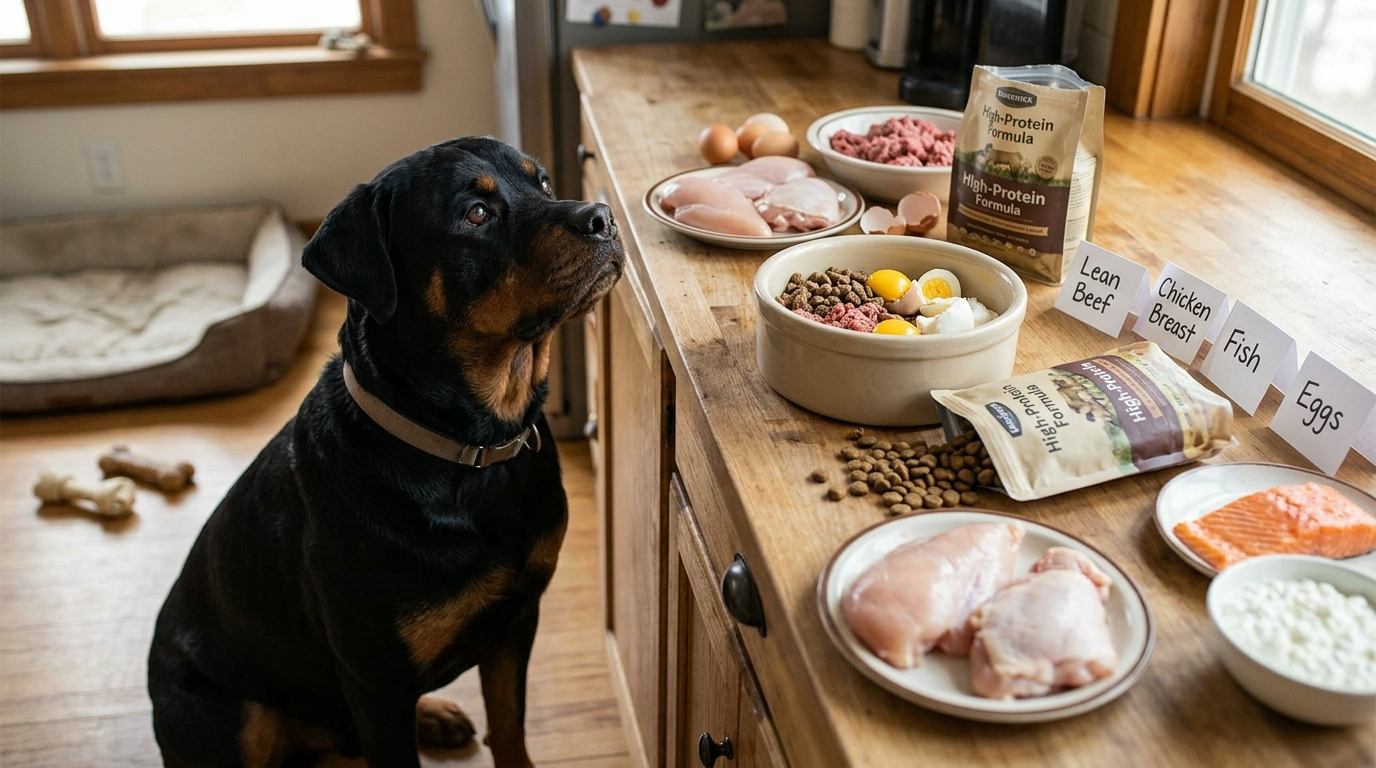
High protein foods Rottweilers require play a critical role in supporting muscle development, endurance, and overall vitality. Because Rottweilers are naturally strong and athletic, active individuals demand higher-quality nutrition than sedentary companions. Therefore, protein becomes a cornerstone of performance and recovery.
Working dogs, sport competitors, and highly energetic pets burn significant calories daily. Without adequate amino acids, muscle repair slows and stamina declines. However, balance remains essential. Too much protein without proper structure may strain digestion or create weight imbalance.
High protein foods Rottweilers benefit from must contain quality animal sources rather than filler ingredients. Lean meats, fish, and carefully formulated diets ensure efficient nutrient absorption. When paired with structured exercise, protein-rich meals help maintain power, resilience, and long-term health.
Understanding how protein functions allows owners to make informed feeding decisions.
Why Active Rottweilers Need Higher Protein Intake
Protein builds and repairs muscle tissue. For active dogs, daily micro-tears occur during running, pulling, or agility work. Therefore, adequate intake supports recovery.
High protein foods Rottweilers consume supply essential amino acids like lysine and leucine. These nutrients stimulate muscle repair and growth. Additionally, protein supports immune function and hormone regulation.
Active Rottweilers also require sustained energy. While fats provide concentrated fuel, protein contributes to steady metabolic performance. Balanced intake prevents fatigue during extended activity.
However, more is not always better. Digestibility matters just as much as percentage. High-quality sources outperform generic by-products significantly.
When paired with controlled calories, protein supports strength without unnecessary weight gain.
Understanding your dog’s activity level helps determine optimal intake.
Best Animal-Based Protein Sources
Animal proteins provide complete amino acid profiles. Therefore, they remain superior to plant-based substitutes for large athletic breeds.
High protein foods Rottweilers thrive on often include chicken, beef, turkey, lamb, and fish. These ingredients offer bioavailable nutrients that support muscle and joint health.
Fish, particularly salmon, delivers omega-3 fatty acids. These fats reduce inflammation and promote joint lubrication. Consequently, recovery improves after strenuous exercise.
Lean red meats contribute iron and zinc, which enhance oxygen transport and immune resilience.
Avoid products with vague labels such as “meat meal” without clear identification. Transparent ingredient lists indicate higher quality.
Selecting whole-food protein sources ensures maximum absorption and performance support.
Commercial High-Protein Diet Formulas
Many premium dog foods now offer performance-based formulas. These diets often contain protein levels between 28 and 35 percent.
High protein foods Rottweilers obtain from commercial blends should prioritize named meats as primary ingredients. Additionally, balanced calcium levels protect joint health.
Performance formulas also include glucosamine and chondroitin. These nutrients support mobility in active dogs.
Before switching diets, transition gradually over seven days. Sudden changes may cause digestive upset.
Consult your veterinarian to confirm suitability. Activity level, age, and weight influence ideal percentages.
Commercial high-performance diets provide convenience and nutritional balance when chosen carefully.
Raw and Fresh Feeding Options
Some owners prefer raw or fresh diets for active dogs. While these options allow ingredient control, balance remains critical.
High protein foods Rottweilers receive from raw plans often include muscle meat, organ meat, and bone components. However, improper ratios may cause deficiencies.
If considering fresh feeding, consult a veterinary nutritionist. Balanced formulations ensure adequate vitamins and minerals.
Fresh diets may improve coat condition and digestion for some dogs. Yet careful monitoring prevents imbalance.
Hydration also increases naturally with fresh meals, which benefits active dogs.
Thoughtful planning ensures that fresh feeding supports performance safely.
Protein Timing and Meal Scheduling
Meal timing influences energy and recovery. Feeding too close to intense activity may cause digestive discomfort.
High protein foods Rottweilers eat should ideally follow a cooldown period. Allow at least one hour after heavy exercise before feeding.
Dividing daily intake into two meals supports digestion and energy stability. Additionally, post-activity meals aid muscle repair.
Avoid large single meals. Smaller, consistent portions reduce risk of bloat, especially in large breeds.
Hydration remains equally important. Provide fresh water consistently, particularly after exercise.
Strategic timing maximizes protein benefits and enhances overall comfort.
Balancing Protein with Other Nutrients
Protein alone cannot sustain performance. Fats provide concentrated energy, while carbohydrates support quick fuel.
High protein foods Rottweilers consume must include balanced fat levels. Omega fatty acids reduce joint inflammation and promote recovery.
Complex carbohydrates from whole grains or vegetables provide steady energy release.
Micronutrients also matter. Vitamins and minerals support metabolism and tissue repair.
Excess protein without balance may increase calorie intake unnecessarily. Therefore, portion control remains essential.
Balanced nutrition enhances endurance and prevents metabolic stress.
Holistic dietary planning ensures long-term vitality.
Monitoring Muscle Condition and Weight
Body condition scoring remains crucial for active dogs. Lean muscle should feel firm without excessive fat coverage.
High protein foods Rottweilers benefit from must align with ideal body weight. Overfeeding leads to joint strain and reduced stamina.
Check ribs and waistline monthly. A visible waist from above indicates healthy condition.
Performance decline may signal nutritional imbalance. Fatigue, coat dullness, or weight changes require attention.
Regular veterinary checkups confirm internal health markers.
Consistent monitoring ensures dietary adjustments remain effective and safe.
Common Mistakes When Feeding Active Dogs
Many owners equate higher protein with unlimited feeding. However, overfeeding increases obesity risk.
High protein foods Rottweilers require must match energy output accurately. Sedentary dogs should not consume performance formulas.
Another mistake involves ignoring hydration. Protein metabolism increases water needs.
Switching diets abruptly may cause gastrointestinal issues.
Finally, relying solely on marketing claims without reviewing ingredient lists can mislead buyers.
Awareness prevents preventable errors and protects long-term health.
Supporting Recovery After Intense Activity
After strenuous sessions, muscle recovery becomes priority.
High protein foods Rottweilers consume post-exercise accelerate repair processes. Amino acids rebuild damaged fibers efficiently.
Light stretching and cool-down walks complement proper nutrition.
Electrolyte balance also supports hydration.
Rest days remain important. Overtraining without adequate recovery reduces performance and increases injury risk.
Balanced recovery protocols maintain strength and resilience.
Long-Term Health Considerations
Sustained high-protein diets must remain appropriate for age and activity.
High protein foods Rottweilers benefit from during peak activity may need adjustment during senior years.
As metabolism slows, calorie needs decrease. However, protein quality should remain high to preserve muscle mass.
Joint supplements may complement dietary adjustments.
Routine health screenings ensure internal organs tolerate protein levels effectively.
Long-term planning protects vitality and extends active years.
Conclusion: Fueling Strength with Smart Nutrition
Active Rottweilers demand purposeful nutrition. Protein forms the foundation of muscle growth, endurance, and recovery.
High protein foods Rottweilers thrive on must provide digestible, balanced nutrients. Quality sources outperform sheer quantity every time.
When combined with proper timing, hydration, and portion control, protein supports sustainable performance.
Monitoring body condition and adjusting intake prevents excess weight and joint strain.
With thoughtful planning and veterinary guidance, your Rottweiler can maintain strength, energy, and resilience for years to come.
FAQ
1. How much protein does an active Rottweiler need?
Most active adults benefit from diets containing 28–35 percent protein, depending on activity level.
2. Are raw diets better for performance?
Raw diets can work if properly balanced, but professional guidance is essential.
3. Can too much protein harm my dog?
Excess without balance may cause digestive stress or unnecessary calorie intake.
4. Should puppies eat high-protein performance diets?
Large-breed puppies require controlled formulas designed for steady growth.
5. How do I know if my dog needs more protein?
Poor muscle tone, slow recovery, or reduced stamina may signal dietary imbalance.