
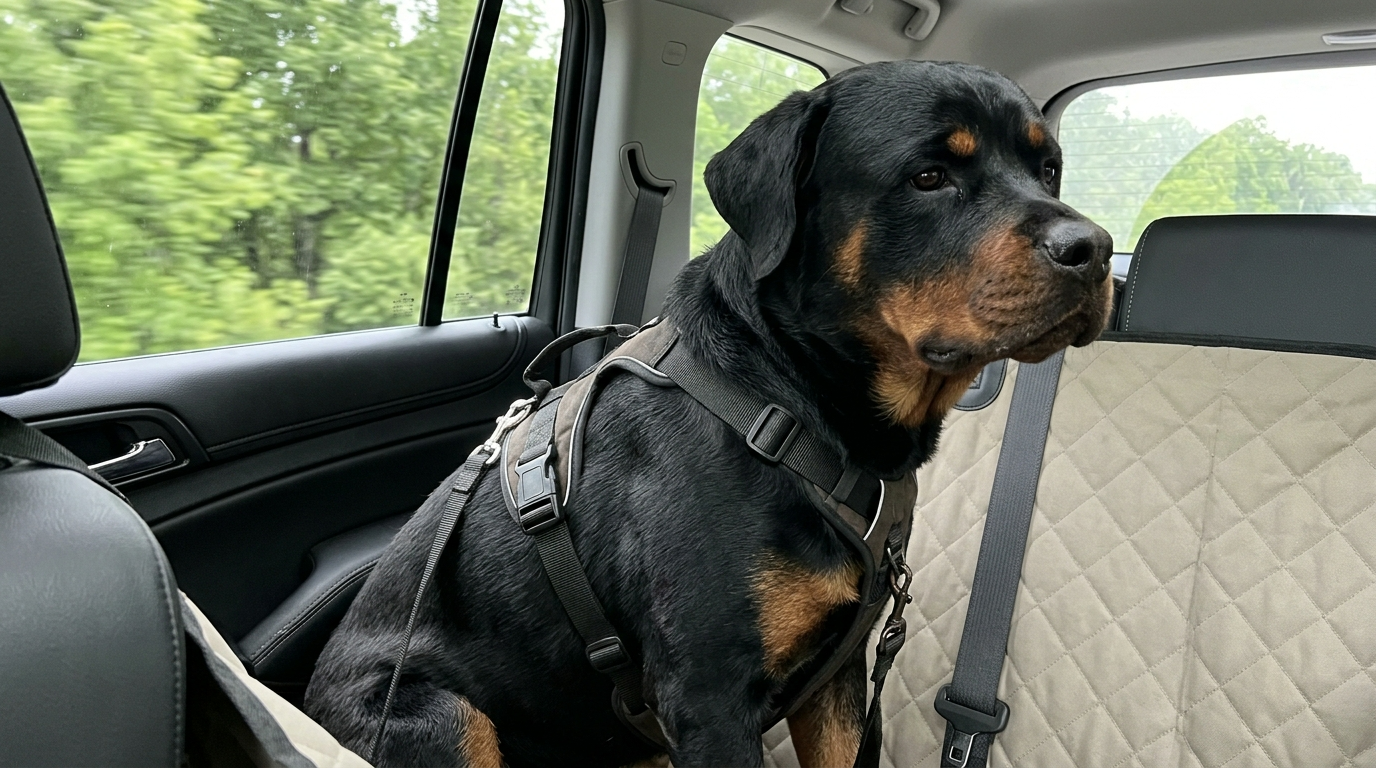
Rottweiler travel safety tips are essential for families who want smooth, secure, and stress-free trips with their loyal companion. Because Rottweilers are strong, intelligent, and protective, travel requires more planning than simply loading up the car. Therefore, preparation ensures both safety and comfort for everyone involved.
Large breeds need proper restraint, hydration, and structured breaks during travel. Additionally, unfamiliar environments can trigger stress if introductions happen too quickly. Calm planning reduces unexpected issues and supports balanced behavior.
Rottweiler travel safety tips focus on vehicle security, public etiquette, health preparation, and emotional management. When families approach travel responsibly, they strengthen their bond and avoid unnecessary risks.
With thoughtful preparation, your Rottweiler can become a confident and reliable travel companion wherever the journey leads.
Preparing Your Rottweiler Before the Trip
Preparation begins well before departure day. Gradual exposure to car rides builds comfort and reduces anxiety. Short practice drives create positive associations.
Rottweiler travel safety tips recommend reinforcing obedience skills before extended trips. Reliable sit, stay, and recall commands ensure control in unfamiliar settings.
Additionally, schedule a veterinary checkup if travel involves long distances. Confirm vaccinations remain current and request copies of medical records.
Pack familiar items such as bedding or toys. These objects provide comfort in new environments.
Exercise your dog before departure. A calm, slightly tired dog handles travel far better than an overstimulated one.
Early preparation builds confidence and minimizes travel-related stress.
Vehicle Safety and Proper Restraint
Unrestrained dogs pose serious risks during sudden stops or accidents. Therefore, proper vehicle restraint remains non-negotiable.
Rottweiler travel safety tips emphasize crash-tested crates or heavy-duty seatbelt harnesses. These options prevent dangerous movement during abrupt braking.
Place crates in secure positions within the vehicle. Avoid front seats where airbags deploy.
Never allow your dog to ride with their head outside the window. Debris and sudden stops create unnecessary danger.
Maintain comfortable ventilation at all times. However, avoid direct cold air blowing onto your dog continuously.
Safe restraint protects both your Rottweiler and every passenger in the vehicle.
Planning Breaks and Hydration
Long drives require structured rest stops. Large breeds need movement to prevent stiffness and discomfort.
Rottweiler travel safety tips suggest stopping every two to three hours. Short walks allow stretching and bathroom breaks.
Carry fresh water and a portable bowl. Hydration supports circulation and reduces fatigue.
Avoid feeding large meals immediately before travel. Instead, offer smaller portions to prevent digestive upset.
Keep your dog leashed during rest stops. Even well-trained dogs may react unpredictably in new environments.
Regular breaks maintain comfort, reduce anxiety, and support physical health.
Choosing Pet-Friendly Accommodations
Not all hotels welcome large breeds. Therefore, research pet policies carefully before booking.
Rottweiler travel safety tips include confirming size restrictions and additional fees in advance. Surprises at check-in create unnecessary stress.
Bring cleaning supplies and bedding to maintain hygiene standards.
Upon arrival, walk your dog around the property calmly. Gradual exposure helps reduce excitement.
Respect quiet hours and maintain leash control in shared areas.
Thoughtful accommodation planning prevents conflict and ensures smooth stays.
Managing Public Interactions
Rottweilers attract attention due to their size and reputation. Consequently, families should prepare for public encounters.
Rottweiler travel safety tips recommend reinforcing calm greetings. Ask your dog to sit before allowing interaction.
Maintain confident body language. Dogs mirror your emotional state quickly.
Avoid crowded events if your dog lacks strong social skills. Controlled exposure works better than chaotic environments.
Carry waste bags and maintain cleanliness at all times.
Clear leadership during public outings builds trust and prevents misunderstandings.
Handling Emergencies While Traveling
Unexpected situations can arise during any trip. Therefore, emergency planning remains essential.
Rottweiler travel safety tips include carrying a first-aid kit tailored for dogs. Include bandages, antiseptic wipes, and emergency contact numbers.
Research veterinary clinics along your travel route. Having addresses saved provides peace of mind.
Microchip information and updated identification tags increase recovery chances if separation occurs.
Stay calm during emergencies. Dogs sense panic quickly.
Preparedness transforms potential crises into manageable situations.
Traveling with Children and Rottweilers
Families traveling with children must coordinate supervision carefully. Clear roles prevent confusion.
Rottweiler travel safety tips suggest teaching children calm behavior around the dog during travel.
Avoid allowing children to climb or lean on the dog during rest stops.
Create defined spaces inside the vehicle to reduce crowding.
Encourage quiet interaction rather than overstimulation.
Balanced supervision keeps both children and dogs safe and comfortable.
Maintaining Routine on the Road
Dogs thrive on predictability. Therefore, maintaining feeding and exercise schedules helps reduce stress.
Rottweiler travel safety tips recommend keeping meal times consistent even when traveling.
Provide familiar bedtime routines when possible.
Structured walks at similar times each day reinforce stability.
Routine prevents anxiety and supports emotional balance.
Consistency creates a sense of normalcy despite environmental changes.
Recognizing Signs of Travel Stress
Panting, pacing, or excessive drooling may signal anxiety. Therefore, watch closely for subtle behavioral shifts.
Rottweiler travel safety tips include responding early to signs of stress. Offer calm reassurance and short breaks when needed.
Avoid scolding anxious behavior. Instead, create quiet environments where possible.
Gradual exposure reduces sensitivity over time.
Recognizing stress quickly allows proactive management before escalation occurs.
Long-Term Travel Training
Frequent short trips build confidence gradually. Therefore, practice remains essential.
Rottweiler travel safety tips encourage incremental distance increases. Begin with brief outings before planning long journeys.
Reward calm behavior consistently during each trip.
Desensitize your dog to travel sounds and motion through repetition.
Over time, travel becomes familiar rather than intimidating.
Gradual conditioning creates resilient and adaptable companions.
Conclusion: Safe Travel Strengthens Family Bonds
Traveling with a Rottweiler requires preparation, structure, and calm leadership. However, the rewards of shared experiences are significant.
Rottweiler travel safety tips provide the framework for secure, enjoyable trips. Proper restraint, hydration, emergency planning, and consistent routines protect everyone involved.
When families prioritize safety and preparation, they reduce stress and increase confidence.
Thoughtful travel practices transform potential challenges into opportunities for bonding.
With steady guidance and responsible planning, your Rottweiler can accompany your family safely wherever the road leads.
FAQ
1. How long can a Rottweiler stay in a car during travel?
Frequent breaks every two to three hours help prevent stiffness and discomfort.
2. Is a crate necessary for road trips?
A secured crate or crash-tested harness greatly improves safety during sudden stops.
3. How can I reduce my dog’s travel anxiety?
Gradual exposure, exercise before departure, and maintaining routine often reduce stress.
4. What should I pack for my Rottweiler when traveling?
Bring water, food, bedding, medical records, waste bags, and a first-aid kit.
5. Are Rottweilers good travel companions?
With proper training and preparation, they can adapt well to structured travel experiences.