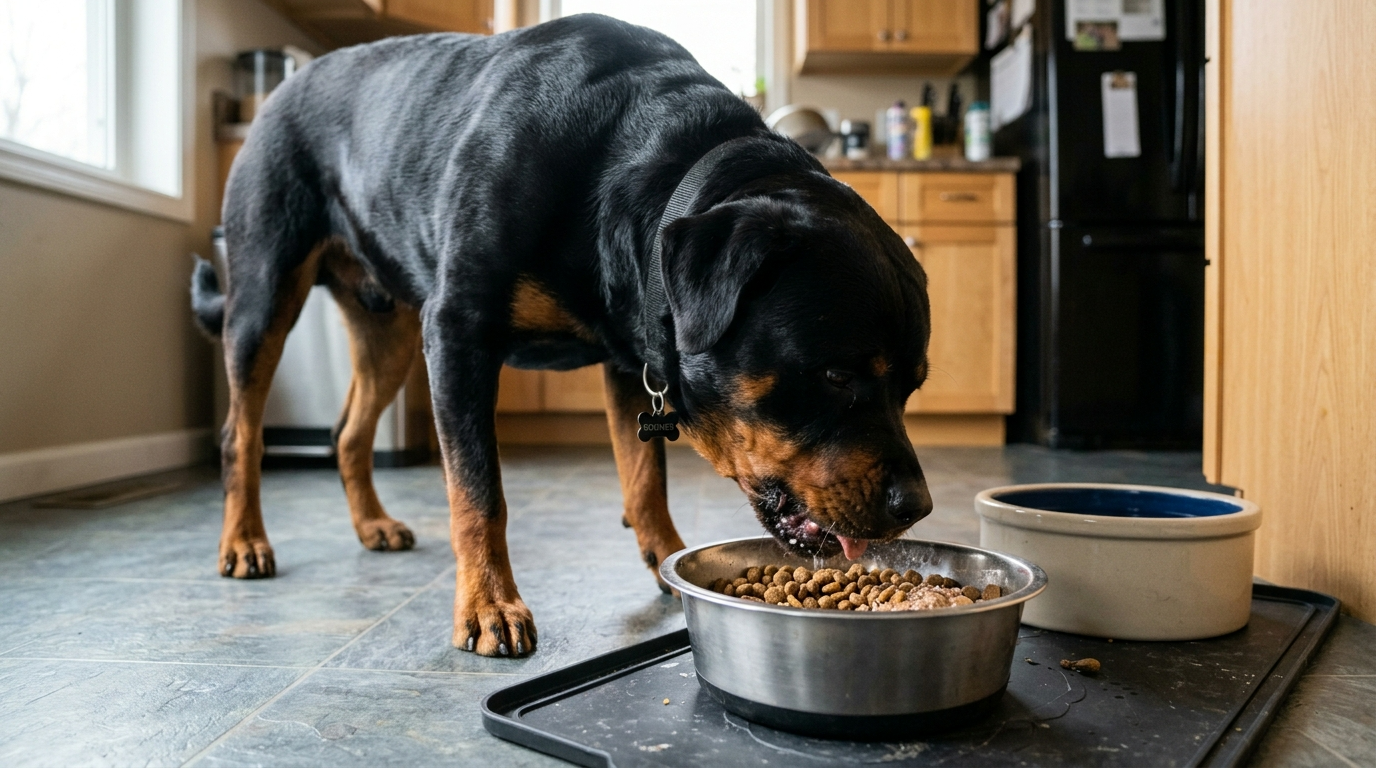
Rottweiler feeding guidelines provide a clear framework for supporting healthy growth, steady weight, and long-term vitality. Because Rottweilers are a large and powerful breed, their nutritional needs change significantly from puppyhood to adulthood. Therefore, feeding based on age and weight becomes essential rather than optional.
Rapid growth during early months requires careful portion control. At the same time, overfeeding can strain joints and increase health risks. Balanced nutrition supports muscle development while protecting skeletal structure.
Rottweiler feeding guidelines also account for metabolism shifts, activity levels, and life stage transitions. When owners understand how to adjust portions properly, they prevent both underfeeding and obesity.
By following structured recommendations and monitoring body condition regularly, you create a strong foundation for lifelong health and energy.
Feeding Rottweiler Puppies (8 Weeks to 6 Months)
Puppyhood represents the most critical growth phase. During this stage, bones, muscles, and organs develop rapidly. Therefore, Rottweiler feeding guidelines emphasize controlled growth rather than maximum size.
Large-breed puppy formulas work best. These diets regulate calcium and phosphorus levels to protect joints. High-quality protein supports lean muscle formation without excess fat.
Puppies between 8 and 12 weeks typically eat three to four small meals daily. As they approach six months, you may reduce feeding to three meals. Frequent meals stabilize blood sugar and aid digestion.
Portion sizes depend on weight and activity. Always measure food carefully rather than guessing. Monitoring body condition ensures ribs remain easily felt but not visible.
Consistent feeding times promote digestive health and reduce behavioral issues linked to hunger or overstimulation.
Adjusting Portions for Growing Adolescents (6–12 Months)
Adolescence brings increased energy and appetite. However, growth begins slowing gradually. Therefore, Rottweiler feeding guidelines recommend adjusting calories thoughtfully.
Most adolescent Rottweilers transition to two meals daily. This schedule maintains stability while preventing overeating. Portion sizes should reflect both weight and activity level.
Because adolescents may experience growth spurts, slight increases in food may be necessary. However, rapid weight gain must be avoided. Excess weight places stress on hips and elbows.
Continue feeding large-breed puppy food until skeletal growth nears completion. Prematurely switching to adult food may disrupt proper development.
Weigh your dog monthly. Body condition scoring provides clearer insight than weight alone. Balanced feeding during adolescence protects long-term mobility and strength.
Feeding Adult Rottweilers (1–6 Years)
Once growth plates close, nutritional focus shifts from development to maintenance. At this stage, Rottweiler feeding guidelines emphasize lean muscle preservation and weight stability.
Most adult Rottweilers thrive on two balanced meals daily. High-quality protein remains important, yet calorie intake should align with activity.
Working or highly active dogs require more calories than sedentary companions. Therefore, adjust portions gradually rather than making sudden changes.
Monitor waistline and rib coverage regularly. A visible waist from above indicates healthy weight. Overfeeding often occurs gradually, so consistent observation prevents problems.
Avoid excessive treats. While training rewards remain useful, they should not exceed 10 percent of daily calorie intake.
Steady feeding routines maintain energy levels and digestive efficiency throughout adulthood.
Feeding Senior Rottweilers (7 Years and Older)
As metabolism slows, calorie needs decrease. However, protein quality remains essential for muscle retention. Rottweiler feeding guidelines for seniors focus on weight management and joint support.
Switching to a senior-specific formula may benefit aging dogs. These diets often include joint-supporting nutrients and moderate fat levels.
Continue feeding two measured meals daily. Smaller portions prevent weight gain while supporting digestion.
Hydration becomes increasingly important. Fresh water should remain accessible at all times.
Because senior dogs may become less active, portion reductions often prevent obesity. Regular veterinary visits help confirm nutritional adjustments.
Maintaining lean body condition supports mobility and reduces arthritis progression.
Portion Control by Weight Range
Weight significantly influences portion size. Rottweiler feeding guidelines recommend calculating portions based on ideal body weight rather than current weight if obesity exists.
Puppies weighing 10–20 pounds require smaller, more frequent meals. As weight reaches 40–60 pounds, portion increases should remain gradual.
Adult Rottweilers often weigh between 80 and 120 pounds. However, males typically weigh more than females. Feeding charts on commercial food bags provide general guidance, yet individual needs vary.
Adjust portions based on activity and metabolism. If weight increases unexpectedly, reduce food slightly and reassess.
Regular weigh-ins ensure alignment with healthy growth curves.
Balancing Macronutrients for Optimal Health
Protein, fats, and carbohydrates must remain balanced. Rottweiler feeding guidelines emphasize high-quality animal protein as the primary ingredient.
Healthy fats support skin, coat, and cognitive health. Omega-3 fatty acids reduce inflammation and promote joint comfort.
Carbohydrates provide energy, yet excessive fillers should be avoided. Choose foods with whole grains or digestible alternatives.
Balanced nutrition reduces digestive upset and promotes steady energy.
Consult your veterinarian before adding supplements. Many complete diets already provide adequate nutrients.
Thoughtful ingredient selection enhances overall wellness and longevity.
Common Feeding Mistakes to Avoid
Overfeeding remains the most common mistake among Rottweiler owners. Because these dogs often appear hungry, owners may increase portions unnecessarily.
Rottweiler feeding guidelines discourage free-feeding. Leaving food available all day encourages overeating and reduces structure.
Sudden diet changes may cause digestive upset. Always transition gradually over seven days.
Excessive treats or table scraps contribute to weight gain and imbalance.
Ignoring body condition signs delays necessary adjustments. Regular evaluation prevents small issues from becoming major problems.
Awareness and consistency protect long-term health.
Monitoring Body Condition and Adjusting Intake
Body condition scoring provides more accuracy than relying solely on scale weight. Rottweiler feeding guidelines recommend checking ribs, waistline, and abdominal tuck regularly.
If ribs feel difficult to detect, reduce portions slightly. Conversely, visible ribs may indicate underfeeding.
Energy levels also provide clues. Sudden lethargy may signal dietary imbalance.
Seasonal activity changes may require temporary adjustments. For example, winter months often reduce exercise.
Keeping a feeding journal helps track changes effectively.
Regular monitoring ensures proactive nutritional management.
Special Considerations for Active and Working Rottweilers
Highly active Rottweilers burn significantly more calories. Therefore, Rottweiler feeding guidelines suggest increased portions for working dogs.
Performance diets often contain higher protein and fat levels. However, increased calories should align with workload.
After intense exercise, allow cool-down time before feeding to prevent digestive issues.
Hydration becomes even more critical for active dogs.
Balanced adjustments maintain muscle mass without causing weight fluctuations.
Tailoring nutrition to activity level maximizes performance safely.
Conclusion: Feeding for Strength and Longevity
Proper nutrition shapes every stage of a Rottweiler’s life. From rapid puppy growth to senior maintenance, feeding decisions influence mobility, energy, and longevity.
Rottweiler feeding guidelines provide structure and clarity. By adjusting portions based on age, weight, and activity, owners support balanced development and prevent obesity.
Consistency remains key. Measured meals, high-quality ingredients, and regular monitoring create stability.
When you feed thoughtfully and proactively, your Rottweiler gains strength without unnecessary strain. Over time, balanced nutrition becomes the foundation for a healthy, active, and confident companion.
FAQ
1. How many times per day should a Rottweiler eat?
Puppies typically eat three to four meals daily, while adults usually thrive on two measured meals.
2. When should I switch from puppy to adult food?
Most Rottweilers transition between 15 and 18 months, depending on growth and veterinary advice.
3. How do I know if my dog is overweight?
A healthy dog has a visible waist and ribs that are easy to feel but not protruding.
4. Can I feed homemade meals instead of commercial food?
Yes, but balanced formulation with veterinary guidance is essential for safety.
5. Should senior dogs eat less than adults?
Often yes, since metabolism slows with age. Adjust portions carefully to maintain lean body condition.